
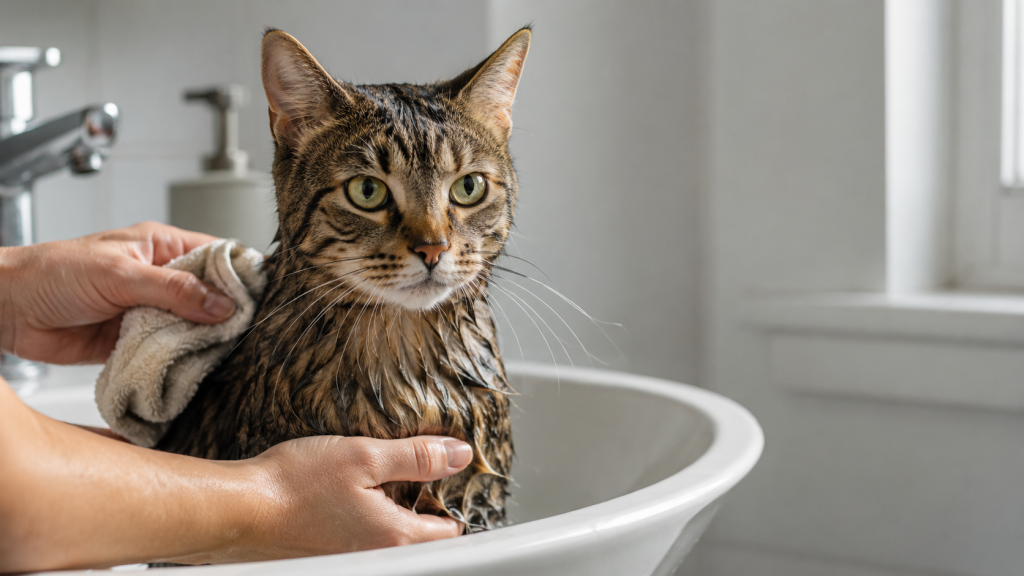
If your cat smells bad, has something stuck in their fur, or has stopped grooming well, it’s natural to wonder how to bathe a cat without turning your bathroom into a stressful scene.
The first answer is not a list of bath steps. It is this: most healthy adult cats do not need regular baths. Many cats keep their coats clean through normal grooming. A bath is usually for a clear problem, such as dirt, feces, urine, grease, fleas, a skin condition, or something unsafe on the coat.
For me, the safer way to think about bathing is simple: clean only what needs cleaning, use cat-safe products, keep it short, and stop if the cat is too frightened or unsafe to handle.
Do Cats Actually Need Baths?
Most cats do not need routine baths from their owners. A healthy adult cat is usually a careful self-groomer, and brushing or spot-cleaning is often enough.
A bath may make sense if your cat is especially dirty, has feces or urine on the coat, got into something sticky or greasy, has a veterinarian-directed skin treatment, or cannot groom properly because of age, weight, pain, arthritis, or another health issue.
That last point matters. Poor grooming is not just a hygiene problem. If your cat suddenly looks greasy, matted, smelly, or unkempt, I would not treat the bath as the whole solution. The coat may be showing you that something else has changed.
When a Full Bath Is Not the Best First Step
A full bath is not always the safest or kindest choice. If the problem is small, spot-cleaning may solve it with much less stress.
Try a simpler option first when appropriate:
- Brush loose fur before it mats.
- Wipe a muddy paw or dirty patch with a damp cloth.
- Use veterinarian-approved cat wipes for small messes.
- Ask a groomer or vet for help with rear-end hygiene in an overweight, arthritic, elderly, or painful cat.
- Get professional help for tight mats, heavy contamination, or a cat who panics or bites.
I’d be more cautious if the cat is old, thin, sick, very young, severely stressed, or hard to handle. In those cases, a bath can become a temperature, stress, or injury problem quickly.
When to Call a Vet Before Bathing
Call a veterinarian before bathing if your cat may have a medical problem, has gotten into a chemical or unknown substance, has worsening skin, or is suddenly grooming less than usual.
You should also contact a vet, emergency vet, or poison-control resource urgently if your cat has breathing trouble, collapse, extreme weakness, repeated vomiting, heavy drooling, severe lethargy, or suspected toxin exposure.
If an essential oil, liquid potpourri product, flea product, or other topical chemical is on the coat, do not guess. Cats groom themselves and can swallow residue. Some products can also be toxic through skin exposure. A professional may advise washing with mild dish soap and lots of water in certain contamination situations, but dish soap should not be treated as a normal cat shampoo.
What You Need Before You Bring the Cat In
Preparation makes the bath safer. Most bath problems start before the cat is wet: slippery footing, loud water, cold rooms, missing towels, too much restraint, or products that should not be on a cat.
Set everything up first:
- Cat-safe shampoo, or the exact medicated shampoo prescribed by your vet.
- A non-slip mat or towel for the sink or tub.
- Lukewarm water, not hot or cold.
- A cup or gentle rinse method.
- A damp washcloth for the face.
- Several towels within reach.
- A warm, quiet, draft-free room for drying.
If your cat tolerates nail trims, trimming the nails earlier can reduce scratch risk. Brush the coat before wetting it, especially with long-haired cats. Wet mats are harder to handle and can pull painfully on the skin.
Use Only Cat-Safe Shampoo
Use a shampoo labeled for cats unless your veterinarian gives different instructions. Human shampoo can be too harsh for pet skin and may strip protective oils.
Avoid essential oils, scented home mixtures, vinegar, baking soda pastes, human dandruff shampoo, routine dish soap baths, and dog flea products. Natural does not mean safe for cats. Because cats lick their coats, anything left on the fur can be swallowed.
Be especially careful with flea products. If fleas are the reason for the bath, the better answer is a vet-guided flea-control plan for the cat, other pets, and the home environment. Repeated baths or the wrong product can create more risk.
How to Bathe a Cat, Step by Step
1. Start calm, prepared, and quiet
Bring your cat in only after the space is ready. If running water scares your cat, fill a shallow basin before bringing them into the room.
Keep your handling steady but not forceful. A cat-friendly approach gives the cat as much control as possible while still keeping everyone safe. If your cat escalates into frantic escape attempts, biting, or extreme panic, stop.
2. Use lukewarm, shallow water
The water should feel comfortably lukewarm, never hot or cold. This matters more for kittens, senior cats, thin cats, and sick cats, because they can be more vulnerable to temperature stress.
Keep the water shallow. You are not trying to soak the cat in a deep tub. You are wetting the coat enough to clean what needs cleaning.
3. Wet the body, not the face
Gently wet the body. Avoid the face, ears, eyes, nose, and mouth. Many cats tolerate a damp washcloth on the face better than water poured near the head.
Move slowly. The goal is a short, controlled bath, not a perfect salon finish.
4. Apply a small amount of cat-safe shampoo
Use a small amount and massage it through the dirty area or coat. Do not scrub hard or tug at mats. If the coat is matted, bathing is often not the right fix.
If this is a medicated bath, follow the veterinarian’s directions exactly. Some medicated shampoos need a contact time, often several minutes, before rinsing. That schedule should come from the vet, not from guessing.
5. Rinse very thoroughly
Rinsing is one of the most important steps. Shampoo residue can irritate the skin and can be swallowed when your cat grooms afterward.
Rinse until the coat feels clean and no product remains. Long-haired cats, thick coats, and medicated shampoos may need more rinsing than you expect.
6. Clean the face separately
Use a damp washcloth for the face. Avoid shampoo near the eyes, ears, and mouth.
If there is a substance near the eyes, in the ears, or around the mouth, I would stop guessing and call a vet. Those areas are too easy to irritate or injure.
7. Towel-dry well
Wrap your cat in a towel and blot gently. Do not rub hard, especially on kittens or cats with sensitive skin.
Keep your cat in a warm, quiet, draft-free room until fully dry. Wet fur can mat, and a chilled cat can become unwell. A blow dryer should not be the default. If a cat is already comfortable with one, use only a low, gentle setting at a safe distance and stop if the cat panics.
How Often Should You Bathe a Cat?
Most cats should be bathed rarely, only when there is a clear reason. There is no need to put a typical healthy cat on a fixed bath schedule.
Ordinary baths should not happen too often because overbathing can dry the skin. If your cat seems to need baths often because of odor, greasy fur, urine, feces, dandruff, or poor grooming, that is a reason to ask why the problem keeps happening.
Medicated baths are different. If your vet prescribes them for a skin condition, follow the prescribed product, contact time, rinsing instructions, and frequency.
Special Cases for Kittens, Hairless Cats, Medicated Baths, Fleas, and Mats
Kittens
Kittens rarely need frequent baths. If a kitten is messy, use shallow lukewarm water, kitten-safe shampoo, short handling time, and careful drying.
Very young, sick, weak, or flea-infested kittens need extra caution. Do not use adult flea products or random shampoos. Call a vet if you are unsure, because kittens can chill easily and tolerate stress poorly.
Hairless cats
Sphynx and some hairless cats can have different skin-care needs because oil and debris may build up on the skin. They may need routine bathing, often on a schedule guided by breed needs and veterinary advice.
A Sphynx routine should not be copied for a typical domestic shorthair or longhair. Different coat, different care.
Medicated baths
Medicated shampoo is treatment, not regular grooming. It may be prescribed for bacterial skin infection, yeast infection, allergies, or another skin issue.
If you cannot bathe your cat safely, tell your vet. That is not failure. A safer plan is better than forcing a fearful, painful, or aggressive cat through a bath that could injure someone.
Fleas
A flea bath alone may not solve an infestation. Flea control usually needs the right cat-specific product and a plan for the household.
Never use a dog flea product on a cat. Choose flea and tick products by species, age, weight, and health status, and ask a vet before treating kittens, elderly cats, sick cats, pregnant cats, nursing cats, or medically fragile cats.
Matted fur
Do not assume mats will wash out. Tight mats can pull on the skin, become painful, and make bathing harder.
Do not cut close mats with scissors. Cat skin can be easy to nick under a mat. Serious matting is a groomer or veterinary problem, especially if the skin looks irritated or the cat seems painful.
Stress Signs That Mean You Should Stop
Some protest is common. Intense distress is different. Stop if your cat is escalating beyond what you can safely manage.
Watch for flat ears, wide pupils, hissing, growling, frantic escape attempts, scratching, biting, hiding, open-mouth breathing, collapse, or extreme fear. Do not push through a bath just to finish shampooing.
If your cat is covered in shampoo and panics, rinse as safely and quickly as possible, then stop. If you cannot rinse safely, call a vet or professional groomer for help.
What to Watch After the Bath
Your cat may hide, groom, or look annoyed after a bath. That can happen. What I would watch more closely is the body response.
Contact a vet if you notice persistent shivering, weakness, lethargy, abnormal breathing, collapse, vomiting, drooling, swelling, worsening redness, intense itching, or a cat who seems cold to the touch or unusually unresponsive.
Also call if the skin looks worse after bathing, especially after a medicated or flea product. Product reactions are not something to wait out if signs are getting worse.
What to Remember
The safest way to bathe a cat is to first ask whether the bath is truly needed. Many cats only need brushing, a damp cloth, or professional help with one difficult area.
If a bath is necessary, keep it short, warm, quiet, non-slip, and cat-specific. Use cat-safe shampoo, avoid the face and ears, rinse thoroughly, dry well, and stop if stress becomes unsafe.
If poor grooming, bad odor, fleas, skin changes, mats, urine, feces, toxins, or sudden behavior change are part of the problem, a vet call is the safer next step.
References
- Texas A&M VMBS, Cat Baths — supports when cats do and do not need baths, grooming changes, stress risk, and Sphynx bathing needs.
- PetMD, How to Bathe a Cat — supports bath supplies, steps, frequency cautions, and when to use professional help.
- PetMD, How to Bathe a Kitten — supports kitten-specific bathing, lukewarm shallow water, kitten shampoo, and short bath handling.
- VCA Hospitals, How to Bathe Cats With Medicated Shampoo — supports medicated shampoo use, contact time, thorough rinsing, and warm drying.
- VCA Hospitals, Human Shampoo on Pets — supports avoiding human shampoo because pet skin differs from human skin.
- VCA Hospitals, Essential Oil and Liquid Potpourri Poisoning in Cats — supports essential oil safety warnings and caution around topical exposures.
- U.S. Food and Drug Administration, Safe Use of Flea and Tick Products in Pets — supports cat-specific flea product selection, label following, and never using dog products on cats.
- PetVet Care Centers, Matted Cat Fur — supports matting cautions, discomfort risk, and avoiding scissors for serious mats.