Most cats descend from desert dwellers and have a naturally low thirst drive, which can put them at risk for dehydration and serious health issues. Understanding how to meet their unique hydration needs is a key part of responsible cat care. This guide provides ten practical and effective strategies to help you increase your cat’s water intake for better long term health.
Key Takeaways
- The most effective way to increase your cat’s total hydration is by switching from dry kibble to a high moisture wet food diet.
- Encourage drinking by providing multiple water stations with wide, shallow bowls made of stainless steel or ceramic.
- Always place water bowls in quiet locations separate from your cat’s food and litter box areas.
- A sudden and sustained increase in thirst is a major warning sign that requires an immediate visit to the veterinarian.
10 Ways to Get Your Cat to Drink More Water
1. Switch to a Wet Food Diet
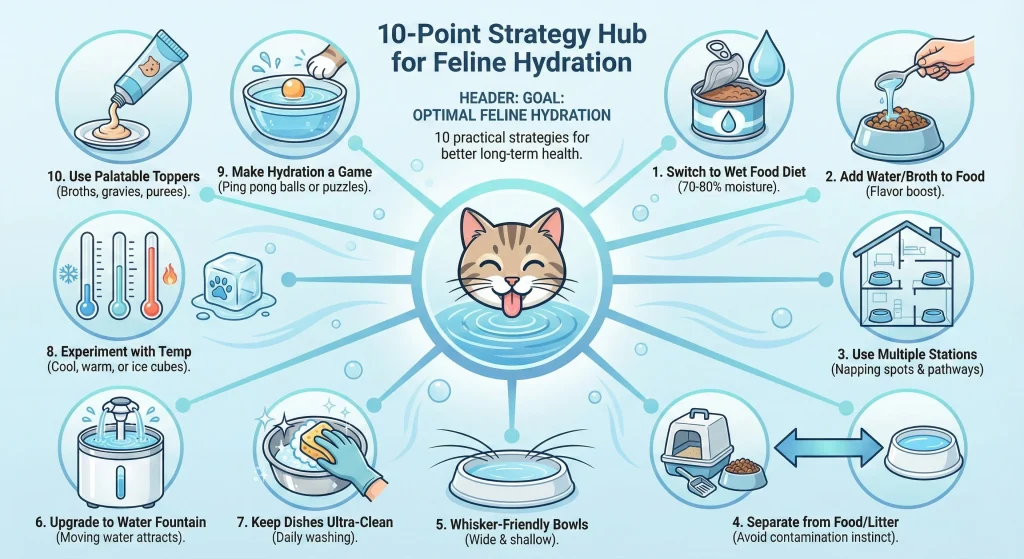
The single best way to increase your cat’s hydration is through their food. Wet food contains approximately 70 to 80 percent moisture, closely mimicking the natural prey your cat’s ancestors ate. In contrast, dry kibble has only about 10 percent moisture, which means a cat on a dry food diet must drink a significant amount of water to stay properly hydrated. A gradual transition to a wet food diet provides hydration with every meal.
2. Add Water or Broth to Food
You can easily boost the moisture content of any meal by adding liquid. Mix a few tablespoons of plain water or safe, homemade bone broth into your cat’s wet or dry food to create a more hydrating meal. You can also use the water from a can of tuna packed in spring water. Never use broth or stock made for humans, as it almost always contains onions or garlic, which are toxic to cats.
3. Use Multiple Water Stations
Place several water bowls in different locations throughout your home. This makes drinking convenient and reduces competition in multi cat households. A good rule is to provide one more water station than the number of cats you have. Placing bowls near favorite napping spots or along common pathways serves as a frequent reminder for your cat to drink.
4. Separate Water from Food and Litter Boxes
Cats have a strong instinct to avoid drinking water near their food source or their toilet area. This is a survival mechanism to prevent water contamination from a kill or from waste. Always place water bowls in a location separate from food dishes and litter boxes. Avoid using combination food and water bowls.
5. Choose a Whisker-Friendly Bowl
A cat’s whiskers are extremely sensitive, and many cats dislike the feeling of them touching the sides of a deep bowl. This sensation, known as whisker fatigue, can cause stress and deter your cat from drinking. Use wide, shallow bowls or saucers that allow your cat to drink comfortably without their whiskers making contact with the sides.
6. Upgrade to a Water Fountain
Many cats are instinctively drawn to moving water because in nature, flowing sources are less likely to be contaminated than stagnant puddles. A cat water fountain can encourage drinking by providing a constant source of fresh, filtered, and circulating water. The movement and sound can also provide valuable enrichment for indoor cats, though success depends on the individual cat’s preference.
7. Keep Water Dishes Scrupulously Clean
Cats are very clean animals with a keen sense of smell and will avoid drinking from a dirty bowl. Wash all water bowls daily with mild soap and water to remove saliva and bacteria. A slimy film, called biofilm, can quickly build up and make the water taste unpleasant. A clean bowl provides fresh, appealing water.
8. Experiment with Water Temperature
Cats can have individual preferences for water temperature. Offer different bowls with cool, room temperature, or slightly warm water to see if your cat prefers one over the other. In warm weather, you can add a few ice cubes to a water bowl. Many cats find the floating cubes to be an engaging toy, which encourages interaction with the water.
9. Make Hydration a Game
Turn drinking water into a fun activity to spark your cat’s interest. Tossing a ping pong ball into a large, wide water bowl can encourage your cat to bat at it and interact with the water. You can also use puzzle feeders designed for wet food, mixing in extra water to create a hydrating “soup” that your cat has to work to consume.
10. Use Palatable Food Toppers or Additives
Enhance the appeal of your cat’s food and water with flavorful additions. Commercial meal toppers, like chicken or fish broths and gravies, add both moisture and flavor. High moisture, lickable puree treats are also an excellent way to get more liquid into your cat. For cats with specific health needs, there are also specialized supplements designed to promote hydration.
How to Choose the Right Water Bowl

1. Select Stainless Steel or Ceramic Materials
The material of your cat’s bowl affects both hygiene and taste. Stainless steel and ceramic are the best choices because they are non porous, which means they do not harbor bacteria or absorb odors. Plastic bowls are not recommended as they scratch easily, creating tiny crevices where bacteria can grow.
| Material | Pros | Cons |
|---|---|---|
| Stainless Steel | Hygienic, durable, easy to clean, dishwasher safe. | Limited designs, can be lightweight. |
| Ceramic | Hygienic, heavy and stable, retains cool temperature. | Can chip or crack, must have lead free glaze. |
| Plastic | Inexpensive, lightweight. | Scratches easily, harbors bacteria, can cause chin acne. |
2. Provide a Wide and Shallow Dish
A wide, shallow bowl is the most comfortable option for a cat. This design prevents their sensitive whiskers from repeatedly brushing against the sides of the bowl. This helps avoid the discomfort of whisker fatigue, ensuring your cat has a pleasant experience every time they go for a drink.
3. Keep the Bowl Filled to the Brim
Cats often prefer to drink from a full bowl of water. A full bowl allows them to lap from the surface without having to put their head deep inside the container. It also makes the water level easier for them to see, which can make them feel more secure while drinking.
Understanding Cat Water Fountains
1. Why Cats Prefer Moving Water
A cat’s attraction to moving water is an evolutionary instinct. In the wild, running water like a stream is generally safer and fresher than a stagnant puddle. The sound and motion of a fountain also stimulate a cat’s senses, making the water source more obvious and interesting than still water in a bowl.
2. How to Select a Good Fountain
When choosing a fountain, prioritize models that are easy to take apart and clean. Look for a fountain made from stainless steel or ceramic for better hygiene. Other important features include a quiet motor that will not startle your cat and a reliable filtration system to remove impurities and keep the water tasting fresh.
3. Proper Fountain Maintenance is Crucial
A dirty fountain is worse than a simple bowl because it can become a reservoir for bacteria. You must deep clean your fountain at least once a week. This involves completely disassembling all parts, including the pump, and washing them with mild soap. Soaking parts in a solution of vinegar and water can help remove mineral buildup and slime.
Signs of Dehydration in Cats
1. Check for Dry or Tacky Gums
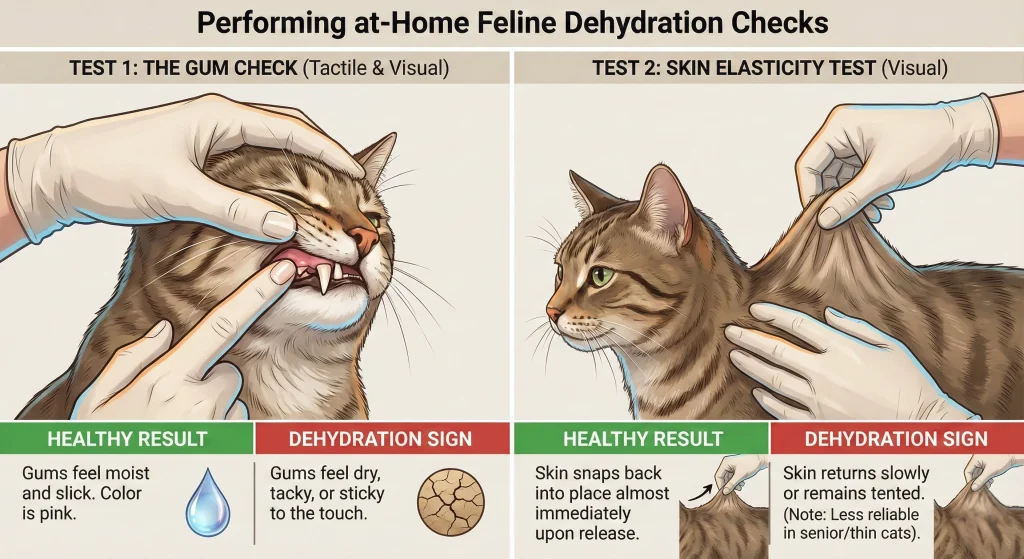
A well hydrated cat’s gums will be moist and slick. You can gently lift your cat’s lip to touch their gums. If they feel dry or sticky, your cat may be dehydrated. Healthy pink gums should also return to their normal color in less than two seconds after you gently press on them.
2. Perform a Skin Elasticity Test
You can check your cat’s hydration by gently lifting the skin over their shoulders into a “tent” and then releasing it. In a hydrated cat, the skin will snap back into place almost immediately. If the skin returns slowly or stays tented, it is a sign of dehydration. Note that this test is less reliable in senior or very thin cats.
3. Watch for Lethargy or Sunken Eyes
Dehydration can cause noticeable changes in your cat’s appearance and behavior. A dehydrated cat may become lethargic, weak, or lose their appetite. As dehydration becomes more severe, their eyes may take on a sunken look. These are serious signs that require veterinary attention.
When to Call the Veterinarian
1. Your Cat Stops Drinking Completely
If your cat refuses to drink any water for more than 24 hours, you should contact your veterinarian. A complete refusal to drink can quickly lead to dangerous levels of dehydration and may indicate an underlying illness that needs to be addressed professionally.
2. Your Cat Suddenly Drinks Too Much Water
A sudden, significant increase in thirst, known as polydipsia, is an urgent red flag. While you may be happy to see your cat drinking more, this change often signals a serious medical condition. It is a classic symptom of chronic kidney disease, diabetes, and hyperthyroidism, all of which require veterinary diagnosis and management.
3. Drinking Changes Accompany Other Symptoms
If you notice a change in your cat’s water intake along with other signs of illness, it is time to call the vet. Pay close attention to symptoms such as persistent vomiting, diarrhea, lethargy, weight loss, or changes in litter box habits. These symptoms combined with changes in drinking warrant an immediate professional evaluation.
Common Questions About Cat Hydration
1. How much water should a cat drink daily?
A typical 10 pound cat needs about one cup of total water per day from all sources, including food. The amount a cat needs to drink from a bowl depends heavily on its diet. A cat eating moisture rich wet food will need to drink very little, while a cat on a dry food diet must drink much more to meet its needs.
2. Is it normal for my cat to rarely drink water?
Yes, it can be perfectly normal for a cat to drink rarely, especially if they eat an all wet food diet. Wet food is 70 to 80 percent water, so a cat eating it gets most of its required daily moisture directly from its meals. As long as the cat is healthy and energetic, infrequent drinking is not usually a cause for concern in this case.
3. Why are plastic bowls bad for cats?
Plastic is not recommended for cat bowls because the material is porous and scratches easily. These tiny scratches can trap bacteria and biofilm, which are difficult to clean and can contaminate the water. This bacterial growth can sometimes contribute to a skin condition on a cat’s chin known as feline chin acne.
4. Can I add human broth to my cat’s food?
You should not add broths or stocks made for humans to your cat’s food. These products almost always contain ingredients that are toxic to cats, especially onions and garlic. Even in powdered form, these ingredients can cause serious damage to a cat’s red blood cells. Always use products made specifically for pets or plain homemade broth with no added salt or seasonings.
Final Thoughts
Helping your cat stay hydrated starts with providing a moisture rich diet and creating a clean, appealing environment for drinking. Pay close attention to your cat’s habits, as you are the first line of defense in noticing when something is wrong. By combining these simple strategies with regular veterinary care, you can support your cat’s long term health and wellbeing.