
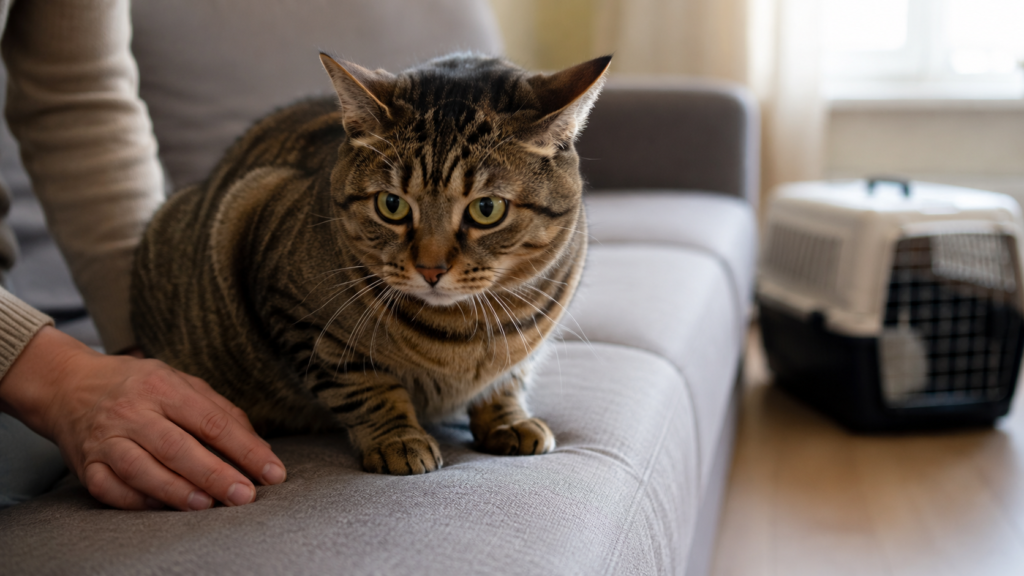
If you are searching this because your cat suddenly bit someone, started drooling, came home with a wound, or had contact with a bat, raccoon, fox, skunk, or unknown animal, treat the situation seriously. Rabies is not something you can safely confirm at home by looking at your cat’s face, mouth, or behavior.
The honest answer is this: you cannot reliably tell if a cat has rabies from symptoms alone. Rabies can cause sudden aggression, extreme behavior changes, drooling, trouble swallowing, weakness, seizures, and paralysis, but those signs can also overlap with other painful or neurological conditions. What makes rabies different is the combination of possible exposure, sudden major behavior change, and progressive neurological signs.
For me, the safer way to think about this is not, “Does my cat look rabid?” It is, “Could my cat have been exposed, and is my cat now acting suddenly and seriously abnormal?” If the answer is yes, stop guessing and contact a veterinarian, emergency vet, or local public health authority.
Can You Tell if a Cat Has Rabies by Looking at Them?
No, you cannot confirm rabies in a living cat just by looking at them. Even veterinarians cannot diagnose rabies from appearance alone. The signs can raise suspicion, but confirmation requires laboratory testing of brain tissue after death.
That is a hard detail, but it matters because many online articles make rabies sound like a simple checklist: aggression, drooling, foaming, death. Real cases are not always that neat. A rabid cat may become unusually aggressive, but another may become weak, quiet, disoriented, or unable to swallow. Some early signs may look like stress, sickness, pain, or fear.
This is why exposure history is so important. A cat who suddenly bites after a painful tail pull is in a different situation from an unvaccinated outdoor cat who fought with a wild animal and is now drooling, stumbling, and acting unlike themselves. The first may still need medical care for the bite. The second raises a more serious rabies concern.
The Biggest Clue Is Usually Exposure Risk
Rabies usually spreads when saliva from an infected mammal enters the body through a bite. Scratches and contact with saliva on open wounds or mucous membranes can also matter in some exposure assessments. The virus does not spread just because your cat walked past a wild animal or touched an object.
The higher-risk situations are more specific. I would be much more cautious if a cat was bitten by a wild animal, fought with an unknown animal, caught or contacted a bat, came home with unexplained bite wounds, or lives outdoors in an area where rabies is present in wildlife. In North America, common wildlife concerns include bats, raccoons, skunks, and foxes. In some parts of the world, free-roaming dogs are a major rabies reservoir, so local context matters.
Indoor cats are lower risk, but not zero risk. A bat can get inside a home. An indoor cat can escape. A raccoon or other wild animal can reach a screened area. That does not mean every indoor cat is in danger, but “my cat never goes outside” is not always enough information if there was direct contact with a bat or unknown animal.
Why a Cat May Look Normal After Exposure
A cat exposed to rabies will not necessarily look sick right away. After the virus enters through a bite, it can replicate near the wound, then travel through nerves toward the spinal cord and brain. Only later does it reach the salivary glands, where it can be shed in saliva.
That slow nerve travel explains the confusing delay between exposure and illness. Cat-specific veterinary sources describe incubation as roughly 2 to 24 weeks or longer. It may be shorter when the bite is closer to the head or spine, when the wound is severe, or when more virus enters the body.
This is one reason owners should not rely on “my cat seems fine today.” A cat may look normal for weeks after a risky bite. On the other hand, if your cat was exposed yesterday and is acting strange today, rabies is not the only possible explanation. Pain, infection, shock, injury, fear, toxins, or another neurological problem may be involved. Either way, a risky exposure plus sudden illness deserves professional guidance.
Early Signs Can Be Vague
Early rabies signs in cats are often not dramatic. A cat may seem nervous, irritable, restless, unusually shy, unusually friendly, withdrawn, or simply not like themselves. A quiet cat may become agitated. An active cat may hide. A normally cautious cat may lose normal fear.
That sounds frustratingly vague because it is. A cat acting weird is not automatically rabies. Cats hide when stressed. They lash out when painful. They drool from dental disease, nausea, toxins, mouth injuries, or fear. They may become withdrawn from many illnesses that have nothing to do with rabies.
The difference is pattern and risk. I would not panic over one mild behavior change in a healthy indoor cat with no exposure history. I would be much more concerned if the change is sudden, severe, progressive, and paired with possible contact with a rabid animal or an unknown bite wound.
More Concerning Signs of Rabies in Cats
Rabies can appear in different forms, and not every cat will show every sign. Some cats develop the more recognizable “furious” form. These cats may become highly irritable, anxious, restless, hyperexcitable, or unusually aggressive. They may bite or scratch with little warning, and the behavior may feel completely out of character.
Other cats show a quieter, paralytic form. This can be easier to miss because the cat may not look wild or aggressive. Instead, the cat may become weak, uncoordinated, unable to swallow, drooly, or partly paralyzed. The jaw or throat muscles may be affected, which can make the cat seem as if something is stuck in the mouth.
Red-flag signs include sudden unprovoked aggression, severe personality reversal, seizures, stumbling or loss of coordination, progressive weakness, facial or jaw weakness, difficulty swallowing, heavy drooling with neurological signs, paralysis, or rapid worsening over a short period. These signs are not proof of rabies, but they are not normal and need urgent professional help.
Drooling and Foaming Are Often Misunderstood
Foaming at the mouth is one of the most famous rabies images, but it is not a reliable stand-alone sign. In rabies, drooling or foaming can happen because paralysis in the throat or jaw makes it hard for the cat to swallow saliva.
That detail matters. A drooling cat does not automatically have rabies. Cats can drool because of dental pain, nausea, toxins, heat stress, stress in the car, oral injuries, or a bad taste. Some cats even drool when relaxed, though that should look very different from a suddenly sick cat who cannot swallow or control their mouth.
Drooling becomes more concerning when it appears with possible rabies exposure, sudden behavior change, trouble swallowing, jaw weakness, incoordination, seizures, or progressive paralysis. If a cat is drooling and rabies is a real possibility, do not pry open the mouth to check. That is exactly the kind of handling that can increase human exposure risk.
Aggression Alone Does Not Mean Rabies
A cat biting, scratching, growling, or hissing does not automatically mean rabies. Cats may become aggressive because they are scared, injured, overstimulated, cornered, territorial, redirected from another animal, or in pain. In a multi-cat home, a sudden fight may come from social tension, scent changes, outdoor cats at the window, or one cat returning from a vet visit smelling unfamiliar.
Rabies concern rises when the aggression is sudden, severe, unprovoked, and very unlike the cat’s normal behavior, especially if the cat is unvaccinated, overdue for vaccination, has outdoor access, is feral, or was recently exposed to wildlife or an unknown animal.
This distinction helps avoid two mistakes. One mistake is dismissing a dangerous exposure because the cat is “just grumpy.” The other is assuming every defensive bite means rabies. Both can lead owners in the wrong direction. A bite wound still matters medically, even when rabies is unlikely, but rabies assessment depends on exposure risk, local disease patterns, vaccination status, and the cat’s behavior after the incident.
Rabies Can Also Look Quiet, Weak, or Confused
The quiet form of rabies is one of the easiest to underestimate. A cat may not attack anyone. Instead, they may appear weak, disoriented, unsteady, unable to swallow, or partly paralyzed. Some may hide, seem dull, or lose normal muscle control.
This is where I would avoid the “wait and see” mindset if there is any credible exposure. A cat who is suddenly stumbling, seizing, collapsing, or developing paralysis needs urgent veterinary care whether the cause is rabies or something else. Many serious conditions can cause neurological signs, and none are good home-diagnosis situations.
The same caution applies to a cat who seems to have something stuck in the mouth but also has a suspicious exposure history. Trying to inspect the throat with bare hands can be dangerous if rabies is possible. Call a veterinarian or emergency clinic first and explain the exposure concern before handling the cat.
What to Do if You Think Your Cat May Have Rabies
If rabies is possible, avoid direct handling as much as you safely can and contact a veterinarian, emergency vet, animal control, or local public health authority. Explain what happened clearly: when the possible exposure occurred, what animal was involved, whether there was a bite or scratch, whether your cat is vaccinated, and what signs you are seeing now.
If your cat bit or scratched a person, that person should contact a healthcare professional or local public health authority. Human rabies prevention is time-sensitive and depends on the exposure details. Do not wait for the cat to “prove” whether it has rabies before getting advice.
Do not try to calm, medicate, bathe, inspect, or restrain a cat with possible rabies exposure unless a professional has told you how to proceed. Do not put your fingers near the mouth. Do not assume a vaccinated cat is impossible to assess either. Vaccine failure is rare, but public health guidance still uses observation after bites because the stakes are high.
Why the 10-Day Observation Rule Confuses Owners
The 10-day observation period is often misunderstood. It does not mean rabies always appears within 10 days of exposure. Rabies incubation can last weeks to months before signs appear.
The 10-day rule is used after a dog, cat, or ferret bites or scratches a person to assess whether the animal was infectious at the time of the bite. If a cat was shedding rabies virus in saliva when it bit someone, it would be expected to develop clinical signs within that observation window. If the cat remains healthy through the proper observation period, public health officials generally use that information to assess the bite risk.
This is why you should not apply the rule casually at home. Observation requirements can depend on local law, vaccination status, exposure details, and public health guidance. The safer move is to report the bite or possible exposure and let the right professionals decide what observation, quarantine, testing, or follow-up is needed.
Vaccination Status Changes the Risk Conversation
A vaccinated cat is much less concerning than an unvaccinated cat, but vaccination status does not erase the need for proper advice after a real exposure. Public health guidance may recommend a booster and monitoring period for a vaccinated cat that has been exposed to rabies. The details can differ based on whether the cat is current, overdue, or never vaccinated.
An unvaccinated cat with a credible rabies exposure is a much more serious situation. Veterinary and public health guidance may involve strict quarantine, vaccination, or other official decisions depending on the case. This is not something an owner should try to manage privately.
For prevention, rabies vaccination is one of the most important safety steps for cats, including many indoor cats. Local laws vary, and vaccine schedules depend on the product and location, but many cats receive rabies vaccination as kittens, then boosters according to law and veterinary guidance. If you are not sure whether your cat is current, check the record instead of guessing.
What Cat Owners Often Get Wrong About Rabies
One common mistake is thinking rabies always looks like a wild, foaming, attacking animal. Some cats may become aggressive, but others may become weak, paralyzed, or unusually quiet. A calm-looking cat can still be a concern if the exposure history and neurological signs fit.
Another mistake is assuming an indoor cat has no possible risk. Indoor cats are safer from wildlife exposure, but bats can enter homes and cats can escape. A direct bat encounter is worth professional advice, even when the cat normally lives indoors.
A third mistake is treating symptoms as proof. Sudden aggression, drooling, hiding, or odd behavior can come from many causes. The practical question is not whether one sign appears on a rabies list. The better question is whether there was a realistic exposure and whether the cat is now showing sudden, progressive, serious neurological or behavioral changes.
When It Is Probably Not Rabies, but Still Worth Attention
Many situations that scare owners are not typical rabies scenarios. A cat who hisses after a stressful move, growls at a new kitten, drools briefly in the car, or bites when a painful area is touched may have another explanation. That does not make the behavior meaningless, but it changes the level of rabies concern.
I would still pay attention if the behavior is new, repeated, severe, or linked with illness. Pain can make a gentle cat bite. Dental disease can cause drooling. Neurological disease can cause stumbling. Toxins can cause sudden weakness or seizures. A non-rabies explanation can still be urgent.
The safest article angle is not “don’t worry.” It is “don’t diagnose this yourself.” If your cat has possible exposure to rabies, involve a vet or public health authority. If your cat has no known exposure but is suddenly very sick, painful, drooling heavily, seizing, unable to swallow, or losing coordination, contact a veterinarian promptly anyway.
How to Think About the Risk in Indoor, Outdoor, and Feral Cats
For a vaccinated indoor cat with no wildlife contact, rabies is usually much less likely than other causes of sudden behavior or health changes. The article should still remind owners that local laws often require rabies vaccination, and rare indoor exposure can happen through bats or escapes.
Outdoor cats have a higher chance of unknown encounters. They may fight with other cats, hunt, contact wildlife, or return home with wounds you did not see happen. If an outdoor cat comes back with a bite wound and later develops sudden neurological or severe behavior changes, rabies belongs on the concern list until a professional rules the risk down.
Feral and free-roaming cats are a different public-health issue because people may approach them, feed them, trap them, or try to help when they seem injured. Cats are among the most commonly reported rabid domestic animals in the United States, and unmanaged colonies can have more contact with wildlife reservoirs. That does not mean most feral cats have rabies, but it does mean unusual aggression or neurological illness in a feral cat should not be handled casually.
What to Remember
You cannot tell for certain if a cat has rabies by symptoms alone. The safest way to judge the situation is to combine exposure risk, vaccination status, sudden major behavior change, and progressive neurological signs, then involve the right professionals.
If your cat may have been bitten by wildlife, had direct bat contact, attacked someone unexpectedly, or is showing drooling with trouble swallowing, seizures, weakness, incoordination, or paralysis, do not try to inspect or treat them yourself. Call a veterinarian, emergency vet, animal control, or local public health authority and explain the situation clearly.
For everyday prevention, keep rabies vaccination current and take unknown bites or wildlife contact seriously. Rabies is rare in many owned cats, but it is serious enough that guessing is not worth the risk.
References
- Merck Veterinary Manual: Rabies in Animals
- MSD Veterinary Manual: Rabies in Cats
- VCA Animal Hospitals: Rabies in Cats
- CDC: Rabies Clinical Overview
- CDC: Information for Veterinarians
- CDC MMWR: Human Rabies Exposures and PEP from a Rabid Feral Cat
- Cornell Feline Health Center: Rabies Vaccination for Indoor Cats
- AAHA-AAFP Feline Vaccination Guidelines