The text has no typos. Here it is unchanged:
If you’re finding freshly dug holes in your flower beds, cat feces in your vegetable garden, or a neighborhood cat spraying near your back door, you already know how frustrating this can be. And if you’ve tried one or two things that didn’t work, you’re probably wondering whether anything actually does.
I think the biggest mistake most people make is reaching for a single solution, like a bag of citrus peels or one ultrasonic gadget, and expecting it to solve everything. The honest answer is that keeping cats out of a yard reliably takes a combination of approaches, and which ones matter most depends on why the cat is showing up in the first place.
This article walks through what actually works, what doesn’t, and what you should absolutely avoid. Everything here is meant to be humane, safe for pets and wildlife, and grounded in evidence rather than garden folklore.
Why Cats Keep Returning to Your Yard
Cats don’t wander into a yard randomly. They come back because the yard is useful to them, and understanding the specific reason helps you choose the right fix.
The most common draw is soft, loose, diggable soil. To a cat, freshly turned garden beds or sandy play areas feel a lot like litter. That’s why newly planted beds, freshly mulched areas, and uncovered sandboxes are magnets. Open water sources, accessible food (including birdseed on the ground), sheltered hiding spots under decks or dense shrubs, and previous scent marks from urine or feces all give a cat a reason to return.
Once you identify the pattern, a cat using your raised bed as a toilet needs different handling than one stalking your bird feeder or one spraying near your front door. The rest of this article is organized roughly by effectiveness, with the most reliable methods first.
Physical Barriers Work Best
If you take one thing from this article, it’s this: physical barriers are the most reliable long-term option for keeping cats out of garden areas. Oregon State University Extension calls them the most effective approach, and practical experience backs that up. Barriers change the surface a cat wants to dig in, which addresses the core reason most cats visit beds in the first place.
Ground-Level Barriers for Garden Beds
Laying chicken wire flat on the soil surface and pinning it down is one of the most consistently recommended methods. Plants grow through the gaps, but the wire makes the surface unstable and unpleasant for digging. University of Maine Extension specifically recommends this for protecting seed beds and established plantings.
Other ground-level options include black bird netting held just above the soil, rough-textured mulch (not the soft, fluffy kind), river rocks, larger stones, and pinecones spread across exposed soil. The goal is to replace soft, diggable ground with something a cat won’t want to scratch at.
For vegetable beds, sandboxes, and areas where children play, I’d prioritize these physical barriers over anything else because the stakes are higher.
Timing matters here. New beds are most vulnerable right after planting, tilling, or adding fresh mulch. Installing barriers before a cat establishes a habit is much easier than trying to break one that’s already formed.
Fencing and Entry Points
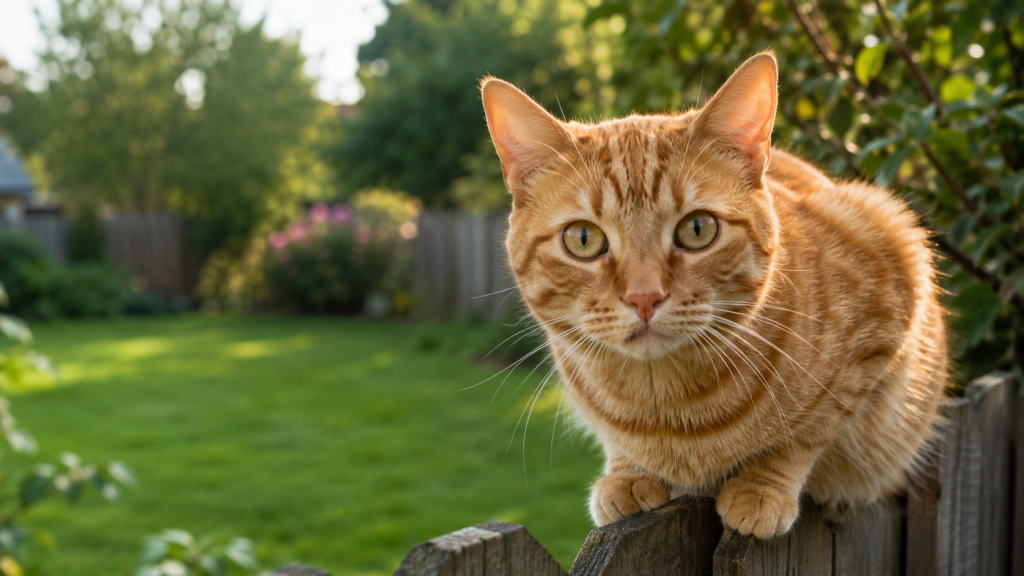
Standard fences often fail because cats climb, jump, and exploit gaps that seem impossibly small. A cat can use a nearby bin, shed roof, stacked planters, low tree branch, or railing corner as a launch point to clear a fence easily.
If fencing is part of your plan, the RSPCA recommends high, close-boarded fences with holes and gaps patched. Specialty cat-proofing systems with angled mesh or netting extensions at the top can make climbing harder. But honestly, for most people, cat-proofing an entire yard perimeter is expensive and difficult. Protecting a specific garden zone with ground barriers and targeted deterrents is usually more realistic and more affordable.
Before you invest in fencing, walk the full route a cat might use. Check under gates, along walls, around compost bins, and near anything a cat could climb. The weakest point is the one that matters.
Motion-Activated Sprinklers
Motion-activated sprinklers are one of the better-supported humane deterrents for open yard areas. They use an infrared sensor to detect movement and release a short burst of water when something cat-sized enters the zone. The idea isn’t to soak the cat. It’s to create a startling, unpleasant association with that specific part of the yard.
These devices work when you’re not home, which is a real advantage. Cats are often most active at twilight and overnight, exactly when you’re not watching. Oregon State University describes motion-activated sprinklers as humane and notes they can be timed for peak activity periods.
There are practical limits. They can’t be used in freezing weather. They need a water source. And while some cats learn to avoid the protected area within a few weeks or months, others may simply route around the sprinkler’s coverage zone. For warm-season garden protection, though, they’re one of the more effective options available.
Do Ultrasonic Deterrents Actually Work?
Ultrasonic devices emit a high-frequency sound when they detect motion, and they’re marketed heavily as cat repellents. The reality is more mixed than the packaging suggests, but they’re not worthless either.
A 2018 study tested ultrasonic deterrents across 18 suburban gardens, identifying 78 cats across 17 garden sites. The devices reduced incursions by resident cats by 46% and cut the duration of visits by 78%. That’s meaningful, but far from total exclusion. The researchers cautioned that the devices don’t prevent all visits.
Cats can also habituate to the sound over time or learn to move around a device. Placement matters, specifically at actual entry points rather than randomly in the middle of the yard. Battery-powered models can underperform as batteries weaken. I’d treat ultrasonic devices as a useful part of a layered approach, not a standalone solution.
Scent Repellents Are Limited and Temporary
This is the category where most garden advice oversimplifies. Citrus peels, coffee grounds, lavender, and commercial sprays are often listed as though they’re equivalent to barriers or motion devices. They’re not.
Oregon State University notes that repellents based on strong scents usually need frequent reapplication, can be costly over time, and lack solid scientific proof that they consistently work. Citrus peel, for example, may deter some cats initially because many cats dislike the smell, but it breaks down quickly, loses potency after rain, and can actually attract slugs, rodents, or raccoons as it decays.
Commercial repellents with ingredients like putrescent egg solids, dried blood, cinnamon, or clove oil are available, but labels must be followed carefully. Some aren’t labeled for use around food crops. University of Maine Extension adds that some products may irritate people, too. The safe way to think about scent repellents is as a temporary, secondary tool. Apply them as directed, reapply after rain, and don’t expect them to solve the problem alone.
Making stronger homemade mixtures is not a good idea. “More smell” can mean more risk, especially around children, pets, edible plants, and drainage.
What You Should Never Use
Some commonly suggested deterrents are genuinely dangerous, and this section matters more than most people realize.
Mothballs
Mothballs still show up in folk advice for keeping cats away, and they need an unambiguous warning: do not use mothballs as a cat deterrent. They are nearly 100% active ingredient, usually naphthalene or paradichlorobenzene, and they slowly release toxic vapor. The National Pesticide Information Center warns that children, pets, and wildlife may mistake them for food. VCA Hospitals states that cats are especially sensitive to mothball toxicity, and as little as one mothball could poison a cat depending on the type and exposure.
If you suspect a cat has ingested a mothball, contact a veterinarian or Pet Poison Helpline immediately. Do not induce vomiting or give anything orally unless directed by a vet.
Essential Oils
Many gardening sources recommend essential oil sprays, but this deserves real caution. The ASPCA states that cats are especially sensitive to essential oils, and ingestion can cause gastrointestinal upset, central nervous system depression, and liver damage. Inhalation can also create respiratory risk. The ASPCA does not recommend using essential oils in areas where pets have access unless supervised or approved by a veterinarian.
If you use any scent-based repellent, stick to commercial products with clear label directions. Don’t apply anything directly to cats, to plants cats may chew, to food crops, to patios where pets rest, or in enclosed areas with poor airflow.
Other Harmful Methods
The RSPCA warns against any deterrent that causes pain, suffering, injury, or distress to cats. That rules out pepper dust, chili powder, ammonia, bleach, glue traps, sharp objects embedded in soil, high-pressure water aimed directly at cats, thrown objects, snares, and poisons of any kind. The standard is discomfort or exclusion, not harm.
Remove What’s Attracting Them
This is easy to overlook but often as effective as any deterrent. The RSPCA’s practical guidance focuses on making a garden less appealing rather than trying to frighten or punish cats.
Stop feeding visiting cats. Any food left outside, including pet food, fallen birdseed, or compost scraps, can attract cats and other wildlife. Remove open water sources if possible. Keep beds watered (damp soil is less appealing than dry, loose soil). Cover sandboxes when not in use. Clear sheltered spots under decks, porches, and dense shrubs that feel safe to a resting cat.
If cats are hunting at your bird feeder, relocate the feeder away from ambush cover. Low bushes near a feeder give a cat a hiding spot; moving the feeder to an open area with clear sightlines reduces the risk to birds.
Cleaning Up After a Cat Visit
Beyond the annoyance, there’s a legitimate health angle to cat feces in garden soil, especially in vegetable beds and children’s play areas.
The CDC explains that infected cats can shed Toxoplasma parasites in feces, contaminating soil. People can accidentally ingest the parasite after gardening or eating unwashed produce from contaminated soil. The parasite doesn’t become infectious until one to five days after shedding, which is why prompt removal helps.
Practical steps: wear gloves when removing cat waste or handling soil that may be contaminated. Wash hands thoroughly with soap and water afterward. Rinse fruits and vegetables from the garden. Cover outdoor sandboxes. Oregon State University adds that cat waste should never be composted or treated like herbivore manure, and it’s especially concerning in vegetable gardens.
For urine, flush the area with plenty of water to dilute the smell and reduce potential plant damage. Don’t use bleach, boiling water, or harsh chemicals in garden soil. These can damage plants, harm soil biology, and still fail to stop the cat from returning.
This isn’t a reason to panic or rip out your garden. Not every visiting cat is carrying Toxoplasma. But it’s a reason to take basic precautions, especially with edible beds and spaces where kids play.
Dealing with Neighborhood, Stray, or Feral Cats
It helps to think about what kind of cat you’re dealing with, because the options differ.
If the cat is clearly owned and you know the neighbor, the RSPCA suggests politely asking whether the cat is neutered and whether they can provide a suitable toilet area in their own garden. This works best for recurring issues like defecation in your beds or fighting with your resident cat. Keep the conversation practical, not confrontational.
For stray or feral cats, simply removing one cat often doesn’t solve the problem long-term. If food and shelter remain, other cats may move in. Humane organizations recommend connecting with local trap-neuter-return (TNR) programs. Spaying or neutering through TNR can help reduce nuisance behaviors like yowling and spraying. Contact your local animal control, shelter, or community cat program rather than attempting to trap and relocate cats yourself.
If a visiting cat appears injured, severely thin, lethargic during the day, aggressive in an unusual way, or if you find kittens without an obvious mother, contact local animal services. And if you’re sealing gaps, blocking entry points under decks, or closing off sheds, double-check that no cats or kittens are trapped inside first.
Protecting Your Indoor Cat from Outdoor Visitors
This part often gets missed in yard-focused articles. A visiting outdoor cat can cause real stress for your indoor cat, even if the two never physically meet.
Cats are territorial. Seeing, hearing, or smelling an unfamiliar cat outside can trigger redirected aggression, urine marking, hiding, door-dashing, and anxiety in a resident cat. The RSPCA recommends microchip cat flaps to prevent intruders from entering the home, providing an indoor litter tray so your cat can stay inside if it feels unsafe, and blocking visual access at low windows where encounters happen.
If your indoor cat has had a fight through a screen or a sudden behavior change after seeing an outdoor cat, that’s worth monitoring. Persistent stress or injuries from an outdoor cat encounter may need veterinary attention.
Putting It All Together
The evidence-backed approach isn’t choosing one repellent and hoping. It’s layered: remove attractants, install physical barriers on the surfaces cats are using, add a motion-activated deterrent at the main entry point or problem area, and treat scent repellents as a minor supplement. For recurring free-roaming cats, involve neighbors or local animal services.
Match the method to the behavior. Cats toileting in beds need ground barriers. Cats entering through one gap need that gap closed. Cats spraying near doors need boundary deterrents and odor removal. Cats ambushing birds need feeder relocation and cover removal.
None of this has to be adversarial. The goal is a yard that’s simply not worth a cat’s time, while keeping the cats, your own pets, your garden, and local wildlife safe.
References
- RSPCA — Cats and Gardens — Guidance on humane garden deterrents, legal protections, and neighbor communication.
- Oregon State University Extension Service — Evidence on physical barriers, scent repellents, motion sprinklers, and cleanup.
- University of Maine Cooperative Extension — Chicken wire barriers, mulch, and timing of cat activity.
- Humane World for Animals — Motion-activated sprinklers, ultrasonic devices, and TNR guidance.
- ScienceDirect (2018 Ultrasonic Deterrent Study) — Field study on ultrasonic device efficacy in suburban gardens.
- ASPCA — Essential Oil Toxicity — Warnings on essential oil sensitivity in cats.
- National Pesticide Information Center — Mothballs — Health risks of mothball exposure to pets and people.
- CDC — Toxoplasmosis — Outdoor soil contamination risks and prevention from cat feces.