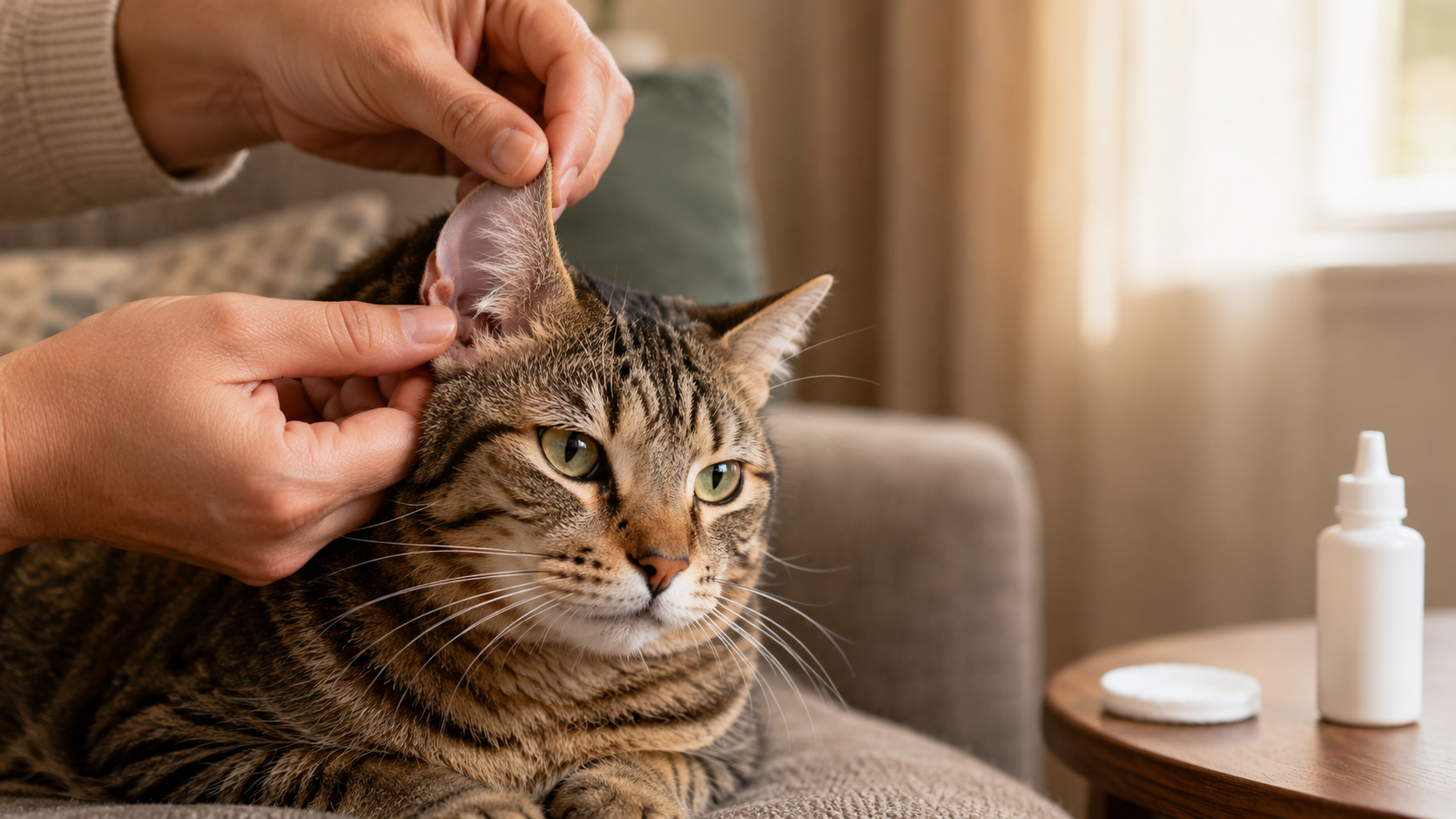
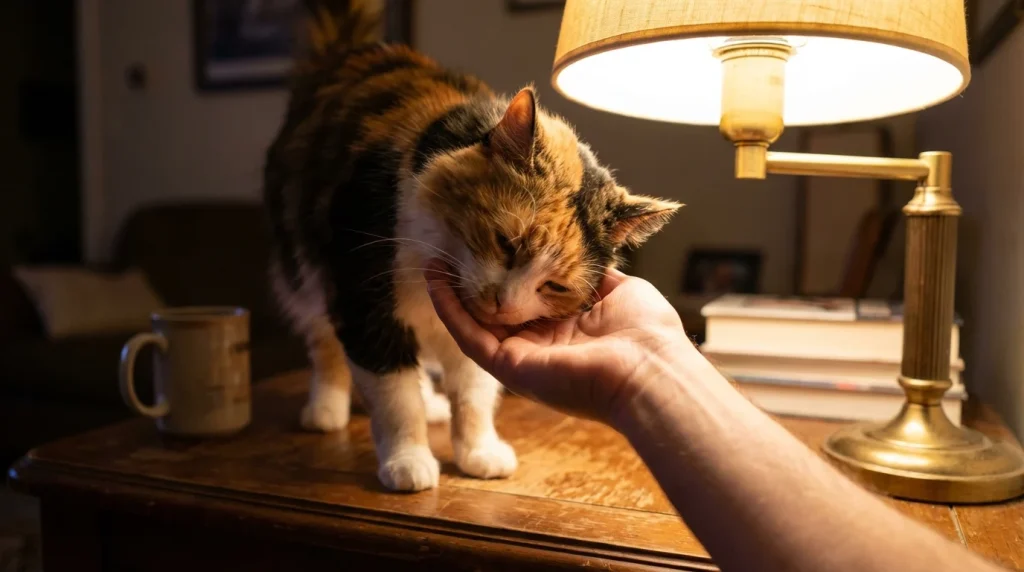
It’s a common scene for many of us. You get up for a glass of water, and a small shadow follows. You sit on the sofa, and a furry companion immediately claims your lap. When your cat seems “obsessed” with you, it’s easy to wonder if their intense affection is normal or a sign of something more.
Key Takeaways
- A cat’s “obsession” is often a sign of a healthy, secure bond where they view you as a source of safety and comfort, much like a human child views a parent.
- Specific behaviors like head-butting, kneading, and slow blinking are a sophisticated language of trust and a declaration that you are part of their family.
- It is crucial to distinguish healthy attachment from separation anxiety, which involves distress signals like destructive behavior or frantic, mournful crying when you leave.
- Any sudden change in behavior, such as a normally independent cat becoming extremely clingy, warrants a veterinary visit to rule out underlying medical issues or pain.
The Science Behind Your Cat’s Strong Bond
That intense connection you feel with your cat isn’t just in your head. It’s a complex bond rooted in science, shaped by early life experiences and their unique view of you as a central figure in their world. In my experience, understanding the “why” behind their behavior makes every head-butt and purr even more meaningful.
1. How Early Socialization Creates a Lifelong Bond
The foundation for a deep bond is often laid when a cat is very young. Kittens have a critical socialization period between two and seven weeks of age. During this window, gentle and frequent handling teaches them that humans are a source of comfort and safety, not something to be feared. While people sometimes use the term “imprinting” to describe this, the process in cats is more flexible than true imprinting seen in birds. This means that even older shelter cats can and do form profound attachments to new owners, though it may take more time and patience to build that trust.
2. Your Role as a “Secure Base” for Your Cat
The most powerful explanation for your cat’s devotion comes from attachment theory. A groundbreaking 2019 study confirmed that about 65% of cats form a “secure attachment” with their owners. This is strikingly similar to the attachment style seen in human infants. What this means for your cat is that you are not just a food dispenser, you are their “secure base”. You are a source of safety that gives them the confidence to explore the world. A cat that stays close to you is often just checking in with its source of security before venturing out again.
3. Why Some Cats Are More Independent Than Others
It is important to remember that cats exist in a fascinating space between their solitary wild ancestors and their domesticated, social present. This duality helps explain the full spectrum of personalities, from the constant “Velcro cat” to the more reserved companion. Some scientific studies, like one from 2015, have argued that cats do not rely on their owners for safety in the same way dogs do, suggesting their instincts for self-preservation in strange situations are stronger. This scientific debate highlights why some cats show a mix of intense affection and aloof independence. Their attachment is real, but it is filtered through a unique evolutionary blueprint.
What Behaviors Show a Healthy, Secure Bond?
Your cat has a whole dictionary of behaviors to show you they trust and love you. Learning to read these signals can transform your understanding of their “obsession” into a daily conversation of affection. These are the signs I have found to be the clearest indicators of a happy, well-attached cat.
1. Head-Butting and Rubbing to Mark You as Family
When your cat rubs its cheeks and forehead against you, it is doing much more than asking for a scratch. This behavior, called bunting, deposits pheromones from special facial glands onto you. This is a deliberate act of scent marking that labels you as a safe and essential part of their social group. By creating a shared “group scent,” your cat is reinforcing that you belong together, which is deeply reassuring for them. It is their way of saying, “You are family”.
2. Following You From Room to Room
A cat that follows you everywhere, even into the bathroom, is a classic example of your role as a “secure base” in action. By staying near their trusted caregiver, the cat feels less anxious and more confident to handle whatever the day brings. This behavior is also learned over time, as they come to associate you with all good things like food, play, and warmth. They are looking to you for companionship and for cues about what might happen next.
3. Kneading and Purring to Show Comfort
Kneading, or “making biscuits,” is a behavior retained from kittenhood. Kittens instinctively knead their mother to stimulate milk flow, so when an adult cat does this on your lap, it is a sign of deep trust and contentment. It means they view you as a source of ultimate comfort and safety, much like a parental figure. While purring often accompanies kneading as a sign of happiness, cats also purr to soothe themselves when stressed or in pain, so context is always important.
4. Slow Blinking to Communicate Trust
A slow, deliberate blink from a relaxed cat is widely considered the feline equivalent of a smile or blowing a kiss. In the animal world, closing your eyes is a moment of vulnerability. By doing this in your presence, your cat is signaling that it feels completely safe and comfortable with you. Research has even shown that humans can reciprocate the gesture to build rapport and show their own non-threatening intentions.
5. Making Special Meows Just for You
Interestingly, adult cats rarely meow at each other. They have adapted this behavior specifically to communicate with humans. A cat that is especially bonded with one person may even develop a unique set of chirps, trills, and meows that are reserved just for that individual. In my own experience, this is one of the most rewarding parts of the feline-human bond. It is like sharing a secret language to ask for food, playtime, or simple companionship.
6. Exposing Their Belly as a Sign of Safety
A cat’s abdomen is its most vulnerable area, protecting all of its vital organs. When a cat rolls over and shows you its belly, it is the ultimate display of trust and relaxation. This gesture communicates that the cat feels completely safe and secure in your presence. It is crucial to recognize this as a sign of trust, not always an invitation for a belly rub. Touching their belly can sometimes violate that trust and be met with defensive claws.
How to Tell Healthy Affection From Separation Anxiety
While a strong bond is a joy, it is vital to know when intense affection crosses the line into anxious distress. A securely attached cat is happy with you but also calm when alone. A cat with separation-related distress experiences genuine panic when you are not there. The difference is not about the amount of love, but about the cat’s underlying emotional state.
1. Constant Anxious Pacing vs. Calm Following
A securely attached cat follows you out of curiosity and then settles down in the same room. A potential sign of anxiety is constant, anxious shadowing where the cat cannot seem to settle. This may escalate to them physically blocking doorways or becoming agitated when they see you preparing to leave, such as when you pick up your keys.
2. Excessive or Mournful Crying
Happy cats greet you with pleasant chirps and meows. A key sign of separation anxiety is excessive, mournful, or frantic howling that occurs specifically when you leave, are about to leave, or are just behind a closed door. This vocalization is a cry of distress, not a call for attention.
3. Destructive Behavior When You Are Gone
A cat that is calm when alone will rest, play, or look out the window. An anxious cat may exhibit destructive behaviors when left by itself. This can include scratching furniture, knocking items off shelves, or other actions that are out of character and occur only in your absence.
4. Urinating on Your Bed or Belongings
A consistent litter box habit is a sign of a healthy cat. Urinating or defecating outside the litter box, especially on items that smell strongly of you like your bed or laundry, is a major red flag for separation anxiety. This is not an act of spite. It is an anxious attempt by the cat to self-soothe by mixing its scent with yours.
5. Over-Grooming to the Point of Hair Loss
Normal self-grooming keeps a cat’s coat healthy. A cat suffering from anxiety may over-groom to the point of creating bald patches or skin sores, a condition known as psychogenic alopecia. This compulsive behavior is often focused on the belly, inner legs, or flanks and is a physical manifestation of psychological distress.
Could a Medical Issue Be the Cause of Sudden Clinginess?
Before assuming that clinginess is purely behavioral, it is absolutely essential to rule out a medical cause. Cats are masters at hiding pain and illness, so a change in behavior is often the first and only clue that something is wrong. If you notice any sudden changes, a trip to the veterinarian is always the first step.
1. Sudden Neediness in a Previously Independent Cat
If a cat that was once aloof suddenly becomes your shadow, it could be a sign of illness or pain. As cats age, they can experience sensory decline like failing vision or hearing. This can make them feel insecure and cause them to seek you out for comfort and security.
2. Changes in Eating or Drinking Habits
A significant increase or decrease in appetite or thirst is a classic warning sign for numerous conditions like diabetes, hyperthyroidism, or kidney disease. A cat that refuses to eat for more than a day requires immediate veterinary attention, as it is at risk for a serious liver condition.
3. Litter Box Avoidance
While inappropriate elimination is a common sign of anxiety, it is also a primary symptom of painful medical issues. These can include urinary tract infections (UTIs), bladder stones, or even arthritis that makes climbing into the litter box difficult. Never punish a cat for this behavior, always investigate the cause.
4. Changes in Grooming Habits or Energy Levels
A cat that suddenly stops grooming itself, resulting in a matted coat, often feels too sick or is in too much pain to perform this normal behavior. Conversely, hyperactivity, restlessness, or increased vocalization can be signs of a metabolic condition like hyperthyroidism.
How to Foster a Balanced and Healthy Bond
If you and your vet have ruled out medical issues and separation anxiety is the concern, you can take steps to build your cat’s confidence. The goal is not to lessen your bond but to make your cat feel secure enough to be calm and happy, whether you are home or away.
1. Enriching Your Home to Build Confidence
Many anxiety issues stem from a boring environment where the owner is the only interesting thing. You can counter this by making your home a “resource-rich” territory. This includes providing vertical space like cat trees, offering a variety of scratching posts, and using puzzle feeders to engage their hunting instincts. Even setting up a bird feeder outside a window can provide hours of “cat TV” and mental stimulation.
2. Using Positive Reinforcement to Reward Independence
You can gently shape your cat’s behavior with positive reinforcement. When your cat is demanding and clingy, try to ignore the behavior. However, when you see them resting calmly in their own bed or playing independently with a toy, reward that behavior with quiet praise or a small treat. This teaches your cat that calm independence is a desirable and rewarded state.
3. Keeping Hellos and Goodbyes Calm
Avoid making a big, emotional fuss when you leave or return home. Dramatic goodbyes and overly excited greetings can increase a cat’s anxiety around your comings and goings. By making these events a normal, uneventful part of the day, you signal to your cat that being apart is not a cause for alarm.
Final Thoughts
The “obsessed” cat is often just speaking a language of deep trust and security, viewing you as the center of its safe world. By learning to distinguish this healthy attachment from signs of anxiety or illness, you can ensure the powerful bond you share is a source of joy and comfort for you both.
Resources
- Cats, like children and dogs, develop attachments to their caregivers – https://news.oregonstate.edu/news/cats-children-and-dogs-develop-attachments-their-caregivers-study-shows
- 10 Unmistakable Signs Your Cat Has Imprinted On You – Cats.com – https://cats.com/signs-your-cat-has-imprinted-on-you
- Feline Scent-Marking: Cat Communication – TVMF – Texas Veterinary Medical Foundation – https://www.tvmf.org/articles/feline-scent-marking-cat-communication/
- 8 Signs of Separation Anxiety in Cats And What to Do About Them – https://www.hickoryvet.com/services/cats/blog/8-signs-separation-anxiety-cats-and-what-do-about-them
- 5 Signs that Could Indicate Something is Wrong with Your Cat – Rau Animal Hospital – https://www.rauanimalhospital.com/services/cats/blog/5-signs-could-indicate-something-wrong-your-cat
- Why Is My Cat Suddenly Clingy? Velcro Cats Explained – Kinship – https://www.kinship.com/cat-behavior/clingy-cat
- Environmental Enrichment for Indoor Cats | The Drake Center For Veterinary Care – https://www.thedrakecenter.com/resources/materials/cats/environmental-enrichment-indoor-cats
- Tips to Help Cats & Dogs with Separation Anxiety – Purina – https://www.purina.com/articles/dog/behavior/understanding-dogs/tips-separation-anxiety