
Finding little rice-like pieces near your cat’s rear, in the litter box, or on their bedding is the kind of discovery that makes most people search fast. It feels gross, confusing, and a little alarming. The natural question is, “Can I handle this at home, or does my cat need the vet?”
The safest answer is this: tapeworms can sometimes be treated at home with a cat-appropriate tapeworm dewormer, but they should not be treated with home remedies. Food tricks, garlic, vinegar, coconut oil, pumpkin seeds, or waiting for the worms to “clear out” are not reliable tapeworm treatments for cats.
For me, the safer way to think about it is simple. The medicine removes the tapeworm. Flea and prey control help stop it from coming back. If you only handle one side of that problem, the same cat may look “treated” for a while and then start showing segments again.
Can You Treat Tapeworms in Cats at Home?
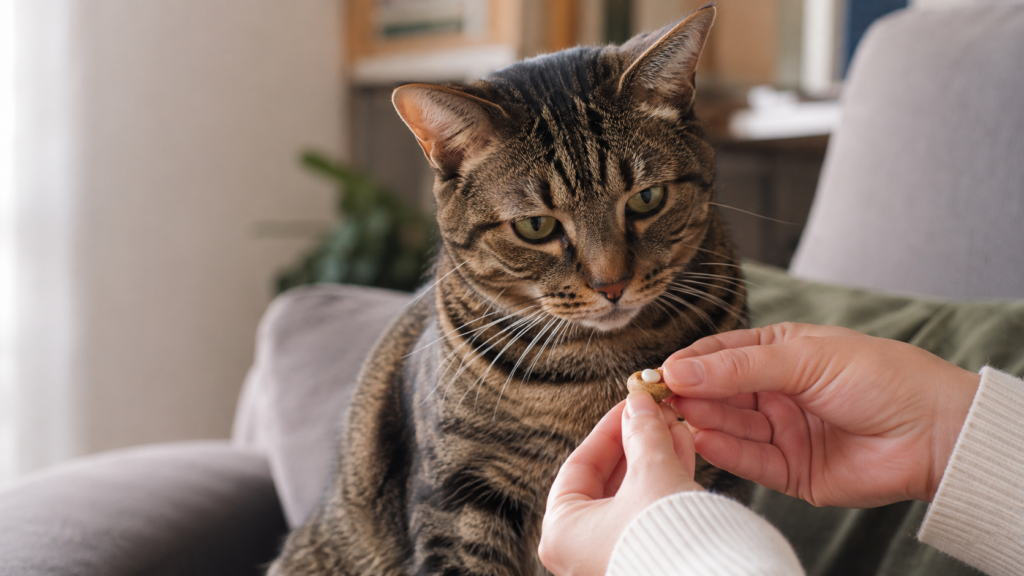
Yes, some cats can be treated at home, but only with a proper tapeworm-active medication made for cats and used exactly as directed. The main medication used for common feline tapeworms is praziquantel. Some veterinary sources also name epsiprantel as an effective tapeworm treatment.
That does not mean every “cat dewormer” works for tapeworms. Some dewormers target roundworms or hookworms, not tapeworms. This is one of the easiest mistakes to make because the package may simply say “dewormer,” while the parasite you are seeing needs a different active ingredient.
“At home” should mean giving a safe, cat-labeled product or veterinarian-prescribed medication at home. It should not mean guessing a dose, using a dog product, cutting down a dog flea treatment, or trying a natural remedy from a comment thread.
I’d be more cautious if the cat is a kitten, senior, pregnant, nursing, weak, underweight, vomiting, not eating, heavily flea-infested, or already on medication. In those cases, the question is not just “what kills tapeworms?” It is “what is safe for this specific cat?”
What Tapeworms Usually Look Like in Cats
Many owners first notice tapeworms as small white or cream-colored pieces that look like rice grains or cucumber seeds. These pieces are called proglottids, which are segments shed by the adult tapeworm.
You may see them around your cat’s anus, stuck to fur under the tail, on bedding, or in fresh stool. Sometimes they move when fresh, which can make them look like tiny larvae. When they dry out, they may look more like sesame seeds.
This is different from seeing long, spaghetti-like worms. Long worms may point to a different parasite, such as roundworms. Diarrhea, vomiting, dull coat, weight loss, or appetite changes can happen with parasites, but those signs are not specific enough to diagnose tapeworms on their own.
A useful practical step is to take a clear photo or save a small sample if you can do so safely. That gives your vet something concrete to work with, especially because tapeworm eggs are not always found on a routine fecal test.
Why Cats Get Tapeworms in the First Place
Most cats get the common flea tapeworm, Dipylidium caninum, by swallowing an infected flea while grooming. The cat is not usually infected just because a tapeworm segment is lying in the litter box. The flea is the key middle step.
That detail matters because it changes what “treatment” means. If a cat has flea tapeworms, the worm medicine may remove the current adult tapeworm, but it does not remove fleas from the home. If fleas are still on your cat, another pet, bedding, carpets, or furniture, reinfection can happen.
Cats can also get some tapeworms by eating infected prey, especially rodents. This is more relevant for outdoor cats, barn cats, cats with hunting access, or homes where rodents sometimes get inside.
Indoor cats are not automatically safe from tapeworms. Fleas can enter on other pets, in shared buildings, through the environment, or after a prevention lapse. Some cats groom so efficiently that you may not see live fleas, even though flea exposure is still happening.
The Safe At-Home Treatment Approach
The safe home approach has two parts: use a tapeworm-active dewormer for the cat, and control the exposure source that caused the infection.
For the medication side, praziquantel is the key ingredient owners are most likely to encounter. It is used to remove common feline tapeworms, including flea-associated tapeworms and some prey-associated tapeworms. Depending on the product and country, it may be available through a veterinarian, as an injection at a clinic, as a tablet, or in certain approved cat-labeled products.
Do not give a dog dewormer to a cat unless your veterinarian specifically tells you to. Do not use a dewormer simply because it says “worms” on the front. The active ingredient and the species label matter.
Some cat praziquantel tablets may be given by mouth or crumbled into food according to label directions, and fasting is not generally needed for those products. But this is still not a reason to improvise. Follow the specific product label, and ask a vet if the cat is young, weak, sick, pregnant, nursing, or hard to medicate.
One detail owners often miss is that you may not see dead tapeworms come out after treatment. The tapeworm can be digested in the intestine, so the lack of a dramatic “worm coming out” moment does not automatically mean the medicine failed.
Why Flea Control Is Part of Tapeworm Treatment
If your cat’s tapeworm came from fleas, flea control is not a side task. It is part of the actual solution.
The adult flea lives on the pet, but flea eggs and immature stages can be in the home environment. Bedding, carpets, furniture, cracks in flooring, and favorite sleeping spots can all matter. That is why a one-time bath or a quick litter box clean does not solve a flea tapeworm problem.
A better home plan usually includes making sure every pet in the household has species-appropriate flea control, washing bedding, vacuuming regularly, and paying attention to areas where pets sleep. If one pet has fleas, the household should be treated as a shared flea environment, not as one isolated cat problem.
Be especially careful with flea products. Dog flea and tick products can be dangerous for cats, and some ingredients used in dog products should not be used on cats. Never use a “small amount” of a dog product on a cat. If a dog in the home is treated with a product that is unsafe for cats, ask your veterinarian how to prevent your cat from grooming or contacting the dog until it is safe.
What If the Tapeworms Come Back?
If tapeworm segments come back after treatment, reinfection is often more likely than true medication failure. This is especially true if flea control was incomplete or the cat keeps hunting rodents.
A cat can be treated, swallow another infected flea later, and start the cycle again. In a home with an active flea problem, it may look like the dewormer “didn’t work,” when the real issue is that the cat was exposed again.
The same logic applies to hunting cats. A cat that keeps catching and eating prey may keep encountering prey-associated tapeworms. Flea prevention alone may not fix that pattern.
This is where I’d stop guessing and look at the full picture. Is every pet on safe flea control? Has bedding been washed? Are you still seeing flea dirt or scratching? Does the cat go outside? Are there rodents around the home? Did you use a dewormer that actually treats tapeworms?
If segments continue after proper treatment and exposure control, contact a veterinarian. The cat may need a different product, confirmation of the parasite, or evaluation for another problem.
Signs That Need a Veterinarian
A cat with visible rice-like tapeworm segments but normal appetite, normal energy, and no other concerning signs still needs treatment. It may not be an emergency, but it should not be ignored.
Contact a veterinarian sooner if your cat is a kitten, senior, pregnant, nursing, weak, underweight, or has a known health condition. These cats have less room for error, and “just try something at home” is not the safest path.
You should also call a vet if your cat has repeated vomiting, persistent diarrhea, blood or mucus in stool, pale gums, dehydration, weight loss, poor appetite, lethargy, a heavy flea burden, or a generally unwell appearance. Those signs are not specific to tapeworms, and some may point to other parasites or illnesses.
Kittens with fleas deserve extra caution. Fleas feed on blood, and a heavy flea infestation can be harder on small or fragile cats. If a kitten has worms and fleas, I would not treat that like a simple over-the-counter problem without veterinary guidance.
Home Remedies to Avoid
Garlic should not be used as a cat dewormer. It is toxic to cats and is not a safe workaround for tapeworm treatment. The same caution applies to “natural parasite cleanse” advice that tells you to mix garlic into food or use tiny doses because it is “natural.”
Pumpkin seeds, coconut oil, vinegar, essential oils, and special diets should not be presented as proven tapeworm treatments for cats. They do not replace a tapeworm-active medication, and they do not solve the flea or prey exposure that caused the infection.
The danger with home remedies is not only that they may fail. They can delay effective treatment, allow reinfection to continue, or expose the cat to something unsafe. In cat health topics, “natural” is not the same as harmless.
If you want to support your cat at home, focus on the parts that are actually useful: use the right medication, clean the environment, control fleas safely, reduce hunting exposure where possible, and get veterinary help when the cat’s age, health, or symptoms make the situation less straightforward.
Can Humans Get Tapeworms From Cats?
Humans can rarely get the common flea tapeworm, but the route matters. People do not usually get it from petting a cat or touching a dried segment. Infection happens when a person swallows an infected flea.
This is why children are mentioned more often in human cases. A child is more likely to have close contact with flea-infested pets or contaminated bedding and accidentally ingest a flea.
The practical response is calm hygiene, not panic. Wash hands after litter box cleaning, clean bedding, control fleas, and keep young children away from flea-infested pet areas until the problem is handled. If a child passes rice-like segments or you suspect exposure, contact a physician.
For cat owners, the main takeaway is still the same: flea control protects the cat and reduces the small human risk at the same time.
How to Think About Litter Box Cleaning
Cleaning the litter box is still sensible, but it is not the main cure for flea tapeworms. Removing visible segments, scooping waste, washing bedding, and keeping sleeping areas clean are all good home-care steps. They make the environment cleaner and help you monitor whether segments are still appearing.
But bleach, disinfectant, or obsessive litter box scrubbing will not remove adult tapeworms from your cat’s intestine. It also will not break the flea life cycle by itself.
For flea-associated tapeworms, the more useful home cleaning focus is flea control: vacuuming, washing washable bedding, treating pets appropriately, and staying consistent long enough to deal with immature flea stages in the environment.
If your cat hunts, cleaning also means thinking about prey access. Rodent control, safer indoor routines, and supervised outdoor time may matter more than another round of litter box disinfecting.
What Owners Often Misunderstand
The biggest misunderstanding is thinking tapeworms are only a litter box problem. For many cats, they are a flea problem showing up as a worm problem.
Another common mistake is using the wrong dewormer. A product that helps with roundworms or hookworms may do nothing for tapeworms. If the active ingredient does not target tapeworms, the cat may keep shedding segments even though the owner feels like they “treated worms.”
Owners also sometimes expect to see a whole dead worm after treatment. In many cases, that does not happen. The worm may be broken down inside the intestine. What matters more is whether the visible segments stop and whether reinfection risks are controlled.
The other misunderstanding is thinking an indoor cat cannot get tapeworms. Indoor cats can still be exposed to fleas, especially in multi-pet homes or places where flea prevention has lapsed. If you see tapeworm segments on an indoor cat, do not dismiss fleas just because your cat does not go outside.
A Practical At-Home Plan
Start by confirming what you are seeing. Rice-like or sesame-like pieces around the anus, bedding, or stool are a classic tapeworm clue. If possible, take a photo before cleaning them up.
Next, choose only a cat-labeled tapeworm medication or contact your vet for the right product. Check that the product treats tapeworms, not just “worms” in general. Follow the label exactly.
Then look for the source. Check for fleas, flea dirt, scratching, overgrooming, and other pets with flea signs. Make sure all household pets have species-appropriate flea control. Wash bedding and vacuum areas where pets rest.
If your cat hunts, reduce prey access where you realistically can. For some cats, that may mean more indoor time, a safer enclosed outdoor setup, or better rodent control around the home.
Finally, monitor. If your cat seems well and the segments stop, that is reassuring. If segments continue, return quickly, or your cat has other symptoms, call your vet instead of repeating random products.
Final Thoughts
Tapeworms in cats are treatable, but the useful answer is not “try a home remedy.” The useful answer is to use a real tapeworm treatment for cats and deal with the fleas or prey exposure that caused the infection.
A healthy adult cat with classic tapeworm segments may be managed at home with the right cat-labeled product, but kittens, fragile cats, sick cats, pregnant or nursing cats, and cats with repeated infections deserve veterinary guidance.
I would not panic over a few rice-like segments in an otherwise normal cat, but I also would not ignore them. Treat the worm, treat the source, and get help if the cat’s symptoms or situation make the answer less simple.
References
- CAPC: Dipylidium caninum
- VCA Hospitals: Tapeworm Infection in Cats
- Merck Veterinary Manual: Tapeworms in Dogs and Cats
- Cornell Feline Health Center: Gastrointestinal Parasites of Cats
- Cornell Feline Health Center: Fleas
- FDA: Safe Use of Flea and Tick Products in Pets
- DailyMed: Praziquantel Tablets for Cats Label
- CDC DPDx: Dipylidiasis