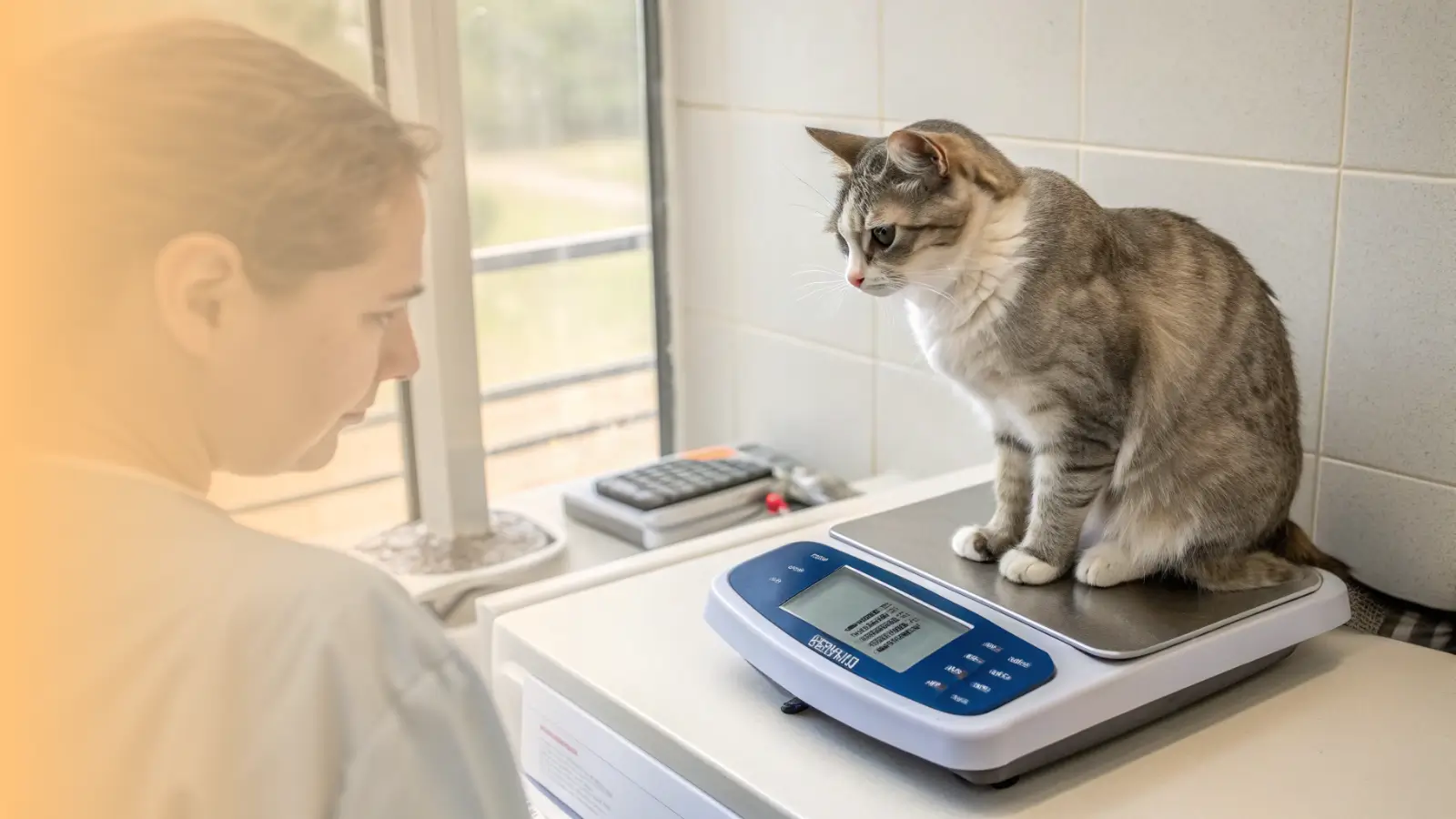
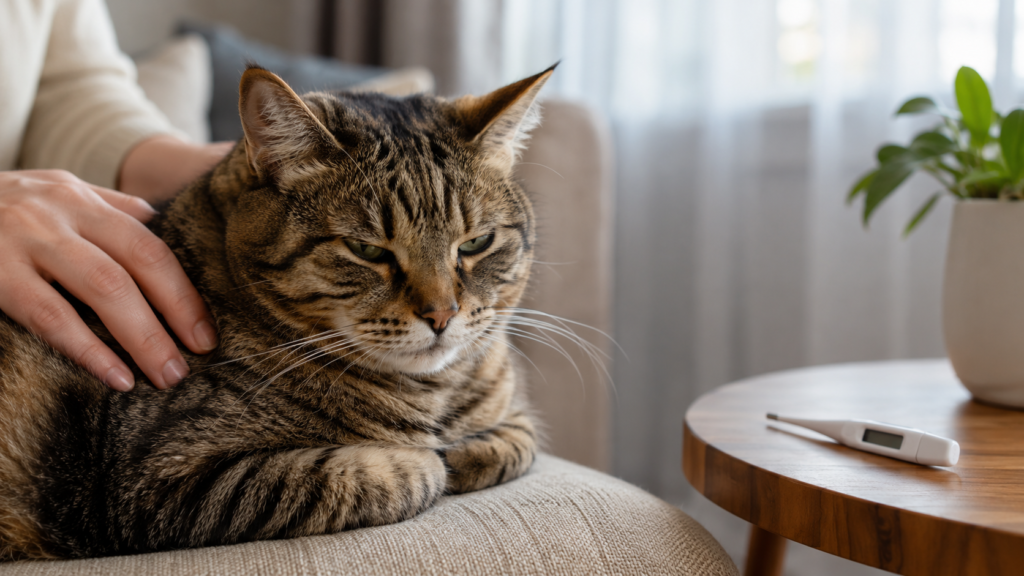
A cat with a fever can be hard to spot because cats are very good at looking “almost normal” when something is wrong. One cat may hide under the bed and refuse food. Another may simply seem quieter, warmer to the touch, or less interested in the usual routine.
The tricky part is that you cannot reliably tell if a cat has a fever just by touching their ears, paws, or nose. Those clues can make you suspicious, but they do not confirm a fever. The only dependable way to know is to take your cat’s temperature, usually with a rectal thermometer, or have a veterinary team do it safely.
For me, the safer way to think about it is this: a thermometer tells you whether your cat’s temperature is abnormal, but your cat’s behavior tells you how worried you should be. A warm-feeling cat who is still eating, breathing normally, and acting like herself is different from a warm-feeling cat who is hiding, not eating, panting, vomiting, or collapsing.
What Temperature Counts as a Fever in Cats?
A cat’s normal rectal temperature is warmer than a human’s. A typical normal range is about 100.5°F to 102.5°F (38.1°C to 39.2°C).
A temperature above that range is abnormal, but there is some nuance. Many owner-facing veterinary sources use above 102.5°F as the point where fever becomes a concern. Some internal medicine sources use about 103°F (39.5°C) or higher for true fever, partly because stress and struggling can raise a cat’s temperature for a short time.
That means one number should not be treated like a perfect cutoff. A reading around 103°F deserves attention, especially if your cat is acting sick. A reading above 104°F is more urgent and should not be dismissed as “probably stress.” A temperature above 106°F is critical and can be dangerous.
Low temperature matters too. If your cat’s temperature is below 99°F, that is also an emergency concern. Owners often focus only on fever, but a very low temperature can also signal a serious problem.
Can You Tell by Touching Your Cat?
You can suspect something is wrong by touch, but you cannot confirm a fever that way.
Warm ears, warm paws, a dry nose, or a warmer-than-usual body may make you pause, especially if you know your cat’s normal feel. But those signs are weak clues. A cat’s ears and nose can change with room temperature, sleep, grooming, stress, activity, or where they have been lying.
This is where many generic cat articles get too confident. They make it sound as if a dry nose or hot ears are enough to tell that a cat has a fever. They are not. A cat can feel warm without having a true fever, and a sick cat may not feel dramatically hot to your hand.
I would treat touch as a reason to look closer, not as proof. If your cat feels unusually warm and is also hiding, eating less, grooming less, breathing oddly, or acting dull, that combination matters much more than warm ears alone.
Signs That May Go Along With Fever
A cat with a fever may act generally unwell rather than showing one obvious sign. Many cats become quieter, sleep more, hide, lose interest in play, or seem less responsive than usual.
Appetite changes are especially important. A feverish cat may eat less or refuse food. This is not something to ignore for days, because cats that do not eat properly can develop serious complications, including fatty liver disease. If your cat has not eaten normally for about 24 hours, veterinary guidance is the safer choice.
You may also notice poor grooming. A cat who usually keeps a smooth coat may look messy, greasy, or fluffed up. Some cats sit hunched, avoid being touched, or seem uncomfortable when moving. Others become unusually clingy or irritable.
Other signs can depend on the cause. Sneezing, nasal discharge, eye discharge, mouth ulcers, coughing, wounds, swelling, vomiting, diarrhea, litter box changes, dehydration, or pain can all appear with illnesses that may involve fever. None of these signs tells you the exact cause at home, but they help show that the problem is more than “my cat feels warm.”
How to Take a Cat’s Temperature Safely
The most accurate at-home method is usually a digital rectal thermometer. This is the method veterinarians commonly rely on because it gives a better reading of core body temperature.
That said, taking a cat’s temperature at home is not always safe or realistic. Some cats tolerate it. Many do not. If your cat is frightened, painful, aggressive, weak, or struggling hard, do not force it. A forced temperature check can injure your cat, stress them further, or get you bitten or scratched.
If you do try, use a digital thermometer, lubrication, and gentle handling. Many cats need one person to hold them calmly while another takes the reading. The thermometer should never be pushed against resistance. If your cat clenches, panics, or fights, stop.
This is one of those moments where I would rather be slightly less “DIY” and more cautious. If you cannot take the temperature calmly, let your vet clinic do it. The goal is not to win a wrestling match with a sick cat. The goal is to get useful information without making the situation worse.
Are Ear Thermometers Reliable for Cats?
Ear thermometers can be less stressful, but they are not as dependable as many owners hope.
To work well, an ear thermometer has to be positioned correctly near the eardrum. That can be difficult in cats because ear canals vary, and wax, hair, debris, inflammation, or poor placement can affect the reading. Some cats also dislike ear handling, especially if their ears are painful.
Recent veterinary research suggests tympanic, or ear-based, temperature measurement may be less stressful than rectal measurement in cats, but it can also produce misleading high readings in cats whose temperature is normal or low. That matters because a false reading could make an owner panic or misunderstand what is happening.
For a home article, the practical message is simple: an ear thermometer may give a clue, but it should not be treated as equal to a rectal temperature. If the reading is high, your cat seems ill, or you are unsure whether the technique was right, call your veterinarian.
Fever, Stress, and False High Readings
Cats can run hotter when they are stressed, frightened, restrained, or overexcited. This is one reason fever in cats is not always as simple as “above one number equals one diagnosis.”
If your cat struggled during the temperature check, the reading may be temporarily higher than it would be at rest. Some veterinary sources note that cats may reach around 103°F from stress alone. A short rest in a calm environment and a careful recheck may help clarify a borderline reading.
But this caveat has limits. A temperature above 104°F is less likely to be explained by stress alone, especially if your cat also seems sick. A high temperature with lethargy, poor appetite, hiding, vomiting, diarrhea, breathing changes, collapse, or weakness should not be brushed off as nerves.
The practical balance is this: do not panic over one slightly high reading from a stressful struggle, but do not use stress as a reason to ignore a sick cat.
Fever Is Different From Overheating
This distinction matters because owners often use “fever” to describe any hot cat.
A true fever happens when the body’s internal thermostat is reset higher, usually because the immune system is responding to infection, inflammation, immune disease, some medications, toxins, or another illness. The body is trying to run at a higher temperature.
Overheating, or hyperthermia, is different. The body is too hot because it cannot get rid of heat properly, or because something has driven the temperature up outside the normal fever process. Heatstroke is one example. A cat trapped in a hot room, garage, shed, greenhouse, car, or poorly ventilated area may overheat quickly.
This difference changes the urgency. A feverish cat needs veterinary guidance because there may be an underlying illness. A cat with possible heatstroke needs immediate veterinary help.
Signs that make overheating more concerning include heavy panting, drooling, weakness, collapse, vomiting, diarrhea, red gums, confusion, seizures, or a cat who seems unable to settle. If heatstroke is possible, move your cat to a cool, ventilated area, use cool water rather than ice-cold water, offer small sips of water without forcing drinking, and contact a veterinarian or emergency vet right away.
When Should You Contact a Vet?
Contact a veterinarian if your cat’s temperature is above the normal range and your cat is acting unwell. I would be more cautious if the reading is around 103°F or higher, and I would treat 104°F or higher as urgent.
You should also contact a vet if your cat has not eaten normally for about 24 hours, is hiding more than usual, seems very lethargic, has vomiting or diarrhea, shows signs of pain, has wounds or swelling, has nasal or eye discharge, or seems dehydrated. Fever plus any of these signs is more concerning than a warm-feeling cat alone.
Some signs should push you toward emergency care rather than watchful waiting. These include open-mouth breathing, labored breathing, collapse, seizures, pale or blue gums, extreme weakness, repeated vomiting, severe diarrhea, suspected heatstroke, or a temperature above 104°F.
A normal temperature does not always mean your cat is fine. If your cat is breathing strangely, not eating, hiding, collapsing, or acting suddenly very different, veterinary care is still the safer choice.
Kittens, Seniors, and Cats With Health Problems Need Extra Caution
Age changes the risk calculation. Kittens, senior cats, and cats with chronic health problems have less room for “wait and see.”
Kittens can become weak or dehydrated faster than healthy adults. Senior cats may have underlying kidney disease, heart disease, diabetes, cancer, dental disease, or other problems that make a fever or appetite loss more serious. Cats already being treated for another condition may also need faster veterinary guidance because fever can complicate their existing health picture.
The same applies to cats who are not eating, vomiting, having diarrhea, or drinking poorly. Fever can contribute to dehydration and low energy, but the bigger issue is that you may not know what is causing the fever. In a higher-risk cat, guessing at home is not a good trade.
For a healthy adult cat who seems mildly off, a short period of careful monitoring after calling your vet may be reasonable. For a kitten, senior, or medically fragile cat, I would lower the threshold for getting help.
What Causes Fever in Cats?
Fever is a sign, not a diagnosis. It tells you the body is reacting to something, but it does not tell you what that something is.
In cats, infections are a common cause. Viral infections may include illnesses associated with FeLV, FIV, FIP, panleukopenia, feline herpesvirus, or calicivirus. Bacterial infections can happen with bite wounds, abscesses, dental infections, kidney infections, chest infections, abdominal infections, or other localized problems.
Other possible causes include inflammation, immune-mediated disease, trauma, some medication reactions, fungal infections, parasites, and cancer. That list can sound alarming, but it should not be used to self-diagnose your cat. The point is that the same fever-like signs can come from many different problems.
This is why a vet may ask about more than the thermometer reading. They may want to know about vaccines, indoor or outdoor access, flea and tick exposure, recent fights, new cats in the home, travel, medications, appetite, litter box changes, vomiting, diarrhea, breathing, wounds, and whether other cats are sick.
Indoor, Outdoor, and Multi-Cat Context Matters
An indoor cat can still get a fever. Indoor cats may develop respiratory infections, dental disease, urinary or kidney infections, inflammatory problems, medication reactions, or heat exposure if trapped in a warm space.
Outdoor or indoor-outdoor cats have added risks. Bite wounds, abscesses, parasites, tick exposure, hunting, roaming, and fights can all shape what a veterinarian worries about. A small puncture wound can hide under fur and may not look dramatic at first.
Multi-cat homes add another layer. Respiratory infections can spread between cats, and conflict between cats can lead to bite wounds or stress that owners do not always see. New cats, shelter or rescue history, boarding, recent introductions, and whether more than one cat is sneezing or acting sick are all useful details for your vet.
If you live with more than one cat, pay attention to patterns. One cat hiding and not eating is already concerning. Several cats developing sneezing, discharge, feverish behavior, or appetite changes around the same time gives your vet different information.
What Not to Do for a Cat With a Suspected Fever
Do not give your cat human fever medicine. This includes acetaminophen, also called Tylenol or paracetamol. It is dangerous and can be fatal to cats. Cats cannot process acetaminophen safely, and poisoning can develop quickly.
Avoid ibuprofen, naproxen, aspirin, cold medicine, leftover pet medication, essential oils, supplements, or home remedies unless your veterinarian specifically tells you to use them. “Works for people” is not safe logic for cats.
Also avoid trying to cool a true fever the same way you would cool heatstroke. Fever and overheating are not the same process. With fever, the safer home role is quiet rest, access to fresh water, monitoring, and veterinary guidance. With suspected heatstroke, cooling and emergency veterinary contact are urgent.
I would also avoid repeated stressful temperature checks. If every attempt turns into a fight, the information you get may be less useful, and your cat may be more distressed. One careful attempt is reasonable for some cats. For others, the kindest and safest option is a vet visit.
What to Track Before Calling the Vet
If you can gather details safely, they can help your veterinarian decide how urgent the situation is.
Useful details include your cat’s temperature, how you took it, when you took it, and whether your cat was calm or struggling. Also note when your cat last ate, whether they are drinking, and whether they have used the litter box normally.
Watch for vomiting, diarrhea, coughing, sneezing, eye or nose discharge, wounds, swelling, limping, hiding, poor grooming, breathing changes, or signs of pain. If your cat goes outdoors, mention fights, hunting, ticks, fleas, or possible heat exposure. If there are new cats in the home, sick cats nearby, recent boarding, or recent medications, mention those too.
You do not need to solve the case before calling. You are collecting the kind of information that helps the vet decide what to check first.
The Safest Way to Think About Cat Fever
A cat fever is not something you can confirm by instinct alone. You may notice the first clues through behavior, but a thermometer gives the clearest answer.
Still, the number is only part of the picture. A slightly high reading in a stressed but otherwise normal cat is different from a high reading in a cat who will not eat, is hiding, breathing strangely, vomiting, or collapsing.
If your cat seems warm and unwell, do not reach for human medicine or try to treat the fever as a standalone problem. Check the temperature safely if you can, look at the whole cat, and contact your veterinarian when the reading is abnormal or the behavior worries you. This is where I’d stop guessing and get professional help, especially for kittens, seniors, chronically ill cats, or any cat with breathing trouble, collapse, severe weakness, or a temperature above 104°F.
References
- Normal Rectal Temperature Ranges, MSD Veterinary Manual
- Taking Your Pet’s Temperature, VCA Animal Hospitals
- Recognizing Signs of Illness in Cats, VCA Animal Hospitals
- Fever of Unknown Origin in Cats, Merck Veterinary Manual
- Feline Heat Safety, Cornell Feline Health Center
- Uncovering the Cause of Fever in Cats, Today’s Veterinary Practice
- 2021 AAHA/AAFP Feline Life Stage Guidelines
- Get the Facts About Pain Relievers for Pets, FDA