
You can love your cat and still feel miserable around them. Sneezing, itchy eyes, a blocked nose, coughing, or skin flare-ups can make your own home feel uncomfortable, especially if your cat sleeps where you sleep.
The honest answer: you usually cannot truly get rid of cat allergies naturally. What you can do is reduce your exposure, lower irritants in the home, protect your breathing space, and build cat-safe habits that may make symptoms easier to live with.
For me, the safer way to think about it is not cure versus failure. It is about dose. The less cat allergen you breathe, touch, sleep in, and carry on clothes, the better chance you have of feeling more comfortable while keeping your cat at home.
Reduce allergens instead of chasing a miracle cure
The most effective way to avoid cat allergy symptoms is to avoid the cat allergen itself. In real life, many people are not ready to remove a loved cat from the home, so the practical goal becomes reducing exposure in layers.
Cat allergy is not really a cat hair allergy. Most people react to proteins from the cat, especially Fel d 1. These proteins are found in dander, saliva, urine, skin, fur, and glands in the skin. Hair matters because it carries allergen, but the hair itself is not the main problem.
This is why shaving a cat, choosing a short-haired cat, or blaming only saliva is too simple. The allergen comes from several parts of the cat’s body, then spreads through grooming, shedding, bedding, furniture, clothes, walls, and dust.
Cat allergens are also stubborn. They can float in the air, settle into soft surfaces, cling to clothing, and travel into places where no cat lives. They may stay at high levels for months, which explains why one deep clean rarely changes everything overnight.
First, make sure it really is a cat allergy
Do not self-diagnose too confidently, especially if your symptoms are strong or breathing-related. Cat exposure may look like the obvious trigger, but dust, pollen, or dust mites carried on a cat’s coat can also cause symptoms.
Common cat allergy symptoms can include sneezing, a runny or stuffy nose, itchy or watery eyes, facial pressure from congestion, coughing, hives, or skin irritation after contact. Highly sensitive people may react within minutes of touching a cat or entering a home with cats.
More concerning symptoms include wheezing, chest tightness, shortness of breath, or asthma flare-ups. If breathing symptoms happen around cats, I’d stop experimenting with home fixes alone and contact a doctor or allergist. An asthma episode can begin soon after inhaling allergens, and that is not something to treat casually.
Allergy testing and a medical history can help separate cat allergy from other indoor or outdoor triggers. That matters because the best plan changes if the real issue is pollen, dust, or mixed allergies rather than cat proteins alone.
Step 1: make the bedroom your low-allergen zone
The bedroom should be the first place you protect. You spend a lot of your life there, and reducing the allergen dose overnight is more realistic than trying to make the whole house perfect.
Keep your cat, cat bedding, and favorite cat blankets out of the bedroom. This will not make the room allergen-free, but it reduces one of the most important daily exposures. If your cat has been sleeping on your pillow, this may take consistency, but the bedroom boundary is worth taking seriously.
Keep the door closed as much as practical. Wash bedding and washable covers regularly. If you cuddle your cat before bed and notice symptoms at night, wash your hands and consider changing clothes before getting into bed.
Do not rely on keeping the cat in one room as the whole solution. Cat allergens do not stay politely in one space. They move on clothing, air, dust, hands, and soft furnishings.
Step 2: clean allergen reservoirs, not just visible fur
The best cleaning plan targets places that hold allergens. Fur on the floor is visible, but the bigger problem is often what has settled into carpets, curtains, fabric sofas, pillows, bedding, rugs, and cat sleeping spots.
Use damp cleaning instead of dry dusting when you can. A damp microfiber cloth on hard surfaces, baseboards, cabinets, and walls is less likely to throw settled allergen back into the air.
For carpets and upholstered furniture, use a vacuum with a HEPA filter when possible. Wash throw rugs, washable slipcovers, and blankets weekly when practical. Smooth, washable surfaces are easier to manage than wall-to-wall carpet or heavy fabric layers.
If your cat has favorite lounging spots, treat those as allergen hot spots. A washable blanket on a chair is easier to clean than the chair itself. The goal is not a sterile home. The goal is fewer reservoirs feeding allergen back into your air every day.
Step 3: use HEPA filtration as a helper, not a cure
A properly chosen HEPA air purifier may reduce airborne cat allergen, but it will not catch every allergen or replace cleaning, bedroom boundaries, and source control.
Choose a portable air cleaner sized for the room. The clean air delivery rate should match the space you want to treat. A unit in the bedroom is often more useful than a small purifier placed randomly in a large open room.
Run it long enough to matter. Higher fan speeds and longer run times increase filtration, though noise may affect where you place it. Replace filters as directed, because a neglected filter is not a long-term plan.
Avoid ozone-producing air cleaners. Ozone can irritate the lungs, which is the opposite of what you want in a home where someone already has allergy or asthma symptoms.
Step 4: shift grooming and litter duties
If someone in the home is not allergic, that person should handle brushing, litter cleaning, cat bedding, and heavy cat-area cleaning when possible. These jobs can stir up allergen and put the allergic person close to the source.
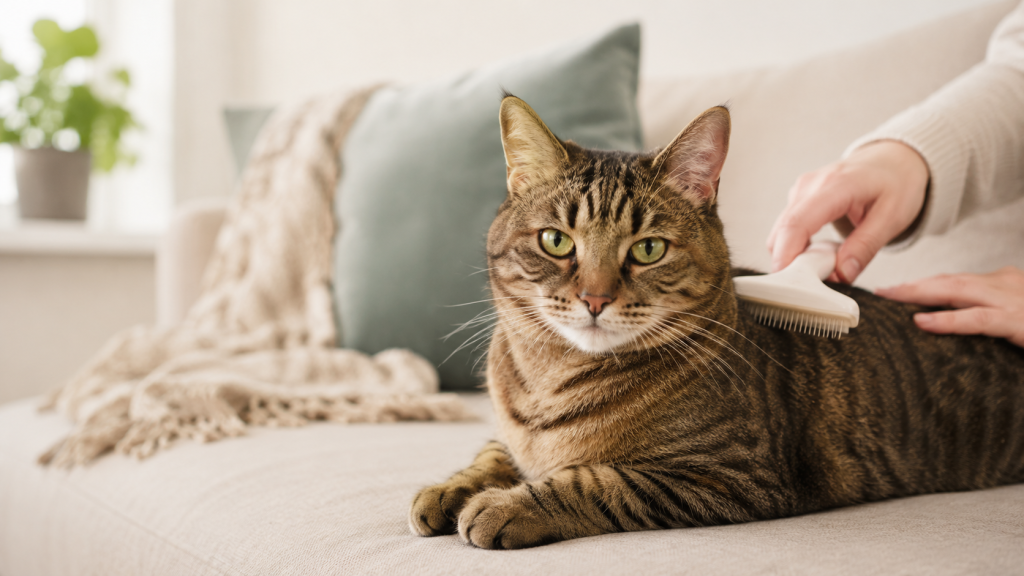
Regular brushing can help catch loose fur before it lands on furniture. It also helps keep the coat cleaner and gives someone a chance to notice skin or coat problems. But brushing can also release allergen into the air, so doing it outside, when safe and practical, is better than brushing on the sofa.
If the allergic person must handle these jobs, gloves and a mask are a reasonable precaution. Washing hands after cat contact also helps, especially before touching your face or going to bed.
Baths may help briefly, but they are not always fair to the cat
Bathing a cat can reduce airborne cat allergen for a short time, but it is not a lasting fix. The effect may fade quickly, and allergen levels can return soon after washing.
Cat welfare matters here. Most healthy adult cats groom themselves carefully and rarely need routine baths. Frequent bathing can be stressful and may irritate the skin, especially if the cat is not used to it.
I wouldn’t force weekly baths on a stressed cat just because it sounds natural. If repeated bathing seems necessary, or your cat’s skin becomes dry, irritated, or uncomfortable, talk with your veterinarian. Pet-safe wipe-downs or professional grooming may be more realistic for some cats.
Do not use essential oils as a natural cat allergy fix
Essential oils should not be used on your cat or as a cat allergy remedy in their environment. Natural does not mean safe for cats.
Diffused oils can irritate the respiratory tract. Tiny droplets may land on fur and be swallowed when the cat grooms. Cats are also more vulnerable to some compounds because they do not metabolize many substances the way humans do.
If a cat is exposed to essential oils and develops watery nasal discharge, drooling, vomiting, trouble breathing, coughing, wheezing, seizures, or other worrying signs, contact a veterinarian, emergency vet, or poison control. This is one place where I would not wait and watch.
Multi-cat homes and outdoor cats need stricter boundaries
Homes with more than one cat tend to have higher cat allergen levels. That does not mean a multi-cat home is impossible, but it does mean your system needs to be more consistent.
In a multi-cat home, there are more beds, more litter activity, more favorite sleeping spots, and more soft surfaces collecting allergen. Bedroom exclusion becomes more important, not less. Washable covers help. More than one air purifier may be needed in a large or open layout.
Outdoor access adds another layer. Some people react not only to cat allergens, but also to pollen or dust carried in the coat. If symptoms spike after outdoor time or during pollen season, wipe your cat down with pet-safe towels, keep outdoor cats off beds, and wash your hands after close contact.
Be skeptical of hypoallergenic cat claims
No cat is truly hypoallergenic. All cats produce allergens, even if some people tolerate certain individual cats better than others.
Fel d 1 levels can vary between individual cats, but coat length and breed marketing do not reliably predict whether you will react. A short-haired cat can still trigger symptoms. A long-haired cat is not automatically worse for every person.
Shaving a cat is not a real allergy solution either. Because allergens come from skin, saliva, glands, urine, and dander, removing hair does not remove the source.
Can allergen-reducing cat food help?
Allergen-reducing cat food may help some households as one part of a broader plan, but it should not be treated as a cure. It is not a home remedy, and it does not make a cat non-allergenic.
The studied approach uses egg-derived anti-Fel d 1 antibodies in food. When the cat chews the food, the antibodies bind Fel d 1 in saliva before it spreads through grooming. That may reduce active Fel d 1 exposure in the environment.
The evidence is promising but limited. A proof-of-concept exposure study found lower active Fel d 1 in a controlled setup and improvement in some human symptoms, but the study was small, controlled, and had commercial ties. Also, people may react to other cat allergens, not Fel d 1 alone.
If your cat eats a special diet or has health issues, ask your veterinarian before changing food. Allergy management for humans should not create a new problem for the cat.
Drug-free symptom support for you
Saline nasal rinses can help some people with allergic rhinitis symptoms by rinsing allergens from the nose and sinuses. They do not reduce cat allergen in the home, and they do not change the immune allergy itself.
Use safe preparation instructions from a medical source, not a casual wellness recipe. This is especially important because nasal rinses involve the inside of your nose and sinuses.
Be cautious with supplements marketed for natural allergy relief. Evidence for options such as butterbur, probiotics, or acupuncture is limited, mixed, or tied to safety concerns. Supplements are not a cat-specific exposure control plan, and they should not be used casually by children, pregnant readers, people on medication, or people with asthma without medical advice.
When natural steps are not enough
If symptoms persist despite a careful home plan, it is time to involve an allergist or doctor. Natural exposure reduction can help, but it should not replace medical care when symptoms affect sleep, daily comfort, or breathing.
Medical options may include nasal sprays, antihistamines, eye drops, inhaled asthma medicines, or allergen immunotherapy, depending on symptoms and medical history. Allergy shots can be a longer-term option for some people, but they require professional supervision and time.
Severe asthma, repeated wheezing, chest tightness, or shortness of breath around cats may exceed what cleaning and air purifiers can solve. Rehoming is an emotionally hard subject, and I would never treat it lightly, but severe uncontrolled allergy or asthma deserves honest medical guidance.
Veterinary help is also part of a safe plan. Call your vet if bathing causes stress or skin problems, if you are considering repeated grooming changes, if your cat may have been exposed to essential oils, or if a diet change is complicated by your cat’s health history.
A realistic natural plan to try first
- Confirm the trigger with a doctor or allergist, especially if symptoms are strong, mixed, or breathing-related.
- Make the bedroom a cat-free, low-allergen zone.
- Reduce allergen reservoirs: carpets, fabric covers, blankets, pillows, curtains, and favorite cat spots.
- Damp-dust hard surfaces and use a HEPA-filter vacuum on carpets and upholstery.
- Use a properly sized HEPA air purifier in the bedroom or main living area.
- Have a non-allergic person handle brushing, litter, bedding, and heavy cleaning when possible.
- Use cat-safe grooming only. Avoid forced frequent baths and avoid essential oils.
- Adjust for multi-cat homes and outdoor pollen exposure.
- Consider allergen-reducing food as an adjunct, not a cure, with veterinary input when needed.
- Get medical help if symptoms persist or breathing is involved.
What to remember
The natural way to manage cat allergies is not one dramatic trick. It is a steady reduction in the amount of allergen you breathe, touch, and sleep in.
Start with the bedroom, clean the soft-surface reservoirs, use filtration realistically, shift grooming and litter duties, and protect your cat from unsafe natural remedies like essential oils.
If you have wheezing, chest tightness, shortness of breath, or uncontrolled symptoms, do not keep guessing. A good home plan and proper medical guidance can work together, and your cat’s safety should stay part of every decision.
References
- Asthma and Allergy Foundation of America: Pet, Dog and Cat Allergies — cat allergens, symptoms, persistence, cleaning, bedroom control, allergen-reducing food context.
- American College of Allergy, Asthma & Immunology: Pet Allergies — symptoms, diagnosis, avoidance, hypoallergenic cat cautions.
- Fel d 1 molecular allergen review — Fel d 1 sources and why cat allergy is not just hair.
- U.S. EPA: Guide to Air Cleaners in the Home — air purifier limits, room sizing, filtration, ozone warning.
- Texas A&M VMBS: Cat Baths — why routine bathing is often unnecessary and may stress cats.
- Texas A&M VMBS: Essential Oil Diffusers and Your Cat — essential oil risks for cats and respiratory irritation concerns.
- Anti-Fel d 1 food proof-of-concept study — allergen-reducing cat food mechanism, potential benefit, and study limits.
- AAAAI: Saline Sinus Rinse Recipe — saline rinses as drug-free support for allergic rhinitis symptoms.