A cat can be sitting beside you, purring and even rubbing your hand, then suddenly turn and nip. It can feel personal. Most of the time, it is not. What makes this hard is that cats can enjoy contact and still want it to stop sooner than we expect.
The safest way to pet a cat is to let the cat start, touch only where they seem comfortable, keep it brief, then pause. If the cat leans back in, continue. If they turn away, freeze, flick their tail, tense up, or watch your hand, stop.
I think of petting as a conversation, not a reward you earn by being liked. Your cat gets to choose access, location, pressure, and duration. That one shift can prevent many bites, scratches, and confused feelings.
The Quick, Safe Method
Start by giving the cat control. Do not reach over them, corner them, pick them up, or hold them in place to make petting happen.
- Sit or crouch near the cat, with your body relaxed.
- Let the cat have a clear way to leave.
- Offer a relaxed hand near them, not pressed into their face.
- Wait. Let the cat sniff, rub, approach, or walk away.
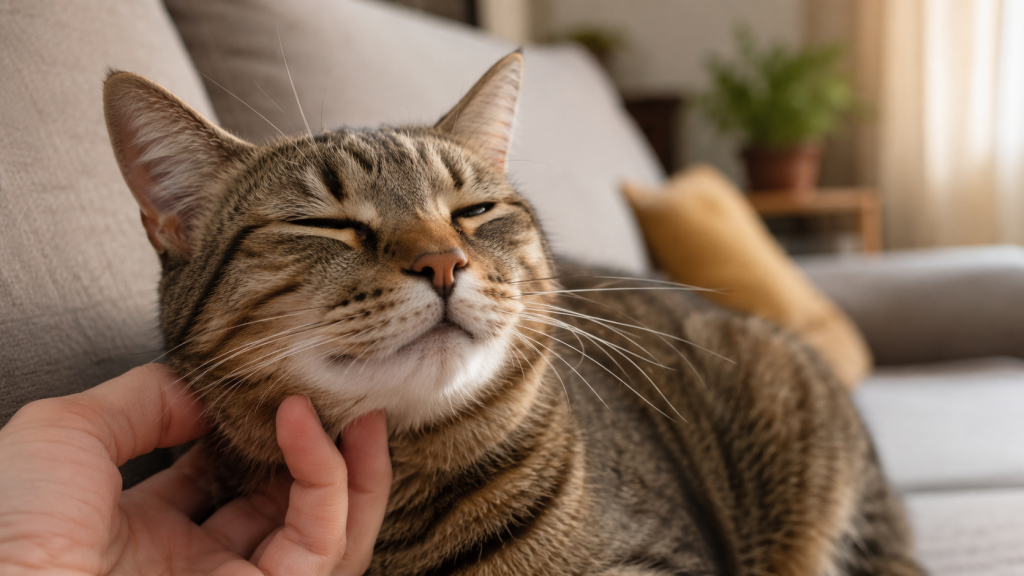
- If the cat chooses contact, gently pet the cheeks, chin, top of the head, or neck area.
- After a few short strokes, stop and wait.
- If the cat nudges, leans in, rubs, or stays loose and engaged, you can continue briefly.
- If the cat does not re-engage, end the session.
The pause matters. Many people keep stroking because the cat has not left yet. But staying nearby is not always permission for more touching. A cat may want company, warmth, or quiet closeness without repeated hands-on contact.
Petting Is About Choice, Attention, and Touch
A good cat interaction has three parts: choice, attention, and touch. Choice means the cat can opt in or out. Attention means you watch the whole cat while petting. Touch means you stay with the areas and pressure the cat accepts.
This is where many well-meaning owners get tripped up. A cat may walk near you, sit beside you, or rub once, but that does not always mean they want a long petting session. They may be greeting you, investigating, or scent-marking. The only reliable guide is what the cat does next.
For me, the safer rule is simple: the cat controls the length of the interaction. If the cat leaves, let them leave. If the cat looks unsure, pause. If the cat comes back, you have your answer.
Read the Cat Before You Touch
A relaxed cat is more likely to accept petting. Look for a soft body, relaxed or forward ears, loose whiskers, half-closed eyes, slow blinking, cheek rubbing, and easy re-engagement with your hand.
Slow blinking can be a gentle invitation before touch. Narrow your eyes slowly, then look away a little. If the cat softens, blinks back, or approaches, that is useful feedback. It is not a trick that guarantees petting access.
Do not rely on purring alone. Purring can happen when a cat is content, but it is only a happy sign when the rest of the body is relaxed too. If the cat is purring while tail-flicking, freezing, flattening their ears, or staring at your hand, believe the body language.
Where Most Cats Like Being Petted
Most cats are more likely to enjoy gentle touch around the head: cheeks, chin, top of the head, neck, and shoulders. These areas fit how cats often show friendly contact with each other, through facial rubbing and head bunting.
Start small. One or two fingers under the chin, a soft cheek rub, or a short stroke over the head is usually better than a full-body stroke from head to tail. Predictable, local contact is easier for the cat to understand and control.
Areas to Treat Carefully
The base of the tail is not a default petting spot. Some cats like it, but some react badly. Research on body regions found more negative responses around the rear body area, so I would only try this if the cat clearly invites it and stays relaxed.
The belly needs even more caution. A cat showing their belly may be relaxed or trusting you, but that does not mean they want a belly rub. For many cats, the abdomen is vulnerable. Touching it can lead to grabbing, biting, kicking, or fleeing. Some cats tolerate belly touch, but only continue if the body stays loose, still, and calm.
How to Tell If Your Cat Wants More
The best test is the pause. Pet briefly, remove your hand, then wait. A cat who wants more may nudge your hand, lean in, rub their cheek, follow your fingers, stay loose, or reposition for more contact.
A cat who is done may do nothing. That still counts as an answer. They may also turn away, groom suddenly, shake their head, flick their tail, tense their back, flatten or rotate their ears, stare, turn sharply toward your hand, or move away.
Stop at the first small warning. Do not wait for the bite to make the decision for you. Cats often give signals before swatting or biting, but those signals can be quick and easy to miss.
Why Cats Bite During Petting
Petting-related biting is often about overstimulation, not meanness. Repeated stroking can shift from pleasant to irritating. A cat may become aroused, excited, uncomfortable, or painful, and the same touch that felt good at first may suddenly feel like too much.
Some cats use aggression to control when petting ends. If this pattern happens, avoid uninvited petting, keep sessions shorter, stay away from disliked areas, and stop before the cat reaches their limit. Do not punish, restrain, or force the cat to get used to it. That usually makes the cat feel less safe.
Also separate petting from play. If a cat is hunting, chasing, pouncing, or already highly aroused, your hand can become part of the game. Hands and feet should not be used as toys, especially with kittens, because cats can learn that skin is an acceptable play target.
Kittens, Older Cats, and Changing Preferences
Kittens need gentle, pleasant handling, not forced cuddling. Early positive human contact helps kittens learn that people are safe, but rough handling, grabbing, startling, or passing a kitten around can create fear instead.
The most sensitive socialization period starts very early, around 2 to 7 weeks in some feline guidance, with broader kitten guidance discussing a window that may extend toward 9 to 10 weeks. For most owners, the exact age matters less than the quality of the contact: calm, brief, positive, and kitten-led.
Adult cats can change too. After social maturity, often around 2 to 3 years, some cats prefer shorter or less frequent interaction. Older cats may prefer being petted where they are already resting, especially if movement is harder or their senses have changed.
I would not assume a cat’s petting preferences are fixed for life. If your cat suddenly dislikes touch, reacts strongly to one spot, or seems different in a way you cannot explain, treat that as information.
Children and Multi-Cat Homes Need Extra Care
Children often miss the early signals that a cat is done. Teach them to let the cat come to them, stroke only briefly, use gentle touch around the head or cheeks, and stop when the cat leaves. Avoid picking up, belly rubbing, tail pulling, paw handling, or following the cat.
If a cat has a history of petting-related aggression, young children should be closely supervised. In some cases, small children should not have physical contact with that cat. That is not about blaming the cat or the child. It is about preventing predictable mistakes.
In multi-cat homes, context matters. A cat may seem relaxed with you but tense when another cat enters the room. Give each cat individual attention without other cats interrupting, and notice whether exits are clear, resting spots are guarded, or another pet is hovering nearby.
When Touch Sensitivity Needs a Vet
New or worsening touch sensitivity deserves a veterinary check. Pain, discomfort, or irritability can make a cat avoid touch or react aggressively, especially if a specific body part is involved.
I would stop guessing and call a vet if your cat suddenly dislikes petting, reacts to one area, becomes unusually aggressive, limps, hides more, eats less, grooms less, changes litter box habits, vocalizes unusually, or just seems not like themselves.
This does not mean every petting problem is medical. It means pain should not be dismissed as moodiness. Cats often hide discomfort, so behavior changes can be one of the first clues owners notice.
If You Get Bitten or Scratched
Wash cat bites or scratches right away with warm, soapy water. If the wound is serious, becomes red, painful, warm, or swollen, or if the cat seems sick, get medical advice.
Also seek medical guidance if the cat’s rabies vaccination status is unknown or your tetanus vaccination is not current. Petting should be low-risk, but hand injuries from cats are worth taking seriously.
Conclusion
The best way to pet a cat is not to find a magic spot. It is to let the cat lead, touch gently, pause often, and stop earlier than your instincts may tell you to.
Cheeks, chin, head, neck, and shoulders are usually the safest starting places. Belly and tail-base contact need caution. If your cat’s tolerance changes suddenly, especially with pain-like signs or behavior changes, call your vet.
Good petting feels like a quiet agreement. The cat asks, you answer gently, then you wait for the next answer.
References
- AAFP/ISFM Cat Friendly Veterinary Interaction Guidelines – cat control, emotional state, handling, slow blinking.
- Battersea Dogs & Cats Home, How to Stroke a Cat – cat-led contact, choice, overstimulation, avoiding restraint.
- Cats Protection, How to Pet a Cat – preferred touch areas, belly caution, tail-base caution.
- Cats Protection, Cat Body Language – relaxed and stressed body-language signs, purring context.
- San Francisco SPCA, Overstimulation – short sessions, warning signs, stopping early.
- Cornell Feline Health Center, Feline Behavior Problems: Aggression – petting-induced aggression, pain-related aggression, punishment, children.
- AAFP/ISFM Feline Environmental Needs Guidelines – socialization, age-related interaction changes, multi-cat attention.
- CDC cat bite and scratch guidance – wound washing and when to seek medical attention.