
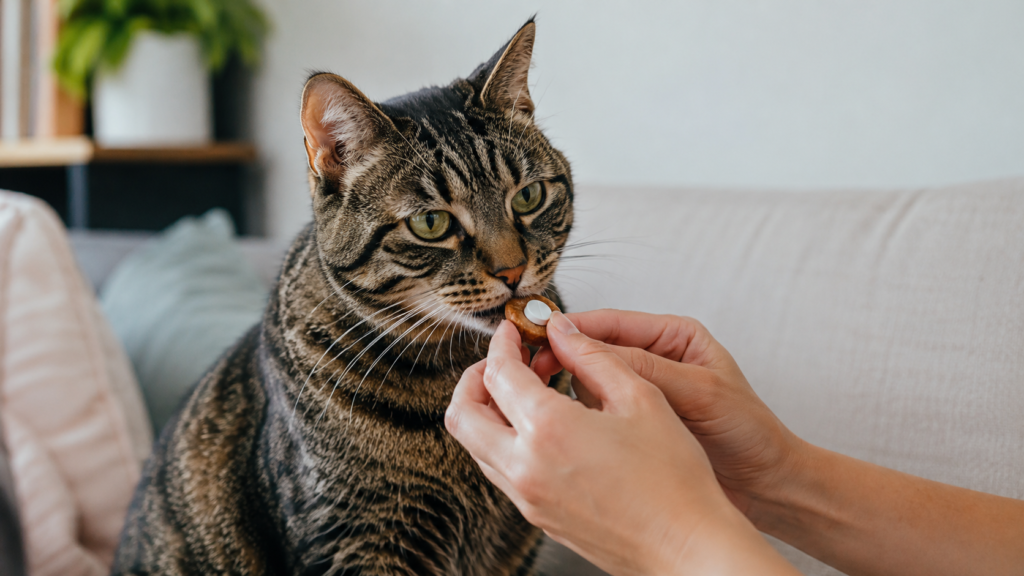
If you think your cat has worms, the first question is usually practical: can you treat it at home, or do you need a vet first?
The safer answer is this: deworming a cat is not just giving any “worm medicine” and hoping it works. The right approach depends on the type of worm, your cat’s age and weight, whether your cat is sick, and how likely reinfection is. Some cat dewormers are available without a prescription, but the product still needs to be cat-safe, weight-appropriate, and matched to the parasite you are trying to treat.
For me, the safest way to think about deworming is in four parts: identify what you are likely dealing with, use the right cat-specific medication, prevent reinfection, and call a vet when symptoms or risk factors make guessing unsafe. That matters because roundworms, hookworms, and tapeworms do not spread the same way, do not always look the same, and are not always treated with the same product.
What Does Deworming a Cat Actually Mean?
Deworming means giving a medication that kills specific internal worms in your cat. In everyday cat-owner conversations, “worms” usually refers to intestinal worms such as roundworms, hookworms, or tapeworms.
That does not mean every parasite is treated the same way. Some organisms that cause diarrhea or stomach upset, such as Giardia or coccidia, are not the same as intestinal worms. A regular worming product may not help if the real problem is a different parasite or a non-parasitic illness.
This is one reason a stool test can be useful. A veterinarian may examine a fecal sample for parasite eggs or other signs of infection. Still, a negative fecal test does not always prove a cat is parasite-free, because some parasites shed eggs or segments intermittently. That is why your cat’s age, symptoms, lifestyle, flea exposure, hunting behavior, and medical history all matter.
The Safest Way to Deworm a Cat
The safest way to deworm a cat is to use a cat-labeled dewormer recommended by your veterinarian or chosen under veterinary guidance. The product should match your cat’s age, current weight, health status, and suspected or confirmed parasite.
Do not use a dog dewormer, leftover medication from another pet, livestock products, random powders, essential oils, or “natural wormers” as a substitute. Similar-looking products can contain different ingredients or different strengths. Some products are made only for dogs, even when the name looks close to a cat product.
A practical process looks like this: check your cat’s weight, collect a fresh stool sample or clear photo if you see worms or rice-like segments, contact your vet or use a vet-recommended cat product, give the medication exactly as directed, then deal with the source of reinfection. With tapeworms, that often means flea control. With roundworms and hookworms, it includes litter hygiene and limiting exposure to contaminated feces, soil, prey, or infected animals.
I would be especially careful if the cat is a kitten, pregnant, nursing, elderly, underweight, sick, newly adopted, or already showing vomiting, diarrhea, weakness, pale gums, or weight loss. In those cases, deworming is not just a shopping decision. The cat may need an exam, a fecal test, supportive care, or a different treatment plan.
How to Tell What Kind of Worm Your Cat Might Have
You may not be able to identify the worm at home, but some clues can point your vet in the right direction.
Roundworms are one of the most common intestinal worms in cats, especially kittens. They may sometimes look like pale, spaghetti-like worms in vomit or stool, but many infected cats never pass visible worms. Cats can pick them up from contaminated environments, infected prey, or, in kittens, from the mother’s milk.
Tapeworms are often noticed because of their segments. Owners may see small, rice-like pieces around the cat’s rear, in the litter box, or on bedding. One common tapeworm spreads through fleas, so treating the worm without treating fleas can lead to reinfection.
Hookworms are harder for owners to spot because they are small and usually not visible in stool. They attach to the intestinal lining and feed on blood. Some cats show few signs, but heavier infections can contribute to anemia, weakness, weight loss, poor appetite, or dark, tarry stool.
The point is that visible worms are not the only sign of worms. At the same time, diarrhea or vomiting does not automatically mean worms. That is the tricky middle ground where a vet visit or fecal test can prevent the wrong treatment.
Symptoms That May Suggest Worms in Cats
Some cats with worms look almost normal. Others may show vague signs that could fit many different conditions.
Possible signs include vomiting, diarrhea, weight loss, poor growth in kittens, a dull coat, a potbellied look, poor appetite, visible worms, rice-like tapeworm segments, or general weakness. Hookworms can be more concerning because blood loss may lead to anemia, especially in vulnerable cats.
These signs are not specific enough to diagnose worms at home. A cat with diarrhea could have intestinal parasites, but it could also have a food-related issue, infection, toxin exposure, inflammatory disease, stress-related digestive upset, or another medical problem. A cat that vomits up a roundworm probably has worms, but a cat that vomits without visible worms still needs a broader view.
This is where I would avoid guessing for too long. If a cat seems otherwise bright and you notice tapeworm segments, calling your vet for product guidance is reasonable. If a cat is weak, not eating, repeatedly vomiting, losing weight, or has blood or black stool, I would treat that as a vet-worthy situation rather than a simple home deworming project.
When Should You Contact a Veterinarian?
Contact a veterinarian promptly if your cat is a kitten, pregnant, nursing, elderly, chronically ill, underweight, or already acting sick. These cats have less room for error.
You should also call a vet if you see persistent vomiting or diarrhea, blood or mucus in the stool, black or tarry stool, pale gums, severe weight loss, dehydration, weakness, collapse, poor growth in a kitten, repeated coughing, visible worms, or rice-like tapeworm segments. Some of these signs may be caused by worms, but they may also point to other problems that need different care.
If your cat vomits shortly after taking a dewormer, do not automatically repeat the dose unless your vet or the product directions tell you to. Giving extra medication can be unsafe. Call your vet and explain what happened, including the product name, the amount given, your cat’s weight, and how soon the vomiting occurred.
Allergic reactions or severe reactions after medication also need urgent help. Breathing changes, facial swelling, collapse, severe weakness, tremors, repeated vomiting, or major worsening after a dewormer should not be brushed off as “normal worm die-off.”
Can You Deworm a Cat at Home?
You can sometimes give a cat dewormer at home, but the choice of product should not be random. A safe at-home treatment still means using a product labeled for cats, appropriate for your cat’s weight and age, and suited to the suspected parasite.
The main risk with at-home deworming is not the act of giving a tablet or liquid. It is choosing the wrong product, using the wrong species’ medication, treating the wrong parasite, missing a sick cat, or failing to prevent reinfection.
For example, a tapeworm product may not cover roundworms or hookworms unless it is part of a combination medication. A roundworm treatment may not solve tapeworms if the cat keeps swallowing fleas. A standard dewormer will not fix diarrhea caused by a non-worm parasite or another medical condition.
So yes, some deworming can happen at home. But I would frame it as home administration of the right treatment, not home diagnosis and experimentation.
How to Give a Cat Dewormer
Follow the product label or your veterinarian’s instructions exactly. Do not estimate the dose by eye, and do not split or combine products unless your vet tells you to.
Many cat dewormers are given by mouth as a tablet, liquid, or paste. Some may be given with food, while others may have specific instructions. After giving an oral medication, watch your cat briefly to make sure it was swallowed. Cats can hide tablets in their mouth and spit them out once they walk away.
If your cat is difficult to medicate, ask your vet whether there is another form that fits the situation. Some parasite control products are topical, but not every topical product treats every worm. The route matters less than whether the product is correct for the parasite and safe for that cat.
Do not chase your cat around the house or force medication into a panicked cat’s mouth if you are likely to get bitten or your cat is extremely distressed. A calm, controlled setup is safer. If giving the medication is not realistic, your vet clinic may be able to help.
Why Deworming Once May Not Be Enough
Deworming kills susceptible worms in your cat at that moment. It does not automatically remove eggs from the environment, fleas from the home, larvae in prey animals, or exposure from other pets.
That is why reinfection is common. A cat treated for tapeworms can get them again if fleas are still present. A cat treated for roundworms can be exposed again through contaminated feces, soil, or infected prey. A kitten may need repeated treatment because young cats are at higher risk and may be exposed early in life.
This is also why follow-up matters. Your vet may recommend repeat treatment, fecal testing, or year-round parasite prevention depending on your cat’s risk. Cats who go outdoors, hunt, eat prey, live with dogs or other cats, have fleas, or come from shelters may need a different plan from a strictly indoor adult cat with low exposure.
Deworming Kittens Is Different
Kittens need special caution because they are more vulnerable to worm burdens and are often treated on a schedule rather than waiting for obvious signs. Roundworms are especially relevant because kittens can acquire them from the queen’s milk.
Veterinary guidelines often recommend starting deworming early in kittenhood and repeating treatment at set intervals, but exact timing and product choice should come from a vet. Kittens are small, growing, and easier to overdose if a product is not chosen carefully.
A potbellied kitten with poor growth, diarrhea, vomiting, a dull coat, or weakness should not be treated as a simple over-the-counter project. Worms may be part of the problem, but kittens can become dehydrated or anemic more quickly than healthy adult cats.
For newly adopted kittens, I would ask about fecal testing and a full parasite-control plan early. That plan may include deworming, flea control, follow-up testing, and treating other pets in the home if there has been shared exposure.
Do Indoor Cats Need Deworming?
Indoor cats have lower exposure than outdoor cats, but “indoor” does not mean “impossible.” Fleas can enter homes, rodents can get inside, and newly adopted cats may already have parasites. Indoor cats can also be exposed through other pets.
A strictly indoor adult cat who does not hunt, does not eat raw prey or raw meat, and has no flea problem may be lower risk. A cat who goes outside, catches mice, lives with a dog, has fleas, or recently came from a shelter is higher risk.
The better question is not “Do indoor cats need deworming?” but “What is this cat’s actual exposure?” That includes lifestyle, geography, boarding, grooming, travel, multi-pet contact, flea prevention, diet, and whether the cat has symptoms.
Your vet can help decide whether your cat needs routine broad-spectrum parasite prevention, periodic fecal testing, treatment after exposure, or a different schedule.
Fleas, Hunting, and Reinfection
Tapeworms and fleas are closely linked. Cats can get a common type of tapeworm by swallowing infected fleas during grooming. If you only treat the tapeworm but ignore fleas, the same cycle can start again.
Hunting is another major reinfection route. Cats who catch rodents or other prey may be exposed to roundworms, tapeworms, and other parasites. This is true even if the cat looks healthy and only hunts occasionally.
Raw meat, offal, raw fish, and prey can also change parasite risk. This does not need to turn into a diet debate, but owners should understand that cats with prey or raw-food exposure need a more careful parasite-control conversation with a vet.
For prevention, the practical basics are not glamorous: control fleas, scoop litter daily, dispose of feces safely, wash hands after handling litter, clean bedding after an active infestation, and reduce access to rodents or prey when possible.
What About Other Pets in the Home?
In a multi-cat or multi-pet home, one cat’s worms may be a household exposure issue. Other cats or dogs may share fleas, litter areas, outdoor spaces, or prey exposure.
That does not mean you should give every animal the same medication. Dogs and cats need species-appropriate products, and body weight matters. A product that is fine for one pet may be unsafe or ineffective for another.
If one cat is diagnosed with worms, ask your vet whether other pets should be tested or treated at the same time. This is especially relevant for newly adopted cats, kittens, outdoor cats, or homes with a flea problem.
Coordinated treatment can prevent the frustrating pattern where one pet gets treated while another untreated pet, or the home environment, keeps the cycle going.
Can Cat Worms Affect People?
Some cat worms can pose a risk to people, especially through contact with contaminated feces, soil, or dirty hands. Roundworm eggs can survive in the environment and may infect people if accidentally swallowed.
This does not mean you need to panic or avoid touching your cat. Normal handling is not the main issue. The bigger concern is fecal contamination, contaminated soil, and poor hand hygiene after litter box or garden contact.
Homes with small children, immunocompromised people, or people who handle soil should be more careful. Scoop litter daily, wash hands after cleaning the box, dispose of feces properly, and keep children away from litter boxes and contaminated soil.
If you are worried about human exposure, especially after visible worms or a known infection, contact your physician for human health advice. Your veterinarian can guide the pet side of prevention and treatment.
Common Mistakes to Avoid
The first mistake is assuming all worms are the same. Roundworms, hookworms, and tapeworms differ in how cats get them, how they show up, and how reinfection happens.
The second mistake is waiting for visible worms. Hookworms usually are not seen in stool, and many cats with intestinal parasites show no obvious signs. A cat can have worms without passing something obvious in the litter box.
The third mistake is treating symptoms instead of the cat. Diarrhea, vomiting, weight loss, or poor appetite may involve worms, but they can also come from other medical problems. If symptoms are persistent, severe, or happening in a vulnerable cat, a vet visit is safer than repeated deworming.
The fourth mistake is ignoring the environment. If fleas, contaminated litter, prey animals, or untreated pets remain part of the picture, the cat may become reinfected even after the medication worked.
Final Thoughts
Deworming a cat safely means using the right product for the right parasite in the right cat. It also means knowing when not to guess.
If your cat is healthy and you notice something like tapeworm segments, your vet can often guide you toward an appropriate treatment and prevention plan. If your cat is a kitten, sick, weak, losing weight, vomiting repeatedly, passing blood or black stool, or showing pale gums, I would stop treating it as a simple home-care task and contact a veterinarian.
The most useful deworming plan does more than kill worms once. It also looks at fleas, litter hygiene, hunting, other pets, and follow-up care, because that is what keeps the same problem from coming back.
References
- Merck Veterinary Manual: Gastrointestinal Parasites of Cats
- Cornell Feline Health Center: Gastrointestinal Parasites of Cats
- CAPC: General Guidelines
- AAHA/AAFP Feline Life Stage Guidelines: Feline Parasite Control
- CDC: How Toxocariasis Spreads
- VCA Hospitals: Praziquantel/Pyrantel Pamoate
- DailyMed: Drontal Label
- Cats Protection: Worms