
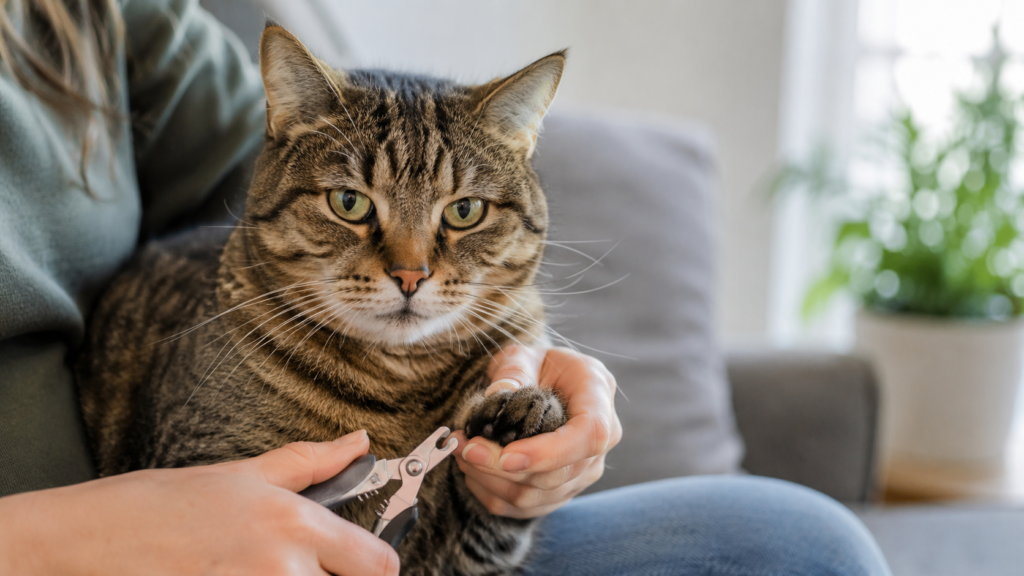
Cutting cat nails sounds simple until your cat pulls one paw away, gives you a suspicious look, or you suddenly realize you are not completely sure where the safe part of the claw ends.
That hesitation is reasonable. Cat claws are small, curved, and partly hidden when relaxed. If you cut too far, you can hit the quick, which is the sensitive part of the nail that contains blood vessels and nerve endings. The good news is that most routine nail trims are much less dramatic when you know what to look for, use a steady pace, and stop before your cat gets too stressed.
For me, the safer way to think about cat nail trimming is not “finish all the nails today.” It is “trim only what is clearly safe, keep the experience calm, and come back later if needed.” Some cats only need a few nails trimmed at a time. That still counts as a successful nail trim.
Do All Cats Need Their Nails Cut?
Not every cat needs the same nail-trimming routine. Some young, active cats with good scratching opportunities may wear and maintain their claws fairly well on their own. Outdoor cats may also wear their claws down more naturally than indoor cats.
Indoor cats, older cats, kittens, less active cats, and cats with mobility problems often need more regular checks. Their claws may not wear down enough through normal movement and scratching. This is especially true for senior cats or cats with arthritis, because they may scratch less, move less, or have trouble retracting their claws properly.
A good rule is to check your cat’s claws regularly instead of waiting for a problem. If the claws are sharp, catching on fabric, clicking on hard floors, or staying visible when your cat is resting, they may need a trim.
The front claws usually need more attention than the back claws. The dewclaw, which is the small inner claw on each front paw, is especially easy to miss because it does not touch the ground like the other claws. Since it does not get worn down much by walking, it can become overgrown if no one checks it.
What Part of a Cat’s Nail Should You Cut?
Cut only the clear, sharp, curved tip of the claw. Do not cut into the pink area inside the nail.
That pink area is called the quick. It contains blood vessels and nerves, so cutting into it can hurt and cause bleeding. On light-colored nails, the quick is usually easier to see. It often looks like a pink triangle or wedge inside the base of the claw.
Dark nails are trickier because the quick may not be visible. In that case, do not guess and cut deep. Trim only the very tip or the hooked part of the nail. The goal is to blunt the sharp end, not make the nail as short as possible.
This is one of the most common owner mistakes. A useful nail trim does not have to look dramatic. Even taking off a small sharp hook can reduce snagging, scratching damage, and the chance of the claw catching in blankets, carpets, or furniture.
What You Need Before You Start
Use sharp, cat-appropriate nail clippers if you can. Cat claws are curved and shaped differently from human nails, so cat nail clippers usually make the job cleaner and easier. Dull tools can crush, split, or tug at the nail, which may make your cat more resistant next time.
It also helps to prepare before your cat is on your lap. Have treats ready, choose a calm place with good lighting, and keep styptic powder nearby in case you accidentally nick the quick. If you do not have styptic powder, some veterinary sources note that flour or cornstarch can help with minor nail bleeding.
Do not start when your cat is already wound up, hiding, playing hard, or annoyed. A sleepy, relaxed cat is usually easier to handle, but avoid surprising them or grabbing a paw suddenly. The calmer the setup, the less restraint you usually need.
I would also avoid turning the first session into a full grooming mission. If your cat is new to nail trimming, one or two nails may be enough for the first attempt.
How to Cut Cat Nails Step by Step
Start by letting your cat settle in a comfortable position. Some cats do well on a lap. Others prefer sitting beside you on a sofa, table, or bed. You do not need to pin them down. In many cases, less restraint works better than more restraint.
Gently hold one paw and press the pad just enough to extend the claw. You should see the claw slide out from its resting position. If your cat pulls away, pause. Let the paw go, offer a treat, and try again later or with a different paw.
Once the claw is extended, look for the quick. If you can see it, place the clipper well in front of it and cut only the clear tip. If you cannot see the quick, cut only the thin hooked end.
Make small cuts instead of one big cut. This gives you more control and lowers the chance of cutting too far. Position the clipper so it cuts cleanly through the nail instead of squeezing the nail sideways.
After each nail, reward your cat. This does not have to be fancy. A treat, a calm voice, or a short break can help your cat connect paw handling with something tolerable. If your cat is relaxed, you can continue to another nail. If they tense up, flick their tail, growl, pull away repeatedly, or try to leave, stop there.
A full trim can happen across several short sessions. That is often better than forcing all four paws in one sitting.
How to Help a Cat Get Used to Nail Trimming
If your cat hates having their paws touched, do not start with clippers. Start with paw handling.
Touch one paw briefly, then reward. Later, gently hold the paw for a second, then reward. Over time, press the pad softly so the claw comes out, then reward again. The point is to make each tiny step feel predictable and safe.
This gradual handling is especially useful for kittens. Kittens who learn early that paw handling, brushing, and basic grooming are normal may be easier to care for as adults. Adult cats can learn too. They may just need slower steps.
You can also let your cat inspect the clippers before you use them. Some cats react to the object, the sound, or the feeling of pressure more than the actual trim. If your cat is nervous, clip one nail, reward, and stop. Build from there.
This is where I would be patient rather than ambitious. A cat who tolerates two peaceful nails today is easier to work with tomorrow than a cat who was forced through eighteen nails and now hides when the clippers appear.
What If Your Cat Struggles?
If your cat struggles, stop and reassess. A struggling cat is not being stubborn for no reason. They may be scared, uncomfortable, overstimulated, or simply not used to having their paws handled.
Some cats feel safer wrapped loosely in a towel, with one paw exposed at a time. This can help prevent sudden twisting or scratching, but it should never become a way to overpower a panicking cat. If the towel makes your cat more frantic, do not keep going.
Avoid heavy restraint unless a veterinarian or trained professional has shown you how and confirmed it is appropriate for your cat. Many cats resent being restrained more than they resent the actual nail trim.
If the nails need attention but your cat will not allow handling, ask a veterinarian, veterinary nurse, or qualified groomer for help. That is not a failure. It may be the safest choice, especially if the claws are already long, thick, painful, or close to the paw pad.
What to Do If You Cut the Quick
If you accidentally cut the quick, stay calm and apply styptic powder to the tip of the nail. If you do not have styptic powder, flour or cornstarch may help with a minor bleed.
Apply pressure to the nail tip, not the whole paw. Squeezing the entire paw can make some cats more upset and may not help as much as direct pressure on the nail.
A small quick nick is usually not an emergency if the bleeding stops and your cat settles. Still, it can hurt, so it is fair if your cat does not want to continue. End the session and give them space.
Call your veterinarian if the bleeding does not stop, the nail looks damaged, your cat seems very painful, or you cannot safely examine the paw.
When Long Claws Become a Vet Issue
Long claws are not always a crisis, but some claw problems should not be handled like a routine trim.
Contact a veterinarian if a claw is curling into the paw pad, stuck in the skin, bleeding before you trim it, swollen, red, discolored, or producing discharge. Limping, repeated paw licking, obvious pain, or sudden reluctance to walk are also reasons to stop guessing and get help.
An embedded claw can be very painful. It may also become infected. Trying to dig it out at home can make the injury worse and may make your cat much harder to handle.
Older cats deserve extra attention here. Senior cats may develop thicker, overgrown claws because they scratch less, move less, or cannot retract their claws as well. If your older cat keeps getting caught in blankets or carpets, check the claws carefully, including the dewclaws.
I would be more cautious with senior cats, arthritic cats, and cats who suddenly react badly to paw handling. Sometimes the nail is the visible issue, but pain or mobility trouble is part of the bigger picture.
Nail Trimming Does Not Replace Scratching Posts
Trimming helps blunt the sharp tips, but cats still need to scratch.
Scratching is normal cat behavior. Cats scratch to stretch, mark territory, exercise the claw motion, and remove the old outer layers of the claw. Those thin claw-shaped pieces you find around the house are often normal shed claw sheaths, not the whole nail falling out.
A scratching post can help your cat maintain healthy claws, but it does not guarantee every nail will stay short. Indoor cats, seniors, cats with mobility issues, and cats with dewclaws may still need trimming.
The best setup is usually both: regular claw checks plus good scratching options. Many cats have preferences. Some like vertical posts. Some prefer horizontal scratchers. Some like cardboard, carpet, sisal, or wood. If your cat ignores one scratcher, the problem may be the texture, height, location, or stability.
Put scratchers where your cat already wants to scratch, such as near resting spots, doorways, or busy household areas. If you hide the scratcher in a corner your cat never uses, they may keep choosing the sofa.
What About Nail Caps or Declawing?
Nail caps are temporary covers glued over the claws. Some sources describe them as an option for reducing scratches or household damage, but they need regular reapplication and are not a substitute for understanding your cat’s scratching needs.
Welfare guidance is mixed. Some veterinary resources mention nail caps as a possible alternative in specific situations. Other animal welfare sources are more cautious because caps may interfere with normal claw use, scratching, grooming, and comfort for some cats.
I would not treat nail caps as the first answer for most homes. If you are considering them because someone in the household is getting injured, your cat is damaging furniture badly, or you feel out of options, it is better to discuss the situation with a veterinarian or qualified cat behavior professional.
Declawing is completely different from trimming. It is not a deeper nail trim. It is a surgical amputation of the last bone of the toe. Major veterinary organizations strongly discourage elective declawing and recommend non-surgical alternatives such as nail trimming, appropriate scratchers, environmental changes, and behavior support.
Common Cat Nail Trimming Mistakes
The biggest mistake is trying to cut too much. A small trim is safer and often enough. If you are unsure where the quick is, trim less.
Another common mistake is forgetting the dewclaws. These small inner front claws can grow long because they do not wear against the ground. In some cats, they may be the first claws to curl or snag.
Many owners also wait until the cat is already getting stuck in fabric. By then, the claws may be longer, thicker, or more stressful to handle. Regular paw checks make trimming easier because you catch sharp tips before they become a bigger problem.
For nervous cats, forcing a full trim can backfire. A rushed session may teach your cat that clippers mean restraint, stress, and losing control. Shorter sessions with rewards are usually more useful long-term.
Finally, do not assume scratching means your cat’s nails are too long. Scratching is normal even when claws are trimmed. If your real problem is furniture damage, you need both nail care and better scratching options.
How Often Should You Cut Cat Nails?
Many indoor cats do well with nail checks every couple of weeks and trims as needed. Some may need trimming every two to four weeks. Others need it less often.
Front claws often need trimming more than back claws. Dewclaws need special attention because they may not wear down naturally. Older cats, arthritic cats, and less active cats may need more frequent checks.
Outdoor cats may need less trimming because their claws wear down through climbing, walking, and outdoor activity. Still, they should be checked. Outdoor life does not protect every claw from overgrowth, injury, or abnormal changes.
The best schedule is based on what you see. If the claw tip is sharp and hooked, trim the safe tip. If the claw is long, thick, curled, painful, or close to the pad, treat that as more than routine grooming and ask your veterinarian.
When to Ask a Vet or Groomer for Help
Ask for help if you cannot see the quick clearly, your cat becomes too stressed to handle safely, or you are worried about hurting them. A veterinarian, veterinary nurse, or qualified groomer can show you how to hold the paw, where to cut, and how much nail to remove.
Contact a veterinarian rather than a groomer if there are signs of pain, swelling, redness, discharge, limping, bleeding, abnormal nail shape, dark discoloration, or a claw growing into the pad.
You should also be cautious with cats who suddenly hate paw handling after previously tolerating it. That change can mean the paw is painful, the nail is damaged, or something else is going on.
For a routine trim, home care is fine when your cat is calm and the claws look normal. For painful or abnormal claws, home trimming should not replace veterinary care.
Final Thoughts
Cutting cat nails safely is mostly about restraint, patience, and knowing where not to cut. Trim only the sharp clear tip, avoid the quick, reward your cat often, and stop before the session turns into a fight.
Some cats need regular trims. Others only need occasional checks. Older cats, indoor cats, less active cats, and cats with mobility problems usually need closer attention, especially around the dewclaws.
If a claw is embedded, painful, swollen, bleeding, or causing limping, do not treat it like a normal nail trim. That is the point where I would stop guessing and call a veterinarian.
References
- Cats Protection: How to trim cat claws — Supports guidance on when cats may or may not need trimming, overgrown claws, dewclaw checks, and spacing trims across sessions.
- VCA Animal Hospitals: How to trim a cat’s nails — Supports trimming technique, quick safety, small cuts, restraint advice, rewards, and what to do if the quick is cut.
- Cat Friendly Homes: Nail trimming — Supports owner-friendly guidance on indoor, outdoor, kitten, and older-cat nail care differences.
- Cornell Feline Health Center: Destructive behavior and scratching — Supports explanation of the quick, claw trimming, scratching surfaces, and why scratching behavior still needs appropriate outlets.
- AAFP Claw Friendly Educational Toolkit: Client Resources — Supports claw function, normal scratching behavior, nail trimming, nail caps, and the distinction between trimming and declawing.
- AAHA/AAFP Feline Life Stage Guidelines — Supports early handling, kitten acclimation, scratching needs, and environmental context.
- 2022 AAFP/ISFM Cat Friendly Veterinary Interaction Guidelines — Supports low-stress handling, minimizing fear, allowing breaks, and avoiding unnecessary restraint.
- Hill’s Pet: Cat ingrown nails — Supports red flags for overgrown or embedded claws and when veterinary care is needed.