When a cat stops eating, the question usually is not simple curiosity. It is that uneasy moment when the food bowl still looks full, your cat seems “off,” and you are trying to decide whether this is a small picky phase or something that needs a vet.
The short answer is this: a healthy adult cat may technically survive for several days without food if they are still drinking water, but that does not mean it is safe to wait. For a cat, not eating for around 24 hours is already worth taking seriously. If your cat has not eaten for more than a day, or sooner if they are a kitten, senior cat, overweight cat, sick cat, or not drinking, I would stop guessing and contact a veterinarian.
What makes this tricky is that cats can look fairly quiet even when something is wrong. Some cats hide, some sniff food and walk away, and some take a few bites that make us think they are “basically eating.” But appetite loss in cats can become dangerous faster than many owners expect.
How Long Can a Cat Safely Go Without Food?
A healthy adult cat might be able to stay alive for days without food, especially if they still have access to water. Some veterinary and welfare sources explain that cats can technically survive longer than owners might expect, but that survival number is not the number you should use for decision-making.
A safer way to think about it is this: if an adult cat skips one meal but is otherwise bright, drinking, using the litter box normally, and has an obvious mild reason, you can watch closely. If your cat has not eaten anything for about 24 hours, it is time to call your vet for advice.
That may sound cautious, but cats are not built to handle long fasting well. Appetite loss can be the first visible sign of pain, nausea, dental disease, infection, kidney disease, diabetes, stress, or another problem. You usually cannot tell which one it is just by looking at the food bowl.
There is also a difference between “not eating at all” and “eating much less than normal.” A cat who only licks gravy, eats a few treats, or takes one or two bites may still be under-eating in a way that matters. If the reduced appetite continues, especially with weight loss, hiding, vomiting, diarrhea, weakness, or changes in drinking, it should not be treated as harmless pickiness.
Why Cats Can Get Into Trouble So Quickly
The biggest reason cat owners should not wait several days is a condition called hepatic lipidosis, often called fatty liver disease. In plain English, this can happen when a cat’s body starts using stored fat for energy because not enough calories are coming in.
That might sound useful at first, especially for an overweight cat, but it can overwhelm the liver. Fat can build up inside liver cells and interfere with normal liver function. This is one reason a non-eating cat is not just “fasting.”
Overweight cats are especially important here. Many owners assume a heavier cat has more reserves and can safely go longer without meals. I would be more cautious with that cat, not less. Extra body fat can increase the risk when the body suddenly starts moving fat to the liver for energy.
Fatty liver disease does not mean every cat who skips breakfast is in immediate danger. But it does mean that several days of not eating, or a longer period of barely eating, can turn into a serious medical problem. The article should not promise an exact hour when this starts. The safer point is that the risk rises quickly over days, and vet advice should come before the cat reaches that stage.
Water Helps, But It Does Not Make Food Refusal Safe
A cat who is still drinking is in a better position than a cat who is not drinking, but water does not erase the risk of not eating. Calories still matter, and a cat who goes without enough food can still become seriously ill.
No water is more urgent. Cats can become dehydrated within a day, and dehydration can affect circulation, body temperature control, organs, and overall stability. If your cat is not eating and not drinking, the waiting window gets much shorter.
Vomiting and diarrhea make this more concerning because the cat may be losing fluid while also not replacing it. A cat who is not drinking, vomiting repeatedly, having diarrhea, acting weak, or seeming very lethargic should not be managed with “wait and see” advice from the internet.
If your cat is still drinking but refusing food, keep watching the full picture: energy level, litter box use, vomiting, stool changes, hiding, breathing, and whether they are eating anything meaningful. Drinking is reassuring only up to a point.
Kittens Cannot Wait as Long as Adult Cats
Kittens need faster attention than adult cats. Their bodies are smaller, their energy reserves are limited, and they can become weak much more quickly.
Very young kittens who are not weaned cannot safely go long without milk. Older kittens also should not be left without food for a full day the way some adult cats might be watched. If a kitten has not eaten for 12 hours, especially if they are also not drinking, weak, vomiting, or having diarrhea, that is a vet-worthy situation.
This is one place where generic advice can be dangerous. “Call the vet after 24 hours” may be a reasonable adult-cat threshold, but it is too loose for a young kitten. Kittens do not have the same margin for error.
Senior cats also deserve a lower threshold. Older cats are more likely to have underlying disease, and appetite loss may be one of the first signs that something has changed.
When a Missed Meal May Be Less Concerning
A single missed meal is not always an emergency in a healthy adult cat. Cats can refuse food because the food is stale, the flavor changed, the bowl was moved, the house is noisy, or another pet is bothering them near the feeding area.
For me, the question is not only “Did the cat skip food?” It is “What else is happening?”
A healthy adult cat who skips breakfast but later eats dinner normally, drinks, plays, uses the litter box, and acts like themselves is different from a cat who refuses every meal, hides under the bed, drools, vomits, or seems weak.
Food changes are a common source of confusion. If you suddenly switch brands, texture, protein, or feeding schedule, your cat may reject the new food. That does not mean you can ignore prolonged refusal. If your cat will eat the old food but not the new one, the issue may be preference or transition. If your cat refuses even favorite foods, that is more concerning.
When Not Eating Is a Red Flag
A cat not eating becomes more concerning when it lasts beyond about 24 hours in an adult cat, but some signs should shorten that timeline.
Call a veterinarian sooner if your cat is not eating and also not drinking, vomiting repeatedly, having diarrhea, acting very lethargic, hiding more than usual, breathing with difficulty, appearing weak, drooling, showing mouth pain, losing weight quickly, or showing yellowing of the eyes, gums, skin, or ears.
Yellowing can be a sign of jaundice, which can appear with liver problems and needs veterinary attention. You do not need to diagnose the cause at home. You only need to recognize that it is not a normal picky-eater sign.
I would also be more cautious if the cat is overweight, diabetic, has kidney disease, has hyperthyroidism, is very young, is elderly, recently had surgery, recently stayed at a clinic, or is already on medication. In those cats, appetite loss can become risky faster.
“Picky” Is Not Always Picky
Cats do have food preferences, but “picky eater” can become a lazy explanation if we use it too quickly. A cat who refuses food may be nauseated, congested, stressed, painful, or unable to chew comfortably.
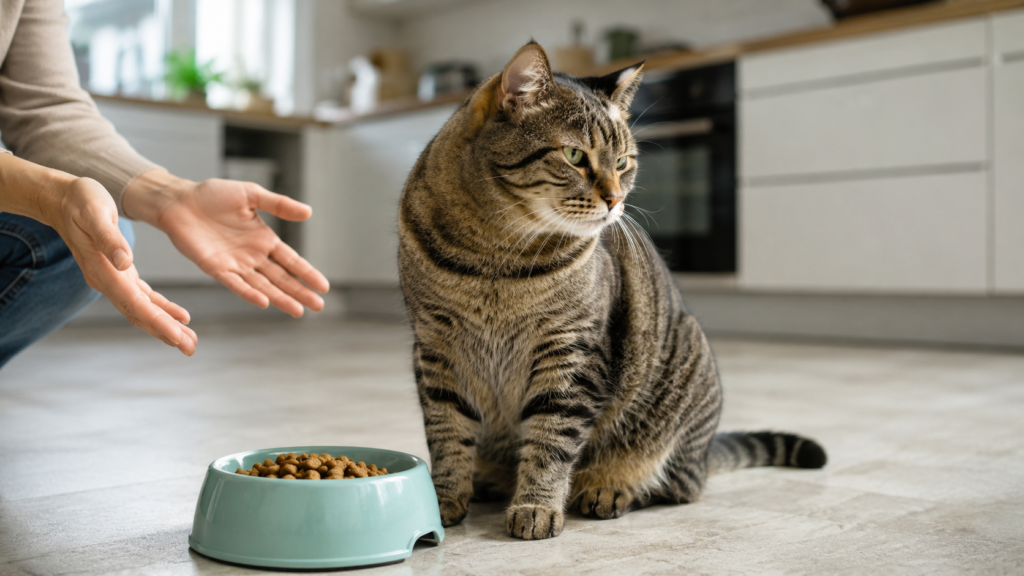
One useful distinction is whether the cat seems interested in food but cannot or will not eat it. A cat may walk to the bowl, sniff, lick once, drool, drop food, chew strangely, paw at the mouth, or turn away. That can happen when eating feels unpleasant or painful.
Dental disease and mouth pain are common reasons cats struggle with food. If chewing hurts, a cat may still be hungry but avoid hard food, drop kibble, prefer soft food, or stop eating altogether.
Nausea can look subtle too. Some cats sniff food and walk away. Some lick their lips, drool, or act interested but refuse the actual meal. It is easy to mistake this for stubbornness, but the pattern can point to illness.
Common Reasons a Cat May Stop Eating
A cat may stop eating because of medical, pain-related, stress-related, or environmental causes. The point is not for owners to diagnose the cause at home, but to understand why appetite loss deserves respect.
Medical causes can include kidney disease, diabetes, hyperthyroidism, pancreatitis, gastrointestinal disease, fever, respiratory infection, and other illnesses. Dental disease, mouth inflammation, oral injury, or tumors can also make eating painful.
Respiratory illness can reduce appetite because cats rely heavily on smell. If a cat has congestion, sneezing, nasal discharge, watery eyes, fever, or lethargy, food may not smell appealing. Warming wet food slightly may make it more aromatic, but this is only supportive care. It does not replace veterinary help when symptoms are significant.
Stress can also affect appetite. A new pet, a new baby, construction noise, travel, boarding, a moved food bowl, a new litter box setup, or conflict with another cat can all disrupt eating. But stress does not make food refusal harmless. A stressed cat who is not eating still needs calories and still faces the physical risks of not eating.
Multi-Cat Homes Can Hide the Problem
In a multi-cat home, appetite loss can be harder to spot. One cat may be eating less while another cat finishes the bowl. You may think the food is disappearing, but not know who ate it.
This is especially important if one cat is shy, older, sick, or lower in the household’s social order. Another cat may block access to food or water without dramatic fighting. Sometimes the tension is just staring, sitting near a doorway, or quietly taking over the feeding area.
Separate feeding stations can help you see what each cat actually eats. In a multi-cat home, each cat should have a calm place to eat without being crowded or watched by another cat. Water bowls, litter boxes, resting spots, and scratching areas also matter because resource pressure can create stress.
If you are unsure whether a specific cat is eating, feed them separately for a short period and measure what is offered and what is left. That gives you better information before calling the vet.
Indoor, Outdoor, and Recently Changed Routines
Indoor cats are usually easier to monitor because you can see the bowl, water dish, and litter box. Outdoor cats are trickier. They may eat somewhere else, but they may also be hiding illness, avoiding the home because of stress, or struggling to access water.
If your outdoor cat suddenly stops coming in for meals, loses weight, acts tired, or drinks less, do not assume they found another food source. Outdoor access can make the situation less clear, not less concerning.
Routine changes can also matter. Cats often notice changes that seem minor to us: a new food smell, a new bowl, a new feeding location, a guest in the house, loud repairs, or a new animal nearby.
Still, I would not let a reasonable explanation turn into a reason to wait too long. If the appetite does not return quickly, or your cat shows other symptoms, the cause needs more than guesswork.
What You Can Safely Try at Home for a Short Time
If your healthy adult cat has only skipped one meal and is otherwise normal, you can try a few low-risk steps while monitoring closely.
Offer the usual food first. If there was a recent food change, try the previous food again if you still have it. Make sure the food is fresh, the bowl is clean, and the eating area is quiet.
Wet food can be useful because it has more moisture and often smells stronger. Slightly warming wet food can make the smell more noticeable, especially for a cat with mild congestion. Do not make it hot. The goal is aroma, not cooking.
You can also try separating cats during meals, moving the food to a calmer spot, or offering a different texture if your cat seems interested but hesitant. These are short-term support steps, not treatment.
Do not force-feed your cat unless a veterinarian specifically tells you to. Force-feeding can increase stress, worsen food aversion, and may not provide enough safe nutrition anyway. If your cat will not eat voluntarily, that is a reason to ask for veterinary help.
What to Tell the Vet When You Call
When you contact your vet, details matter. “My cat is not eating” is useful, but “my cat last ate a normal meal yesterday morning and has only licked gravy since” is much more helpful.
Try to note when your cat last ate a normal amount, what they have eaten since, whether they are drinking, and whether they are urinating and passing stool. Mention vomiting, diarrhea, drooling, bad breath, coughing, sneezing, nasal discharge, hiding, weakness, weight loss, or behavior changes.
Also mention recent changes: new food, new treats, medication, travel, boarding, visitors, construction, a new pet, a missing companion animal, or conflict with another cat.
You do not need to solve the case before calling. Your job is to describe what changed and when. The vet’s job is to decide what needs checking.
What a Vet May Need to Check
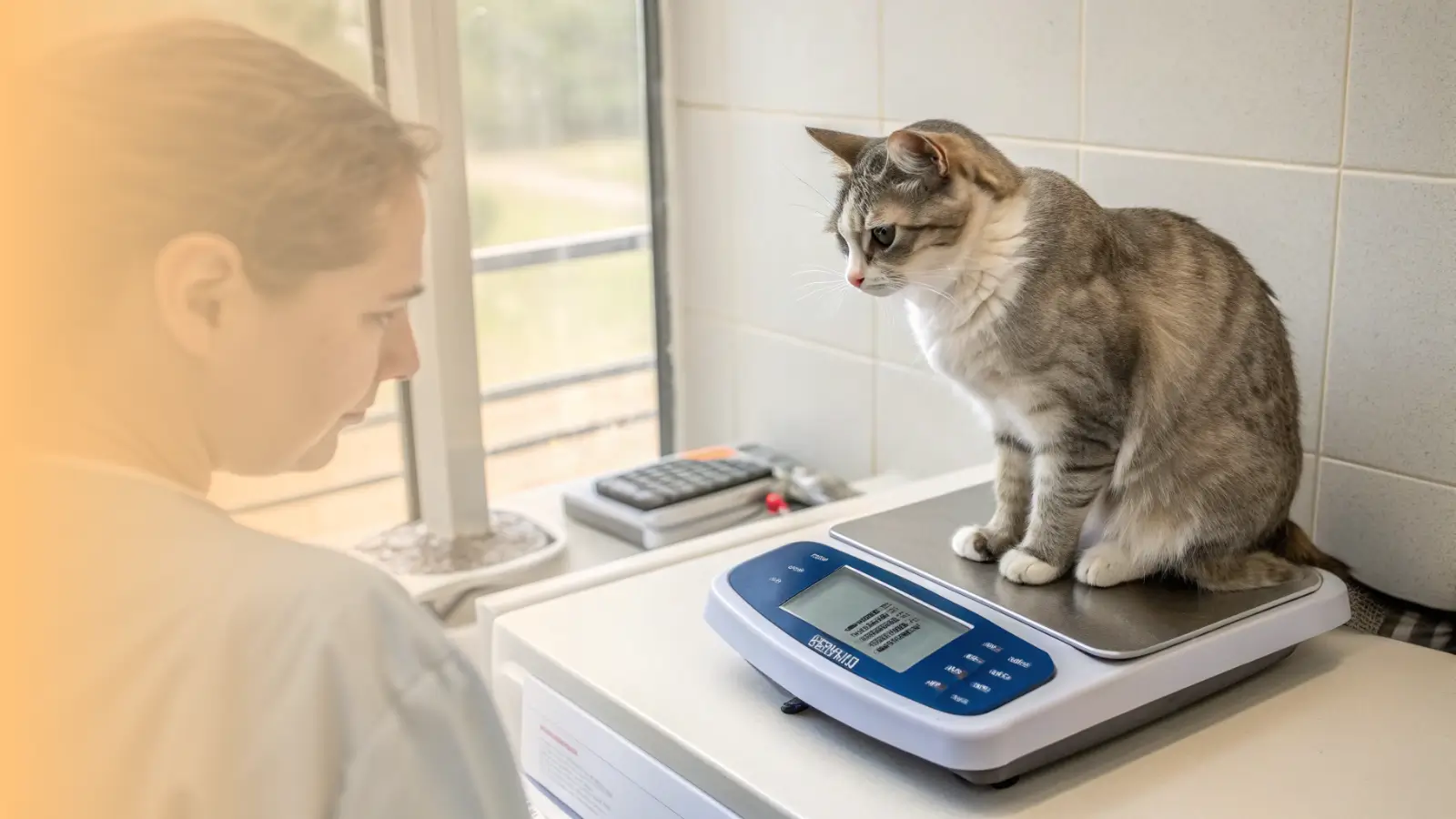
A veterinarian may examine your cat’s mouth, teeth, gums, hydration, weight, temperature, abdomen, breathing, and overall condition. Depending on the situation, they may recommend bloodwork, urine testing, imaging, fluids, anti-nausea medication, appetite support, dental care, or other treatment.
If hepatic lipidosis is suspected or the cat has not been eating enough, veterinary feeding support may be needed. In serious cases, this can include a feeding tube. That can sound frightening, but feeding tubes are sometimes part of safe, effective care because they help cats get calories while the underlying problem is treated.
This is why waiting too long can make things harder. The earlier a non-eating cat is assessed, the better the chance of addressing the cause before the cat becomes weaker or develops complications.
How Long Is Too Long?
For a healthy adult cat, no food for about 24 hours is too long to ignore. For kittens, senior cats, overweight cats, cats with known disease, or cats with vomiting, diarrhea, weakness, no drinking, or major behavior change, the safer choice is to call sooner.
A cat may technically survive longer than that, but “survive” is the wrong standard. The better question is: how long can a cat go without food before the risk becomes unacceptable? For many cats, that point comes much sooner than owners expect.
A skipped meal can happen. A full day without eating should get your attention. Several days without food is not a watch-and-wait situation.
Final Thoughts
If your cat misses one meal but acts completely normal, you can watch closely and offer familiar food in a calm setting. But if your cat has not eaten for around 24 hours, or if they are young, elderly, overweight, already ill, not drinking, vomiting, weak, or hiding, call a veterinarian.
I would rather be slightly early with a vet call than slightly late with a cat who has stopped eating. Appetite loss is one of those signs that can look small at first, but in cats, it can become serious quickly.
References
- Cornell Feline Health Center: Anorexia — Supports the 24-hour concern threshold, causes of appetite loss, dental checks, food aversion, and cautions around force-feeding.
- Cornell Feline Health Center: Hepatic Lipidosis — Supports the explanation of fatty liver disease, its link with anorexia, and feeding support.
- University of Illinois College of Veterinary Medicine: Hepatic Lipidosis — Supports the risk in overweight cats, mechanism of fat breakdown, symptoms, and tube-feeding context.
- Cats Protection: How Long Can Cats Go Without Food? — Supports practical owner thresholds for food refusal, water refusal, kitten risk, dehydration, and red flags.
- Cornell Feline Health Center: Hydration — Supports dehydration risks, causes of water loss, and hydration support through wet food and water access.
- PetMD: Cat Not Eating? Here’s What to Do — Supports owner-facing signs, nausea patterns, mouth pain clues, and when veterinary care is needed.
- PetMD: Why Your Cat Can’t Go Without Food — Supports the distinction between complete anorexia over days and partial anorexia over weeks.
- VCA Animal Hospitals: Feline Upper Respiratory Infection — Supports appetite loss related to respiratory infection, congestion, and reduced smell.
- AAFP/ISFM Environmental Needs Guidelines — Supports separate feeding resources and reducing feeding competition in multi-cat homes.