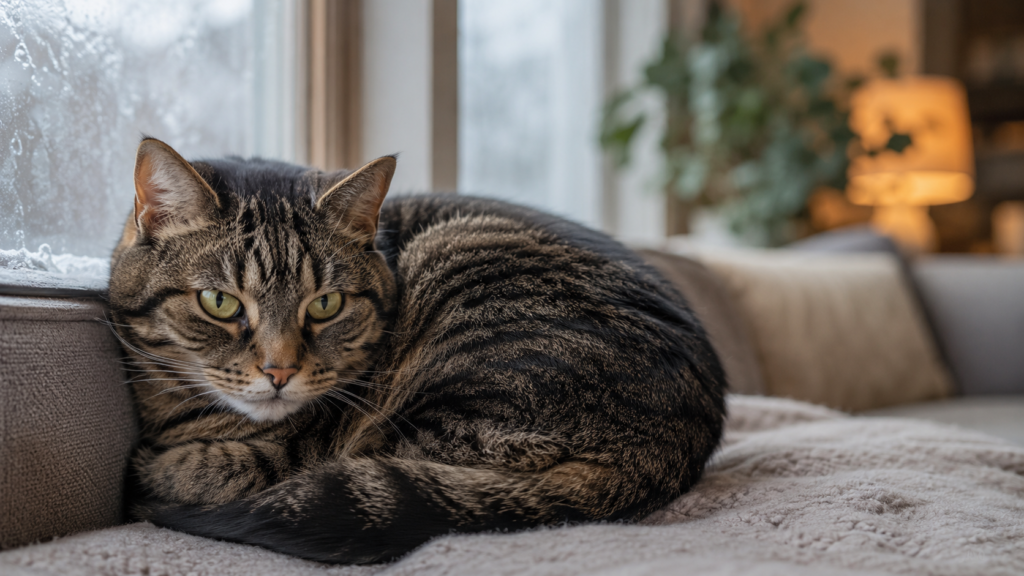
Cold weather can be confusing with cats because they often act fine until they do not. A cat may sit by a chilly window, ask to go outside, curl up in the garage, or disappear into a warm-looking corner, and it is not always obvious whether they are comfortable or just coping.
For me, the safer way to think about it is this: the number on the thermometer matters, but it is not the whole answer. A dry, healthy adult cat in a sheltered room is not in the same situation as a wet kitten outside in the wind, even if the temperature is exactly the same.
In general, many cats start to become uncomfortable when temperatures drop below about 45°F or 7°C, especially if they are outside for long. Temperatures at or below 32°F or 0°C are much more dangerous because frostbite and hypothermia become real risks.
That does not mean every cat is safe above 45°F or in immediate danger below it. Age, health, coat, body condition, wet fur, wind, shelter, and length of exposure all change the risk.
So, How Cold Is Too Cold for Cats?
For many cats, below about 45°F or 7°C is too cold for prolonged exposure, especially outdoors. Freezing temperatures, 32°F or 0°C and below, should be treated as dangerous for cats, particularly if there is wind, rain, snow, ice, or no dry shelter.
A useful way to think about it is by risk level, not by one perfect cutoff.
| Temperature | What it usually means for cats |
|---|---|
| Around 60°F or 15°C and above | Usually manageable for many healthy adult cats indoors, if they have warm resting spots. |
| Around 50°F or 10°C | Some cats may be fine briefly, but vulnerable cats may already feel cold. |
| Around 45°F or 7°C | Too cold for many cats to stay exposed for long, especially outdoors. |
| Below 32°F or 0°C | Dangerous. Frostbite and hypothermia become serious concerns. |
This is why you may see slightly different advice from different veterinary and welfare sources. Some focus on comfort. Some focus on outdoor survival risk. Some focus on medical emergencies.
I would not treat those differences as contradictions. They are talking about slightly different questions. “Is my cat comfortable?” is not the same as “Can my cat survive this?” and neither is the same as “When should I bring my cat inside?”
For a pet cat with access to a home, I would be cautious much earlier than freezing. If it is cold enough that you are worrying, your cat should have a warm, dry place to go.
Why the Same Temperature Can Affect Cats Differently
A temperature that is only mildly uncomfortable for one cat can be risky for another. Cats do have fur, but fur is not a guarantee of safety. It works best when the cat is dry, sheltered, healthy, and able to move away from the cold.
Wind and wetness make a major difference. Wet fur loses much of its insulating value, and wind pulls heat away from the body faster. A cat sitting outside at 45°F on a dry, still day is not facing the same risk as a cat at 45°F in cold rain.
Exposure time also matters. A quick walk through a cold yard is different from being locked outside overnight. This is where many owners get caught off guard. A cat may seem okay when they first go out, then become chilled after hours of limited movement, wet paws, or no warm shelter.
Body condition matters too. A thin cat has less insulation. A sick cat may not regulate body temperature well. A senior cat may move less, seek warmth less effectively, or have joint pain that makes it harder to reach a warm spot.
Hairless and short-haired cats need more protection than thick-coated cats. Long-haired cats may tolerate cool weather better, but they are not cold-proof. Even cats with heavy coats can become dangerously cold if the temperature is freezing, the wind is strong, or their coat gets wet.
Indoor Cats Can Get Too Cold Too
Indoor cats are usually safer than outdoor cats in winter, but they can still become too cold in unheated rooms, garages, basements, sheds, drafty apartments, or homes during a power outage.
For most healthy adult indoor cats, the practical question is not “must my home be tropical?” It is “does my cat have warm, dry choices?” A cat can often handle a cooler room if they have a cozy bed, a draft-free area, and the freedom to move somewhere warmer.
Cold floors, open windows, damp rooms, and drafts can make a space feel much colder to a cat. Cats often choose warmth very deliberately. You may notice them sleeping in sun patches, near radiators, on soft blankets, inside enclosed beds, or close to people.
That behavior is not always a problem. Seeking warmth is normal. What would concern me more is a cat who seems unusually quiet, weak, cold to the touch, reluctant to move, or uninterested in food after being in a cold place.
Garages deserve extra caution. They may feel like “indoors” to us, but many garages are poorly insulated and can drop close to outdoor temperatures. They may also contain winter hazards such as antifreeze, de-icing products, or access to car engines.
Outdoor Cats Need More Than Somewhere to Hide
Outdoor exposure is where cold becomes more serious. A pet cat should not be left outside for long periods in freezing or near-freezing weather, especially overnight.
A cat who is used to going outdoors may have better cold tolerance than a strictly indoor cat. They may grow a thicker winter coat and know where to seek cover. That still does not make them safe in freezing temperatures, strong wind, cold rain, or snow.
For owned cats, the safest option in cold weather is simple: bring them indoors, especially at night. If your cat normally toilets outside, provide an indoor litter tray so they do not have to choose between holding it and going out into cold weather.
Community cats and feral cats are a different situation because they may not be easy or safe to bring indoors. In that case, shelter quality matters. A winter shelter should be dry, insulated, raised off the ground, protected from wind, and small enough to hold body heat.
One common mistake is putting towels or blankets in outdoor shelters. It feels kind, but cloth can absorb moisture and become cold. Straw is usually preferred for outdoor cat shelters because it helps repel moisture and gives cats a dry material to burrow into. Hay, towels, blankets, and folded newspaper can hold dampness and chill the cat.
Food and water also need winter planning. Outdoor cats may need more calories in cold weather because staying warm takes energy. Water can freeze quickly, so bowls need to be checked often. Water should not be placed inside the sleeping area because a spill can turn a shelter damp and cold.
Signs Your Cat May Be Too Cold
A cat who is mildly cold may simply look for warmth. They may curl into a tight ball, tuck their paws under their body, sleep in a warmer spot, or become less interested in going outside.
Those signs are not automatically an emergency. They do mean your cat is trying to conserve heat.
Signs that are more concerning include:
- Shivering
- Lethargy or unusual quietness
- Weakness or trouble walking
- Cold ears, paws, or tail
- Pale gums
- Slow or shallow breathing
- Confusion or poor responsiveness
- Collapse
- Skin on the ears, paws, or tail looking pale, gray, bluish, swollen, painful, blistered, or darkened
I would be careful not to rely on shivering alone. A cat can be dangerously cold without obvious shivering, and shivering may stop when hypothermia becomes severe.
Cold ears or paws also need context. A cat’s ears can feel cool after lying near a window, but cold extremities plus weakness, wet fur, outdoor exposure, slow breathing, or pale gums is much more serious.
Hypothermia in Cats
Hypothermia means a cat’s body temperature has dropped below normal. Cats normally run warmer than humans, with a typical rectal temperature around 100.5°F to 102.5°F. When their body temperature drops too low, the body starts struggling to keep the heart, brain, and organs working properly.
This can happen after cold outdoor exposure, especially if the cat is wet, trapped, injured, very young, old, thin, or sick. It can also happen because of serious illness, not just weather.
That second point matters. If an indoor cat feels cold, weak, or unusually unresponsive, do not assume the room temperature is the only problem. A low body temperature can be a sign that something medical is going wrong.
If you suspect hypothermia, move the cat to a warm, dry place, dry them if they are wet, wrap them in warm towels or blankets, and contact a veterinarian or emergency vet. Warming should be gradual. Do not use hot water, hair dryers, or high heat against the skin because a cold cat can be injured by heat more easily than you might expect.
This is where I would stop guessing and call a vet, especially if the cat is weak, collapsed, breathing strangely, very cold to the touch, not responding normally, or has pale or bluish gums.
Frostbite in Cats
Frostbite happens when tissue is damaged by freezing temperatures. When the body gets very cold, it protects the core by reducing blood flow to outer areas. That helps preserve heat around vital organs, but it leaves the ears, paws, and tail more vulnerable.
The ear tips are especially exposed. Paws and tails can also be affected, particularly if the cat is standing on ice, snow, or cold wet ground.
Frostbite is not always obvious right away. Affected skin may look pale, gray, or bluish. It may feel cold, brittle, swollen, painful, or unusually sensitive. Later, damaged tissue can blister, ulcerate, darken, or turn black.
Do not rub suspected frostbite. Do not apply snow. Do not use very hot water. The safer step is to get the cat somewhere warm and contact a veterinarian. Frostbite can be painful, and the full damage may take time to show.
Which Cats Need Extra Caution in Cold Weather?
Some cats need protection from cold sooner than others. I would be more cautious with:
- Kittens
- Senior cats
- Thin or underweight cats
- Hairless or short-haired cats
- Cats recovering from illness, surgery, or anesthesia
- Cats with heart disease, kidney disease, diabetes, hormonal disease, or other chronic conditions
- Cats with arthritis or mobility problems
- Cats who are wet, injured, lost, or unable to get indoors
Kittens and frail cats have less reserve. Senior cats may be less able to regulate body temperature or move to a warmer spot. Cats with chronic illness may not handle cold stress well.
Arthritis is also worth thinking about. Cold weather may make stiffness more noticeable. A senior cat who stops jumping, hesitates on stairs, avoids the litter box, grooms less, or becomes irritable when handled may not just be “slowing down.” Pain or mobility changes deserve a veterinary conversation.
For these cats, I would not wait until the house feels very cold. A warm bed, easy access to food and water, low-sided litter boxes, and reachable resting places can make winter much easier.
Winter Hazards That Come With Cold Weather
The cold itself is not the only winter risk. Cats often seek warmth in unsafe places, and winter products can create extra hazards.
Outdoor cats may crawl into wheel wells or engine compartments because a recently used car is warm. Before starting a car in cold weather, it is worth banging on the hood, checking around the wheels, or making noise so a hiding cat has a chance to escape.
Sheds, garages, and outbuildings should also be checked before closing them. A cat trapped inside a cold building without food, water, or warmth can become unsafe quickly.
Antifreeze is a serious winter danger. Products containing ethylene glycol can be highly poisonous to cats, and even small amounts can be dangerous. If you think your cat may have licked antifreeze or walked through a spill and groomed it off, contact a veterinarian or emergency vet immediately.
Road salt and ice melt can irritate paws and may cause problems if cats lick it from their feet or fur. If your cat walks outside in winter, wiping their paws and belly when they come in is a simple habit that can reduce both irritation and ingestion risk.
How to Keep Your Cat Safer When It Gets Cold
The safest winter setup is one where your cat does not have to work hard to stay warm. Indoors, that usually means warm resting spots, no strong drafts, dry bedding, and easy access to food, water, and a litter tray.
A soft bed in a quiet area can help, especially if it is off a cold floor. Some cats like enclosed beds because they trap body heat better than flat mats. Your cat should always be able to move away from any heat source if they get too warm.
Be cautious with heating products. A temperature-controlled heated cat bed may be useful for some cats, but direct heat can burn. Avoid using heating pads, hair dryers, or hot water as emergency warming tools unless your vet specifically instructs you.
For outdoor access, bring cats in before temperatures drop sharply, especially at night. If your cat uses a cat flap, make sure it works and does not leave them stuck outside. If you live in a multi-cat home, provide enough indoor resources so staying inside does not create new stress. More cats indoors can mean more competition for warm beds, litter trays, and quiet corners.
If you care for outdoor community cats, focus on dry insulated shelters, straw bedding, protected entrances, unfrozen water, and regular food checks. A shelter that stays dry is far more useful than one that looks cozy but absorbs moisture.
Final Thoughts
For most cats, below 45°F or 7°C is too cold for long exposure, and freezing temperatures are dangerous. But the better question is not only “what temperature is too cold?” It is “can my cat stay warm, dry, sheltered, and able to come inside?”
A healthy adult cat may handle a chilly room or brief outdoor cold better than a kitten, senior, thin cat, hairless cat, sick cat, or wet cat. Wind, rain, snow, ice, and time outside all raise the risk.
If your cat seems weak, confused, very cold, collapsed, breathing abnormally, has pale gums, or shows signs of frostbite, do not treat it as ordinary winter discomfort. Warm them gently, keep them dry, and contact a veterinarian or emergency vet.
References
- PetMD, How Cold Is Too Cold for Cats? — supports practical cold thresholds, vulnerable cats, and signs a cat may be too cold.
- Cornell Feline Health Center, Cold Weather Tips for Cats — supports indoor safety, outdoor shelter, food, water, and winter vehicle precautions.
- Merck Veterinary Manual, Keeping Pets Safe During Cold Winter Months — supports frostbite risk, wet and windy conditions, road salt, antifreeze, and vehicle risks.
- VCA Animal Hospitals, Frostbite in Cats — supports frostbite mechanism, affected body parts, signs, and delayed tissue damage.
- Cats Protection, Cats and Cold Weather — supports cold-weather signs, hypothermia warnings, arthritis considerations, indoor litter access, paw wiping, and antifreeze caution.
- PDSA, Hypothermia in Pets — supports hypothermia signs, higher-risk pets, wet fur risk, and gradual warming advice.
- Humane World for Animals, How to Care for Outdoor Cats in Winter — supports practical outdoor shelter design, bedding cautions, and winter food and water setup.