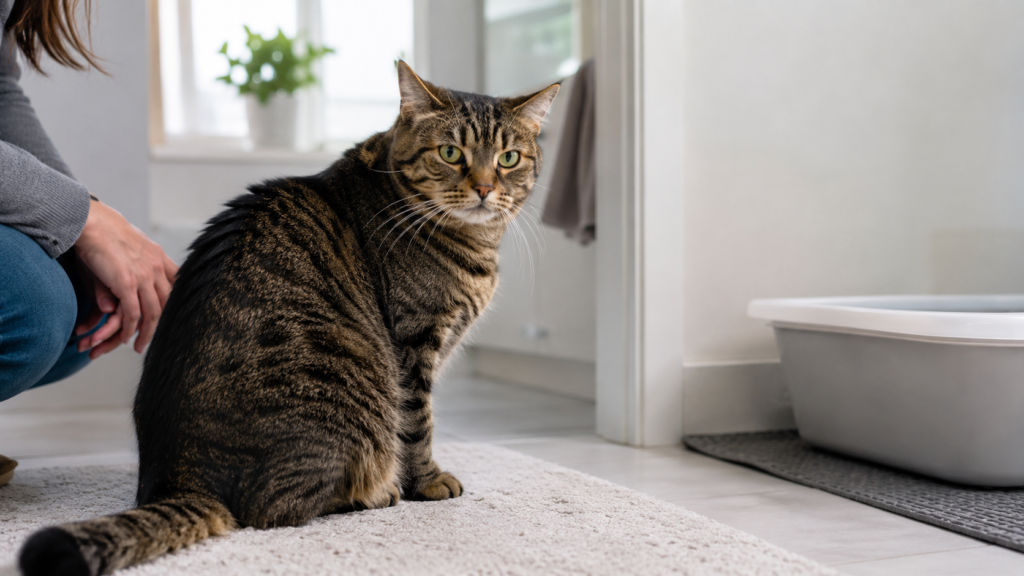
Seeing your cat strain in the litter box is hard to watch. It is also confusing, because “trying to poop” is not always what it looks like. A cat that keeps squatting, visits the box again and again, or produces very little may be constipated, but similar behavior can also happen with urinary problems, diarrhea, pain, or other medical issues.
The safest way to help a constipated cat starts with figuring out what you are actually seeing. Is your cat passing urine? Has there been any normal stool? Are the stools dry and hard, or is there only a small amount of liquid? Is your cat eating, moving, and acting normal?
Mild constipation may improve with simple support such as better hydration, easier litter box access, and closer monitoring. But if your cat is repeatedly straining, vomiting, not eating, lethargic, painful, bloated, or unable to pass urine, this is not a wait-and-see situation. That is where I would stop guessing and call a veterinarian.
What Constipation Means in Cats
Constipation means your cat is having trouble passing stool, usually because the stool is too dry, too hard, too large, or moving too slowly through the colon. It is not just “my cat spent a long time in the litter box.” The detail that matters is whether your cat is actually passing hard, dry stool with effort.
The colon naturally absorbs water from stool as it moves through the body. When stool stays in the colon too long, more water is pulled out. The stool becomes drier and harder, which makes it even harder to pass. That is why constipation can become a cycle: the longer stool sits, the more difficult and uncomfortable it may become.
Most cats pass stool about once a day, but individual patterns vary. A cat that normally poops every day and suddenly goes a day or two without stool deserves closer attention than a cat whose usual pattern is already less frequent. The more useful question is: what is normal for your cat, and what has changed?
First, Make Sure It Is Not a Urinary Emergency
Before thinking about food, fiber, or home care, check whether your cat is passing urine. This matters because urinary obstruction can look a lot like constipation from the outside. A cat may keep going to the litter box, strain, cry, squat for a long time, and produce little or nothing.
If your cat is trying to urinate but cannot, that is an emergency. This is especially concerning in male cats, but it can be dangerous for any cat. Do not assume litter box straining is constipation unless you can confirm your cat is passing urine normally.
Look for wet clumps, urine marks, or normal-sized urine output. In a multi-cat household, this can be hard to confirm because you may not know which cat used the box. If you are unsure and your cat is straining repeatedly, I would treat that uncertainty seriously and contact a vet.
Signs Your Cat May Be Constipated
A constipated cat may visit the litter box more often than usual, squat for a long time, strain, or leave only small, hard pieces of stool. Some cats vocalize because passing stool is uncomfortable. Others may seem restless, hide, groom less, or avoid the litter box if they associate it with pain.
One confusing sign is a small amount of watery stool or mucus. Many owners see liquid and assume diarrhea, but constipated cats can sometimes pass liquid around retained hard stool. This is one of the biggest mistakes in home interpretation. A cat can look like it has diarrhea while still being constipated.
Blood can also appear after repeated straining. That does not mean you should panic over one tiny streak, but it does mean you should not dismiss the problem as ordinary stomach upset. Straining, hard stool, liquid leakage, blood, appetite changes, and reduced energy together deserve veterinary guidance.
When to Contact a Veterinarian
Call a veterinarian promptly if your cat is straining repeatedly and producing little or no stool, especially if you are not completely sure your cat is urinating. Also contact a vet if there has been no bowel movement for more than 24 to 48 hours and the pattern is unusual for your cat.
More urgent warning signs include vomiting, not eating, lethargy, obvious pain, a swollen or tense belly, crying in the litter box, collapse, or repeated attempts with no output. If your cat cannot pass urine, seek emergency veterinary care.
I would be more cautious with kittens, senior cats, cats with chronic kidney disease, overweight cats, cats with previous constipation, and cats taking medications. These cats may have less room for error because dehydration, pain, mobility problems, or underlying disease can make constipation harder to manage safely.
What You Can Do at Home for a Mild, Stable Case
If your cat is bright, eating, passing urine normally, and only mildly constipated, the safest home support is simple: improve hydration, reduce litter box barriers, and monitor closely. Home care should support your cat while you watch for changes. It should not replace veterinary care if your cat is sick, painful, or repeatedly unable to pass stool.
Start with water access. Put fresh water in more than one location, especially if you have a larger home or multiple cats. Some cats drink more from a wide bowl, some prefer a fountain, and some are more likely to take in moisture through wet food. You can also ask your vet whether adding water to food is suitable for your cat.
If your cat already eats wet food, keep meals consistent unless your vet recommends a change. If your cat eats dry food only, a gradual move toward more moisture may help some cats, but sudden diet changes can cause digestive upset. For me, the safer way to think about food is this: moisture can support stool softness, but it is not a guaranteed cure for constipation.
Be Careful With Fiber, Pumpkin, and Natural Fixes
Fiber is one of the most oversimplified topics in cat constipation advice. Some constipated cats may benefit from the right type of fiber, but more fiber is not always better. Fiber changes stool bulk, stool moisture, and how the colon has to move material along.
Soluble fiber, such as psyllium or pumpkin, can hold water and may affect stool consistency. Insoluble fiber can increase stool bulk and stimulate the colon in some cats. But if a cat is dehydrated, severely backed up, or has poor colon movement, adding bulky fiber may make the situation worse instead of better.
That is why I would not treat pumpkin, psyllium, or high-fiber food as harmless universal fixes. They may be useful in some mild or recurring cases, but they should be discussed with a veterinarian, especially if your cat is older, has kidney disease, has repeated constipation, or is already struggling to pass stool.
Do Not Use Human Laxatives or Enemas Without a Vet
This is a firm safety line: do not give human laxatives, enemas, mineral oil, or rectal treatments unless your veterinarian specifically tells you to. Some products that seem ordinary for people can be dangerous for cats.
Phosphate enemas are especially risky for cats and can cause severe electrolyte problems. Oral mineral oil is also unsafe because of the risk of aspiration, which means the oil can enter the airway and cause serious lung problems.
Even laxatives that veterinarians commonly use in cats are not something to start casually at home. Some work by drawing water into the bowel, which can be a problem if the cat is dehydrated. They also need the right patient, the right situation, and veterinary judgment. A blog article can explain options, but your own cat’s treatment needs a vet.
Why Cats Become Constipated
Constipation can happen for many reasons, and sometimes more than one factor is involved. Dehydration is a common part of the picture. When the body needs more water, the colon may absorb more water from stool, leaving it dry and hard.
Pain and mobility problems can also contribute. A senior cat with arthritis may avoid climbing into a high-sided litter box or may find the defecation posture uncomfortable. If passing stool hurts, the cat may delay going, which gives stool more time to dry out.
Other possible contributors include hair ingestion, swallowed indigestible material, obesity, low activity, stress around the litter box, certain medications, chronic kidney disease, pelvic problems, neurologic disease, tumors, strictures, or previous constipation. That does not mean you should try to diagnose all of these at home. It means recurring or severe constipation deserves a proper veterinary exam instead of repeated home experiments.
Why Senior Cats and Cats With Kidney Disease Need Extra Caution
Older cats are more likely to have constipation risk factors such as dehydration, chronic kidney disease, arthritis, reduced activity, medication exposure, and litter box access problems. A senior cat that strains or stops passing stool should not be treated the same way as a young, otherwise healthy cat with one slightly hard stool.
Chronic kidney disease matters because affected cats can lose more water through urine. When hydration is harder to maintain, stool may become drier. Some cats with kidney disease also have appetite changes, weight loss, weakness, or medication needs that complicate constipation.
If your senior cat has not pooped normally, is eating less, vomiting, or seems uncomfortable, I would call a vet sooner rather than trying several home remedies first. In older cats, constipation can be part of a wider health picture.
Litter Box Setup Can Make Constipation Worse
A poor litter box setup does not usually create a medical constipation problem by itself, but it can make a vulnerable cat hold stool longer. That delay can matter. If a cat avoids the box because it is dirty, hard to reach, guarded by another cat, too small, too high-sided, or placed in a stressful area, stool may sit longer in the colon.
For constipated or senior cats, make the box easy. Use a low-entry box if climbing is difficult. Keep the box clean. Place it where your cat can reach it without being trapped by another pet. In a multi-cat home, provide enough boxes so one cat cannot control access.
This is also useful after a painful constipation episode. Some cats develop a negative association with the litter box after straining or discomfort. Making the box easier and calmer will not treat impaction, but it can remove one barrier to normal elimination.
Multi-Cat Homes Make Monitoring Harder
In a single-cat home, you can usually tell whether your cat has pooped. In a multi-cat home, it is easier to miss constipation because the litter box still contains stool from other cats. You may think the household is normal while one cat has not passed stool for a day or two.
If you suspect one cat is constipated, watch that cat’s litter box visits more closely. Notice whether the cat squats, strains, leaves stool, or leaves only urine. If needed, temporarily separate the cat with its own clean box for observation, as long as doing so does not cause major stress.
Also watch the social side of the box. One cat may block access, stare from doorways, or make another cat avoid certain areas. That kind of pressure can be subtle. If a constipated cat already feels uncomfortable, litter box conflict can make the problem harder to read and harder to manage.
What a Vet May Need to Check
A veterinarian may check whether the colon is full of stool, whether your cat is dehydrated, whether the abdomen is painful, and whether there are signs of urinary disease or another condition. Depending on the case, they may recommend X-rays, bloodwork, urinalysis, or other tests.
This is not excessive when the signs are more than mild. Straining can come from constipation, urinary disease, colitis, anal sac problems, pain, obstruction, or other issues. The point of the exam is not just to confirm constipation. It is to find out why it is happening and whether the cat needs fluids, medication, an enema performed safely, or more intensive care.
Severe constipation can become obstipation, which means the cat can no longer pass the retained stool normally. In chronic cases, the colon can stretch and lose function, a condition often called megacolon. That is one reason repeated constipation should not be brushed off as a small litter box problem.
How to Prevent Future Constipation
Prevention depends on the cat, but the safest general approach is to support hydration, keep litter boxes easy to use, monitor stool quality, and address underlying risks with a vet. For many cats, this means more moisture in the diet, more water access, regular grooming for heavy shedders or long-haired cats, and a box setup that does not make elimination stressful or painful.
Weight and mobility matter too. If your cat is overweight, weight management should be planned with a veterinarian rather than handled through sudden food restriction. If your cat is stiff, reluctant to jump, or struggles with a litter box entrance, pain may be part of the constipation pattern.
For recurring constipation, ask your vet what pattern they want you to monitor: stool frequency, stool size, stool hardness, appetite, vomiting, urine output, and behavior. A simple record can help more than vague memory, especially if episodes happen weeks apart.
Common Mistakes to Avoid
The first mistake is assuming all litter box straining means constipation. If your cat is not passing urine, that can be an emergency. Always think about urine first.
The second mistake is treating watery stool as simple diarrhea. A constipated cat may pass small amounts of liquid around hard stool. If your cat is straining and only passing liquid, do not assume an anti-diarrhea approach is the answer.
The third mistake is stacking home remedies. Pumpkin, oils, milk, supplements, human laxatives, and enemas can delay proper care or create new risks. If the first safe steps are not helping, or if your cat seems unwell, the next step should be veterinary advice, not another remedy from the internet.
Final Thoughts
To help a constipated cat safely, start by checking the basics: stool, urine, appetite, vomiting, energy, pain, and how long the problem has been going on. A bright cat with mild hard stool may benefit from hydration support, easier litter box access, and close monitoring. A cat that is repeatedly straining, not producing stool, vomiting, not eating, painful, lethargic, or possibly unable to urinate needs veterinary help.
I would rather be cautious with constipation than wait until the cat is exhausted and the stool is harder to pass. Home care has a place, but it works best when the cat is stable and the risk signs are absent. When the signs are unclear, especially around urine output, the safer choice is to call a vet.
References
- Cornell Feline Health Center: Constipation
- Cornell Feline Health Center: Feline Lower Urinary Tract Disease
- VCA Animal Hospitals: Constipation in Cats
- Merck Veterinary Manual: Constipation, Obstipation, and Megacolon in Small Animals
- Royal Canin Veterinary Academy: Treating Constipation in Cats
- Purina Institute: Feline Constipation and Megacolon
- Today’s Veterinary Practice: Nutrition and Feline Idiopathic Constipation
- PetMD: Cat Constipation Symptoms and Causes