If you are trying to get rid of dander on your cat, the first thing to know is that you cannot remove it completely. Cats naturally shed tiny skin particles as part of normal skin turnover.
What you can do is reduce loose dander, manage visible flakes, and keep allergens from building up around your home.
This topic gets confusing because many people use “dander” and “dandruff” as if they mean the same thing. They are related, but they are not identical. Dander is usually microscopic, so you often cannot see it. Dandruff is the visible white or grayish flaking you may notice on your cat’s coat, bedding, brush, or favorite blanket.
For me, the safer way to think about it is this: mild dander is normal, but heavy visible flaking is a clue. Sometimes it is simple dryness or grooming buildup. Other times, it points to parasites, pain, obesity, poor grooming, skin disease, allergies, or another health issue that needs a veterinarian.
Dander vs Dandruff: What Are You Actually Seeing?
Cat dander is made of tiny skin particles that cats shed naturally. It is not the same thing as cat hair, although hair can carry dander around the home.
Dandruff is different because it is visible. If you see small white flakes on your cat’s back, near the base of the tail, in the fur, or on bedding, you are probably looking at dandruff or skin scale rather than invisible dander.
This difference matters because the goal changes. If your concern is allergies, you are trying to reduce dander and allergen spread in the home. If your concern is visible flakes on your cat, you are trying to remove loose skin and figure out why those flakes are there.
Cats can have normal skin shedding without looking flaky. A healthy cat usually grooms away a lot of loose skin and hair. So if the flakes suddenly become obvious, watch the pattern. A little dryness during a dry season is one thing. Heavy flakes, greasy fur, odor, itching, redness, scabs, or hair loss are different.
Can You Completely Get Rid of Cat Dander?
No, you cannot completely get rid of cat dander while living with a cat. All cats shed skin cells, and all cats produce proteins that can trigger allergies in sensitive people.
The more realistic goal is reduction. You can reduce loose skin on the coat with grooming, reduce buildup in bedding and soft furniture, and reduce airborne particles through cleaning and filtration.
This is where many owner-focused articles oversimplify the issue. They make it sound as if one shampoo, wipe, brush, or spray can solve cat dander. That is not realistic. Dander keeps forming because your cat’s skin keeps renewing itself. Allergy-triggering proteins can also come from saliva and skin secretions, then spread onto the coat when the cat grooms.
So the practical plan is not to remove dander forever. It is to lower the amount your cat sheds into the home and check whether visible flakes mean something more.
Why Cat Dander Causes Allergy Problems
Many people think cat hair is the allergy trigger, but the bigger issue is usually proteins found in cat dander, saliva, and urine. Hair matters because it carries those proteins around, not because the hair itself is the main problem.
This is also why short-haired cats are not automatically low-dander cats. A short coat may shed less visible hair in some cases, but that does not mean the cat produces no allergenic proteins.
Cat allergens can be frustrating because they are light and sticky. They can float in the air, settle into carpets and sofas, cling to clothing, and stay in rooms even after the cat has left. That is why someone may react in a cat home even when the cat is not sitting beside them.
If someone in your home has sneezing, itchy eyes, congestion, coughing, wheezing, or asthma-like symptoms around the cat, the cat’s coat is only one part of the problem. The home environment matters too.
Start with Regular Gentle Brushing
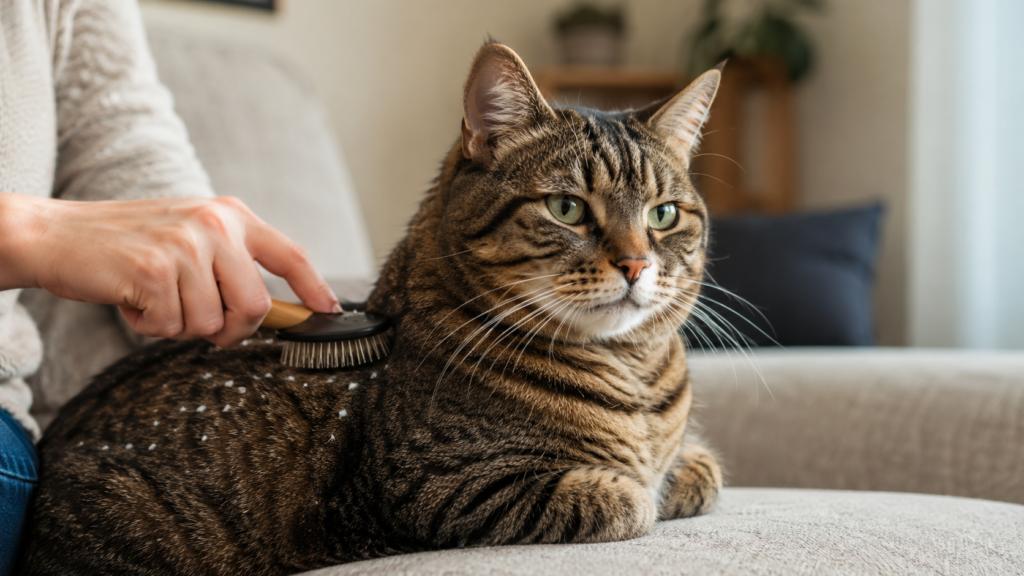
Brushing is usually the safest first step for reducing loose dander and visible flakes on a cat who otherwise seems well.
A good brushing session removes loose hair, dead skin cells, dirt, and debris before they spread around the house. It can also help distribute natural skin oils along the coat, which is one reason brushing may make the coat look smoother over time.
Use a cat-appropriate brush or comb and keep the pressure gentle. Do not scrape the skin to lift flakes. If the skin looks red, sore, crusty, or painful, brushing harder is not the answer.
Short-haired cats may only need brushing a few times a week, depending on the cat. Long-haired cats, thick-coated cats, older cats, and cats who mat easily often need more frequent grooming. The exact routine depends on the coat and the cat’s tolerance.
I would pay special attention to areas where cats often struggle to groom well, such as the lower back, base of the tail, behind the ears, under the front legs, and around the groin. Keep it calm. If your cat resists strongly, growls, bites, flinches, or seems painful, stop and treat that as information.
Use Grooming Time to Check the Skin
Brushing is not only about removing flakes. It is also your chance to see what is happening under the fur.
Look for redness, scabs, crusts, bald patches, greasy buildup, tiny black flea dirt, moving white specks, lumps, mats, or areas your cat does not want touched. These details matter because what looks like dander may actually be a sign of something else.
Many cats hide discomfort well. A cat with painful joints, dental pain, obesity, or stiffness may simply groom less. The owner may first notice flakes or mats, not obvious pain.
That is especially common around the back half of the body. If your cat has dandruff mostly along the lower back or near the tail base, ask whether your cat can comfortably reach that area. Senior cats and overweight cats may need more help, but they may also need a vet check to find out why grooming has changed.
Should You Bathe a Cat to Remove Dander?
Bathing may remove some dander and allergens temporarily, but it is not the best default solution for every cat.
Most healthy cats do not need frequent baths. Many cats find bathing stressful, and over-bathing can irritate the skin if it strips oils or if the wrong product is used. Human shampoo, harsh soaps, scented products, and random anti-dander products can make things worse.
If your cat tolerates water and your veterinarian recommends bathing, use only a cat-safe product and follow the label or veterinary directions. If your cat has skin disease, allergies, infection, greasy scaling, or recurring dandruff, the shampoo choice should come from a vet, not guesswork.
The tricky part is that bathing may reduce allergens only briefly. Research suggests washing a cat can reduce the main cat allergen for a short period, but the effect may not last long. For many homes, routine brushing, cleaning, washable bedding, and air filtration are more realistic than trying to bathe a stressed cat every week.
What About Cat Wipes or Damp Cloths?
A damp cloth or cat-safe grooming wipe may help remove loose surface material from the coat, especially if your cat does not tolerate baths. This can be useful for older cats, overweight cats, or cats who need light help with grooming.
Use simple, cat-labeled products. Avoid strong fragrance and avoid essential-oil-based products. Cats are more sensitive to some chemicals than many owners realize, and essential oils can be risky when absorbed through the skin or licked from the coat.
Do not use dog products unless the label clearly says they are safe for cats. Cats are not small dogs when it comes to grooming products or parasite products.
If wipes seem to make the skin redder, itchier, greasier, or flakier, stop using them. More product is not always better. Sometimes the skin needs a diagnosis, not another layer of grooming treatment.
Improve the Home Environment, Not Just the Cat’s Coat
If your goal is to reduce allergy exposure, you need to manage the home as well as the cat.
Dander and allergens collect in bedding, carpets, sofas, curtains, cat trees, clothing, and soft blankets. Brushing the cat helps, but it will not do much if allergens keep building up in places where your cat sleeps.
Wash cat bedding regularly. Wash your own bedding if the cat sleeps on it. Vacuum with a good filter, especially around favorite resting spots. Wet-dust hard surfaces instead of dry dusting, because dry dusting can push particles back into the air.
Carpets and upholstered furniture hold more allergens than smooth floors and washable covers. If someone in the home has allergies, the cat’s bedroom access may matter. Keeping the bedroom cat-free may help some people, but it works better as part of a bigger plan, not as the only step.
A HEPA air purifier can help reduce airborne particles in rooms where the cat spends a lot of time. It is not a cure, but it can be one useful layer, especially when combined with cleaning and grooming.
Watch Indoor Air and Humidity
Dry indoor air can make flaky skin more noticeable in some cats. This often becomes more obvious in homes with air conditioning, heating, or low humidity.
If your cat’s flakes are mild and the skin otherwise looks calm, improving indoor comfort may help. Keep fresh water available, keep the home from becoming overly dry, and avoid placing your cat’s bed directly in harsh hot or dry airflow.
That said, do not blame every flaky coat on dry air. If the dandruff is heavy, greasy, smelly, itchy, or paired with hair loss, dry air is probably not the whole story.
This is a common owner mistake: assuming flakes are just dry skin and trying oils, supplements, or repeated baths. Sometimes the cause is parasites, poor grooming from pain, infection, allergy, or another medical issue.
Food and Supplements Need Careful Wording
A complete, age-appropriate diet supports healthy skin and coat. Poor nutrition can show up as a dull coat, dry skin, or increased shedding.
But it is too strong to say that changing food will get rid of dander. Dander is normal. Diet may support skin health, but it does not stop skin turnover or make a cat allergy-free.
If your cat eats a complete cat food and suddenly develops dandruff, do not assume the food is the only problem. Look at grooming, weight, age, parasites, stress, indoor air, and skin changes too.
Fish oil and other skin supplements are sometimes discussed for dry skin, but I would not add supplements casually without veterinary guidance. Supplements can vary in quality, dose, and suitability, and the research report supports vet-directed use rather than DIY dosing.
There are also some allergy-focused cat foods designed to reduce active Fel d 1 allergen exposure, but they should not be presented as a cure. The current evidence is more promising than conclusive, and these diets do not make a cat truly hypoallergenic.
When Dandruff May Be More Than Dry Skin
Visible dandruff becomes more concerning when it is heavy, recurring, greasy, smelly, or paired with other skin changes.
Possible underlying causes include poor grooming, fleas, mites, allergies, infections, ringworm, hormonal disease, stress, dehydration, obesity, arthritis, dental pain, or other health conditions. That does not mean your cat has one of these problems. It means dandruff is a sign, not a diagnosis.
One useful clue is whether the cat is itchy. Scratching, overgrooming, chewing, licking, scabs, and hair loss point away from simple dry skin and toward a skin problem that needs proper evaluation.
Another clue is coat texture. Dry white flakes on an otherwise comfortable cat may be less urgent. Oily flakes, odor, redness, crusts, or sore patches are more concerning.
If you have more than one pet, pay attention to whether other animals are itchy or flaky too. Fleas and some mites can affect multiple pets, and treating only the cat with visible flakes may not solve the household problem.
Fleas, Mites, and Walking Dandruff
Fleas can cause major skin irritation even if you rarely see the fleas themselves. Some cats react strongly to flea bites and may develop itching, scabs, hair loss, and flaky skin.
Flea dirt can look like tiny dark specks in the coat, often near the tail base or lower back. White flakes are not the same as flea dirt, but both can appear during coat checks, which is why grooming time is useful.
Mites can also cause scaling. One condition often called walking dandruff is linked to Cheyletiella mites, where flakes may appear to move. It can spread between animals and may sometimes affect people too.
Do not try to identify mites by guessing from photos. If you notice moving flakes, sudden heavy dandruff, itching in multiple pets, or irritated skin on people in the home, that is a good point to stop experimenting and call a veterinarian.
Senior, Overweight, and Stiff Cats Need Extra Attention
Older cats and overweight cats are more likely to have grooming trouble. They may not twist, bend, or reach as easily as they used to.
This can lead to dandruff, mats, greasy patches, and loose hair buildup, especially along the back and near the tail. The cat may still look calm and normal, so the coat change may be the first sign you notice.
I would be more cautious if the dandruff appears along with less jumping, stiffness, hiding, weight change, reduced appetite, bad breath, drooling, or a sudden change in grooming habits. Those signs do not prove one specific problem, but they make “just brush more” feel too shallow.
Gentle grooming can help these cats feel cleaner, but it should not replace a vet visit if pain, obesity, dental disease, arthritis, or illness may be affecting grooming.
Multi-Cat Homes Can Build Up More Dander
In a multi-cat home, dander control is harder because there are more skin cells, more hair, more bedding, and more shared resting spots.
If allergies are the concern, more cats usually means more allergen load in the home. Cleaning routines need to match that reality. One air purifier in a rarely used room will not do much if the cats spend all day on the sofa and beds.
If visible dandruff or itching appears, also think beyond one cat. Fleas and some skin problems can involve more than one animal. One cat may show obvious flakes while another carries fleas or contributes to reinfestation.
This is where practical consistency matters. Brush the cats who tolerate it, wash shared bedding, vacuum common resting areas, and keep parasite prevention decisions under veterinary guidance.
What Not to Use for Cat Dander
Avoid essential oils, human dandruff shampoo, harsh soaps, heavily scented sprays, and homemade anti-dander mixtures.
Cats groom themselves, so anything placed on the coat may be swallowed. Some substances can also be absorbed through the skin. Essential oils are a particular concern because concentrated oils can be dangerous for cats, especially if applied directly or licked from the fur.
Also be careful with flea products. Products meant for dogs can be dangerous for cats, and parasite control should be cat-specific.
If a product promises to eliminate dander completely, be skeptical. A reasonable product may help remove loose surface material or support grooming. It cannot stop normal skin shedding.
When Should You Call a Vet?
Call a veterinarian if your cat has heavy dandruff, recurring flakes, itching, overgrooming, hair loss, redness, scabs, crusts, greasy fur, odor, visible parasites, moving flakes, weight loss, stiffness, limping, pain, or a sudden change in grooming.
You should also call if the flakes come with signs of illness, such as reduced appetite, hiding, low energy, or major behavior change.
This does not mean every flaky cat is seriously ill. It means the coat can show early clues. A cat with mild flakes and no other signs may simply need better grooming and environmental support. A cat with symptoms needs more than surface cleaning.
For human allergy symptoms, speak with a healthcare professional, especially if there is wheezing, asthma, shortness of breath, or symptoms that interfere with sleep or daily life. The cat’s grooming routine may help reduce exposure, but it is not medical treatment for a person’s allergies.
A Practical Dander-Reduction Routine
For a healthy cat with mild dander or light flakes, start with a simple routine.
Brush gently and regularly with a cat-appropriate brush. Check the skin while you brush. Wash cat bedding and blankets. Vacuum areas where your cat spends time. Wet-dust surfaces instead of dry dusting. Consider a HEPA air purifier in the main cat room. Keep the home from getting overly dry.
If your cat tolerates it, you can wipe the coat with a damp cloth or cat-safe grooming wipe. Keep it mild and simple.
Then watch the trend. Are the flakes improving? Is the coat smoother? Is the cat comfortable? Or are the flakes returning quickly, getting greasy, or appearing with itch, redness, hair loss, or poor grooming?
That trend tells you whether this is likely a routine grooming issue or something that deserves a veterinary check.
Final Thoughts
You do not need to panic over a few flakes, and you do not need to chase the impossible goal of a dander-free cat. Dander is normal. Visible dandruff is common enough, but it should still be read in context.
The best approach is steady and practical: brush gently, reduce buildup in the home, avoid harsh products, and pay attention to what your cat’s skin and coat are telling you.
If the flakes are heavy, greasy, itchy, smelly, painful, recurring, or tied to poor grooming or other symptoms, I would stop treating it as a cleaning problem. That is the point where a veterinarian can help find the reason behind the flakes.
References
- Cats Protection: Can Cats Get Dandruff?
- Mayo Clinic: Pet Allergy Symptoms and Causes
- AAAAI: Pet Allergy
- Cornell Feline Health Center: Feline Skin Diseases
- VCA Hospitals: Grooming and Coat Care for Your Cat
- VCA Hospitals: Coat and Skin Appearance in the Healthy Cat
- Merck Veterinary Manual: Seborrhea in Animals
- VCA Hospitals: Essential Oil and Liquid Potpourri Poisoning in Cats