When a cat does not seem to like you, it can feel oddly personal. Maybe your cat walks away when you sit down, accepts food but refuses touch, prefers someone else in the house, or seems friendly one minute and annoyed the next.
For me, the safer way to think about it is this: you are not trying to convince a cat to love you. You are trying to help the cat feel safe enough to choose you.
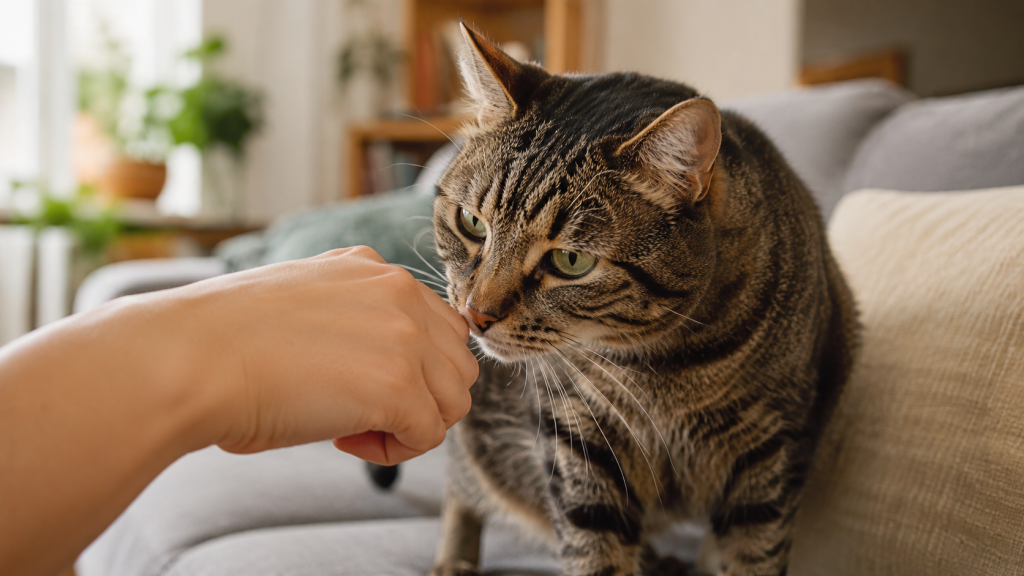
For many cats, “liking you” does not look like constant cuddling. It may look like sitting in the same room, blinking slowly, rubbing their cheek on your hand, sleeping nearby, playing with you, or approaching you without being called. Once you understand those smaller signs, the whole relationship becomes less confusing.
What It Really Means When a Cat Likes You
A cat that likes you usually feels safe around you, not controlled by you. That distinction matters.
Some cats show affection by climbing into your lap. Others prefer quiet proximity. They may sit near your chair, follow you into a room, rub once against your leg, then leave. That still counts as social behavior.
Cats can form real bonds with people, but they do not all show attachment in the same way. A confident, well-socialized cat may enjoy touch, play, and lap time. A cautious rescue cat may show trust by staying visible instead of hiding. A senior cat may want company but dislike being picked up because their body is less comfortable than it used to be.
I would not judge the relationship only by whether a cat wants to be held. Many cats like their people and still hate being carried, hugged, kissed, or restrained.
Better signs to watch for include: