
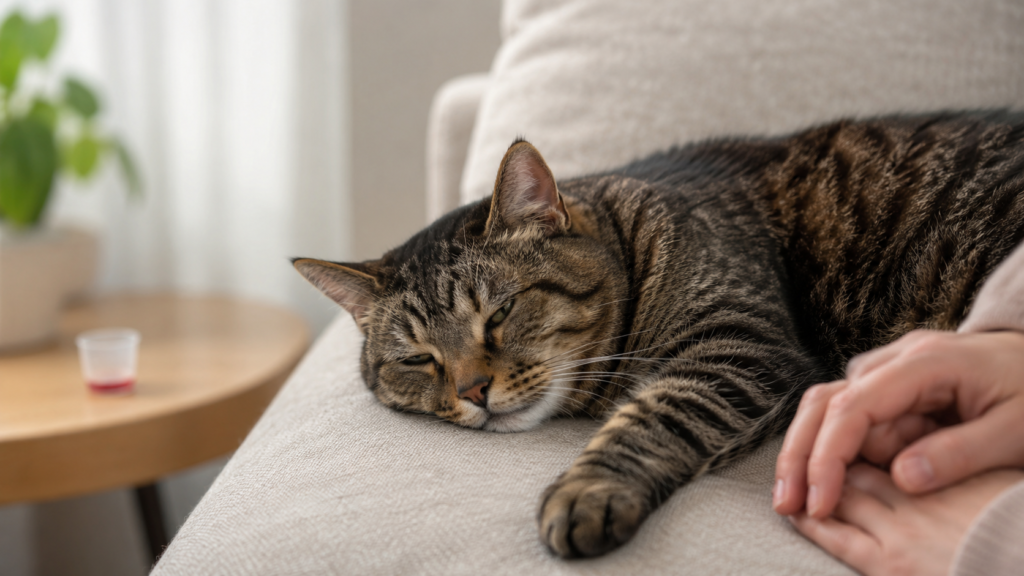
If your cat looks sleepy, wobbly, or unusually calm after taking gabapentin, it is natural to wonder how long the effect is supposed to last. Many owners ask this after a vet visit, a stressful car ride, grooming, a pain-related prescription, or a dose given before an appointment.
The simple answer is that gabapentin is usually considered a short-acting medication in cats, and many noticeable effects wear down within the same day. Veterinary guidance commonly describes it as a medication that should stop working within about 24 hours in most pets, although effects may last longer in cats with kidney or liver disease.
That does not mean every cat will look normal after the same number of hours. Some cats only seem mildly relaxed. Others become very sleepy or unsteady. The timing can change depending on your cat’s health, age, stress level, dose, formulation, and why the medication was prescribed.
For me, the safer way to think about gabapentin is not “exactly how many hours does it last?” but “is my cat gradually becoming more alert and coordinated, or are the effects severe, worsening, or lasting longer than expected?”
How Long Does Gabapentin Usually Last in Cats?
In many cats, gabapentin starts to have a noticeable effect within about 1 to 2 hours. When it is used before a veterinary visit or travel, cats are often calmer during the stressful window, then gradually become more alert later in the day.
A study on gabapentin before veterinary visits found that its effects resolved within 8 hours after administration in the cats studied. Other veterinary guidance gives a broader safety window, saying the medication should stop working within 24 hours in most pets.
Those two points can sound conflicting, but they are not really saying the same thing. The 8-hour figure describes visible effects in a specific pre-visit study. The 24-hour figure is a broader owner-facing guideline for when a short-acting medication should no longer be working in most pets.
So a practical owner answer is this: many cats look most affected for several hours, often through the vet visit or travel period, and should trend back toward normal the same day. If your cat is still clearly sedated, very wobbly, or not acting right the next day, contact your veterinarian.
Why the Timing Is Not the Same for Every Cat
Gabapentin does not work like a timer that starts and stops perfectly. In cats, oral gabapentin reaches peak levels at around 100 minutes in pharmacology data, which lines up with why vets often tell owners to give it before the stressful event rather than at the last second.
After that, the body clears the medication over time. Studies in cats report a relatively short elimination half-life of roughly a few hours. A half-life is the time it takes for the amount of a drug in the body to drop by half, but it is not the same as “how long your cat will look sleepy.”
That distinction matters. A cat may still seem tired after blood levels have already started falling. Another cat may have the drug still present but look fairly normal. Sedation, coordination, fear level, pain level, and the cat’s normal personality all shape what you see at home.
This is why generic answers like “gabapentin lasts 6 hours” or “gabapentin lasts 12 hours” can be misleading. They may be partly true for some cats in some situations, but they do not cover the full range of normal responses.
What Gabapentin Is Used for in Cats
Gabapentin is used in cats for several different reasons. Veterinarians may prescribe it for chronic pain, especially nerve-related pain, seizure-related conditions, or fear and anxiety linked to travel and veterinary visits. In cats, these uses are generally described as off-label or extra-label, meaning the veterinarian is using the medication based on clinical judgment rather than cat-specific approval for that exact purpose.
The reason for the prescription changes how owners interpret “lasting.” If your cat took gabapentin before a vet visit, you are probably watching for calmness, sleepiness, and wobbliness. If your cat is taking it as part of a chronic pain plan, you may be watching mobility, comfort, appetite, litter box habits, and whether your cat seems more willing to move.
This is where the topic gets tricky. A calmer cat is not always the same as a pain-free cat. Gabapentin can reduce anxiety and cause sedation, so a cat may move less simply because they are sleepy. With chronic pain, it is better to look at repeated patterns over time, such as jumping, grooming, stairs, litter box use, and willingness to interact, rather than judging only one sleepy afternoon.
What Effects Are Normal After Gabapentin?
Mild sleepiness and mild wobbliness can be expected in many cats, especially when gabapentin is prescribed to make a vet visit or car ride less stressful. Your cat may nap more, walk less steadily, jump less confidently, or seem quieter than usual.
Some cats look almost “drunk” when the medication is active. That can be alarming if you have never seen it before, but mild incoordination is one of the commonly reported effects. A cat may also have a softer, less reactive response to handling, which is often the intended result when gabapentin is used before an appointment.
What I would watch most closely is the trend. A cat who is sleepy but comfortable, breathing normally, and gradually becoming steadier is different from a cat who is becoming weaker, cannot stand, repeatedly vomits, or seems difficult to rouse.
Normal does not mean “ignore everything.” It means mild, expected effects should improve with time and should fit the plan your vet gave you.
When Sleepiness or Wobbliness Becomes Concerning
Contact your veterinarian, an emergency vet, or the prescribing clinic if your cat seems severely affected, gets worse instead of better, cannot stand, is difficult to wake normally, vomits repeatedly, has persistent diarrhea, shows heavy salivation, or seems disoriented beyond the expected window.
You should also call if you suspect your cat received too much, got into another pet’s medication, ate an unknown amount, or received a human formulation that was not specifically approved by your vet.
I would be more cautious if the cat is very young, very old, has known kidney disease, has liver disease, is taking other medications, or has a history of unusual reactions to sedatives or pain medications. Those situations do not mean gabapentin is automatically unsafe, but they do make guessing riskier.
The article should never tell owners to “wait it out” when signs are severe or unusual. If the effect feels beyond what your vet described, it is better to call and ask.
Kidney Disease Can Make Gabapentin Last Longer
Kidney health is one of the biggest reasons gabapentin may last longer in some cats. Gabapentin is eliminated through the urine, so cats with kidney disease may clear it differently.
Research summarized by EveryCat Health Foundation found that cats with stable stage 2 to 3 chronic kidney disease had higher dose-normalized gabapentin concentrations than healthy cats at both 3 and 8 hours after dosing. That does not mean every kidney cat will become dangerously sedated. In the study summary, the cats with kidney disease were not considered overly sedated at the reduced study dose.
The practical point is more careful than that: cats with kidney disease may need individualized veterinary dosing, timing, and monitoring. Owners should not reuse an old prescription, borrow gabapentin from another pet, or repeat a dose just because the cat still seems anxious or painful.
This is especially relevant for senior cats. Older cats are more likely to have chronic kidney disease, sometimes before owners notice obvious signs. If an older cat seems unusually sedated or takes longer than expected to return to normal, kidney function is one reason the vet may want to consider.
Why Some Cats Seem Too Sedated
Some cats are simply more sensitive to gabapentin. Others may look more affected because the dose was intended to reduce fear during a very stressful event, or because they are already tired from travel, pain, illness, or a veterinary procedure.
Stress can also change what owners see. If a cat becomes highly worked up before the medication has had time to work, the result may look uneven. The cat may still panic during carrier loading, then become sleepy later, sometimes after the appointment is already over.
That does not always mean the medication failed. It may mean the timing, stress level, or administration process needs to be reviewed with the vet before the next visit.
For pre-visit use, some veterinary sources discuss giving gabapentin around 90 minutes before travel or examination, while cat-friendly owner guidance may recommend a longer lead time, such as three hours before travel. Owners should follow their own veterinarian’s instructions because the right timing depends on the cat and the purpose.
Food, Formulation, and Bitter Taste Can Affect the Experience
Gabapentin may be given as a capsule, tablet, or compounded liquid, depending on what the veterinarian prescribes. It may be given with or without food. If a cat vomits after taking it on an empty stomach, veterinary guidance may allow future doses with food or a treat, but owners should follow the prescribing instructions.
One common practical problem is partial dosing. If gabapentin is mixed into food and the cat eats only half of it, the effect may be weaker or less predictable. If the cat spits out part of a capsule or refuses a bitter liquid, the timing may also become unclear.
This is one reason you should not judge a first attempt too harshly without context. A cat that “did not respond” may not have swallowed the full dose. A cat that became very sleepy may have received the full dose, absorbed it well, and been more sensitive than expected.
Human liquid formulations are another safety issue. Some human oral gabapentin liquids may contain xylitol, which is especially dangerous for dogs. Even when discussing cats, the safest advice is to use only the medication and formulation your veterinarian prescribed or approved, especially in homes that also have dogs.
Can You Give Another Dose if It Wears Off?
Do not give another dose unless your veterinarian’s instructions say to do so. This is one of the most important safety points for this topic.
Many owners search duration because they are trying to decide whether the medication has worn off enough, or whether they can give more before another stressful event. That question should go back to the prescription label or the prescribing veterinarian.
Veterinary guidance warns not to double doses. It also notes that gabapentin should not be stopped abruptly in pets taking it for epilepsy because withdrawal seizures can occur. That does not apply to every cat taking a single pre-visit dose, but it shows why the reason for the prescription matters.
If your cat is taking gabapentin regularly for pain or another medical reason, missed doses, changes, or stopping the medication should be discussed with your vet. The answer is not the same as it would be for a one-time appointment dose.
Gabapentin for Vet Visits Is Different From Gabapentin for Pain
When gabapentin is used before a vet visit, the goal is often to reduce fear, make transport safer, and help the cat tolerate handling. The owner’s main job is to give it at the instructed time, keep the environment calm, and monitor the cat until coordination returns.
When gabapentin is used for chronic pain, the question is more complicated. A cat may seem less active because they are sedated, not necessarily because the pain is controlled. In one study of geriatric cats with osteoarthritis, gabapentin was linked with improvement in owner-identified impaired activities, but activity levels were also lower than during placebo, and sedation was the most common adverse effect.
That is a useful caution for owners. If a painful cat sleeps more on gabapentin, that alone does not prove the treatment is working well. Better clues include how the cat moves when awake, whether they groom more comfortably, whether they use the litter box normally, and whether they seem more willing to do normal daily activities.
Chronic pain in cats often needs reassessment. If your cat seems too sedated, still painful, or less like themselves, the vet may need to adjust the plan.
How to Keep a Cat Safe While Gabapentin Is Active
While gabapentin is still affecting your cat, reduce avoidable risks. Keep your cat indoors, avoid high cat trees or slippery jumping spots, and give them a quiet place to rest. A wobbly cat can misjudge jumps, even if they normally move with perfect confidence.
In a multi-cat home, it may help to give the medicated cat a calm, separate space for a while. A cat returning from the vet may smell different, move differently, and act quieter than usual. Other cats can react strangely to that change.
This is not about treating gabapentin as dangerous. It is about matching the environment to the temporary effects. A sleepy, unsteady cat should not have to navigate stairs, excited pets, loud handling, or pressure to eat a full meal immediately.
I would also avoid judging your cat’s personality or long-term comfort while the medication is clearly active. Wait until they are fully alert before deciding whether they are “back to normal.”
What Owners Often Misunderstand
The first common misunderstanding is treating gabapentin like a simple tranquilizer. It can cause sedation, but it is also used for pain and nerve-related conditions. Its effects are not limited to making a cat sleepy.
The second misunderstanding is assuming the same timing applies to every cat. One cat may be mildly calm for a few hours. Another may sleep deeply most of the day. A cat with kidney disease may have longer-lasting effects. A cat that fought the carrier before the medication peaked may seem anxious first and sedated later.
The third misunderstanding is using visible sleepiness as the only measure. If the goal is a less stressful vet visit, sedation may be part of the intended effect. If the goal is pain control, too much sedation can make it harder to tell whether the cat is actually more comfortable.
A better approach is to write down what happened: when the dose was given, when the cat became calm or sleepy, how wobbly they were, when they started acting normal again, and any side effects. That information is useful for your vet before the next dose or appointment.
When to Call Your Veterinarian
Call your veterinarian if your cat’s reaction is stronger than expected, lasts longer than your vet said it should, or does not clearly improve. Also call if your cat has known kidney or liver disease and seems unusually sedated.
Seek urgent help if your cat is extremely weak, cannot stand, is hard to wake, has repeated vomiting, has severe diarrhea, has breathing difficulty, collapses, has a seizure, or may have received an overdose.
If you are unsure, I would rather call too early than sit at home trying to interpret a medication reaction alone. Gabapentin is commonly used in cats, but that does not make every reaction normal or every situation safe to manage without advice.
For routine questions, the prescribing clinic is usually the best place to start because they know the dose, timing, reason for use, and your cat’s medical history.
The Safer Way to Think About Duration
Gabapentin often affects cats for several hours, and many cats are closer to normal later the same day. In most pets, veterinary guidance describes it as short-acting and expected to stop working within about 24 hours, but kidney or liver disease can make effects last longer.
The most useful question is not only “how long does gabapentin last in cats?” It is also “is my cat’s reaction mild, expected, and improving?” Mild sleepiness and wobbliness can fit the expected pattern. Severe, worsening, or prolonged effects deserve a call to the vet.
Use gabapentin only as prescribed, do not double up doses, and do not reuse medication without veterinary direction. If your cat’s response worries you, especially if they are older or have kidney disease, stop guessing and contact the prescribing veterinarian.
References
- VCA Animal Hospitals: Gabapentin
- PubMed: Effects of a Single Preappointment Dose of Gabapentin on Signs of Stress in Cats During Transportation and Veterinary Examination
- MDPI: Gabapentin in Feline Medicine, a Systematic Review
- EveryCat Health Foundation: Serum Concentrations of Gabapentin in Cats With Chronic Kidney Disease
- Clinician’s Brief: Effect of Gabapentin on Blood Pressure in Cats With and Without CKD
- Today’s Veterinary Practice: Management of Chronic Pain in Cats
- PubMed: Gabapentin and Degenerative Joint Disease in Cats
- Today’s Veterinary Practice: Feline-Friendly Previsit Pharmaceuticals