
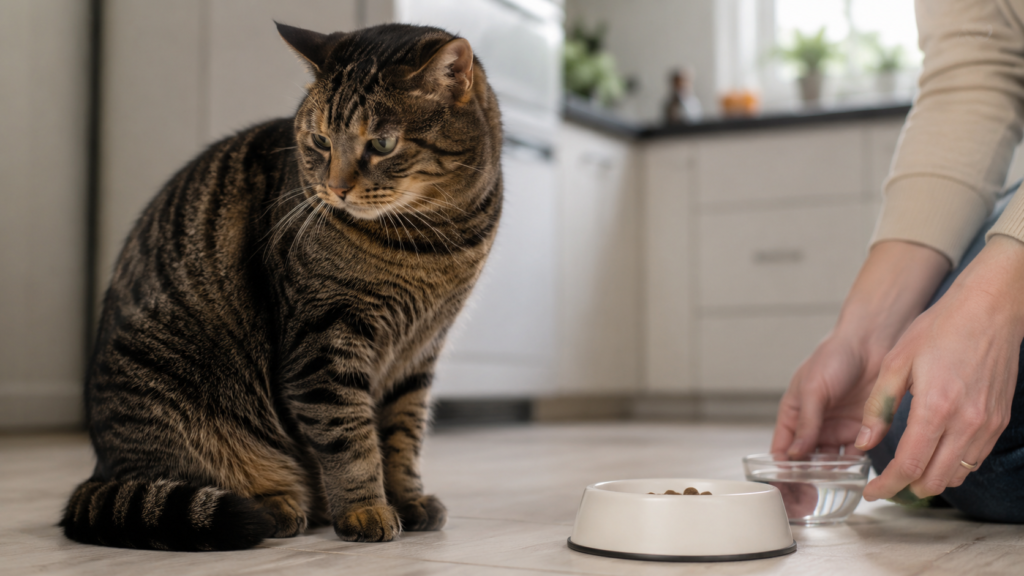
If your cat has stopped eating, stopped drinking, or you are not sure when they last had either, the safest question is not, “How long can they survive?” The better question is, “How long is it safe to wait?”
A healthy adult cat may technically survive longer without food than without water, but that does not mean waiting is safe. Cats can develop serious problems from not eating long before they reach the outer survival limit. Not drinking is even more urgent because dehydration can begin quickly, especially if your cat is also vomiting, has diarrhea, is old, very young, or already has a health condition.
For me, this is a triage topic, not a countdown topic. The point is not to test how long a cat can go. The point is to know when a missed meal is something to watch, when it is time to call your vet, and when the situation should be treated as an emergency.
The Short Answer
A healthy adult cat may physically survive without food for several days and, in some cases, longer if water is still available. Some welfare guidance mentions that a cat may technically live without food for up to around two weeks if they can still drink water.
But that number can be misleading. A cat that has not eaten for 24 hours may already need veterinary guidance, especially if they are acting unwell. After a couple of days without food, the risk of serious complications increases.
Water is different. A cat may only survive around three to four days without water, and dehydration can begin within about 24 hours. If your cat is not drinking and is not getting moisture from wet food, I would not treat that as something to casually monitor for days.
The most urgent situation is when a cat is not eating and not drinking. That removes both calorie intake and fluid intake at the same time. If this is happening for a full day, or sooner if your cat seems weak, is vomiting, has diarrhea, is hiding, cannot urinate, or seems painful, it is safer to contact a veterinarian.
Why “Can Survive” Is Not the Same as “Is Safe”
A cat’s body can sometimes keep going for a while without normal food intake, but that does not mean the body is handling it well. Cats have a particular risk that makes fasting more dangerous than many owners realize: hepatic lipidosis, often called fatty liver disease.
When a cat does not eat enough, the body starts using stored fat for energy. In cats, especially overweight cats, that fat can overwhelm the liver. Fat builds up inside liver cells, and the liver may stop working properly.
That is why “my cat has extra weight, so they have reserves” is not a safe assumption. Extra body fat does not protect a cat from fasting. It can actually make the risk of fatty liver disease higher when the cat suddenly stops eating.
This is also why a cat that stops eating should not be treated like a picky eater by default. They may be refusing food because of illness, pain, nausea, stress, dental disease, a toxin, a urinary problem, or another issue that is not obvious from the outside.
How Long Can a Cat Go Without Food?
A healthy adult cat may technically go several days without food, and some sources describe survival as possible for up to about two weeks if the cat still has water. That is the outer limit people often repeat, but it is not the number I would use to make a care decision.
In practical terms, appetite loss becomes concerning much earlier. If a mature cat has not eaten for around 24 hours, it is sensible to contact a veterinarian for guidance. If the cat is eating much less than usual for more than a day, that also matters.
The risk becomes more serious when the cat has had little or no food for two or more days. Fatty liver disease is often associated with several days of poor intake, especially in overweight cats. The exact timing can vary, but waiting for a precise “danger day” is not a good strategy.
A cat does not need to be completely fasting for poor intake to matter. Only licking gravy, nibbling a tiny amount, refusing normal meals, or eating much less than usual can still become a problem if it continues.
How Long Can a Cat Go Without Water?
A cat can usually go a much shorter time without water than without food. Broad estimates often place survival without water around three to four days, but dehydration can start within about 24 hours.
That does not mean every cat who drinks less from a bowl is in trouble. Cats on wet food may get a lot of moisture from their meals, and some cats naturally drink less visible water because their food already contains fluid.
The concern is different when your cat is not drinking and not eating wet food, or when they show signs that their body is not staying hydrated. Dry or sticky gums, sunken eyes, weakness, lethargy, hard stool, vomiting, diarrhea, or skin that stays tented when gently lifted can all point toward dehydration.
Home checks are not perfect. A cat can be dehydrated without every sign being obvious. If you suspect dehydration, it is safer to call a vet than to try to solve it by forcing water at home.
What if Your Cat Is Not Eating or Drinking?
If your cat is not eating or drinking, treat it as more urgent than either problem alone. Food provides energy, but it may also provide fluid, especially if your cat normally eats wet food. When both stop, your cat loses two support systems at once.
A cat who skips one meal but acts normal, drinks, and uses the litter box normally is not in the same category as a cat who refuses everything. But if your cat has gone a full day with no real intake, I would stop guessing and call a vet.
Be more cautious if your cat is also hiding, weak, drooling, vomiting, having diarrhea, breathing oddly, crying in the litter box, straining to urinate, or acting painful. Those signs suggest the problem may not be simple appetite loss.
Do not force food or water into your cat’s mouth. This can be dangerous, especially if your cat is nauseous, weak, or vomiting. Fluids or food can accidentally go into the airway, which can lead to serious complications.
Kittens, Senior Cats, and Sick Cats Need Faster Action
Kittens cannot safely be judged by adult-cat timelines. Very young kittens can become weak quickly if they miss milk or food, and kittens under six weeks are especially vulnerable. Even 12 hours without food can be dangerous for a very young kitten.
Older kittens also need faster attention than healthy adult cats. They have less reserve, and they can decline more quickly when they are not eating or drinking.
Senior cats need caution too. Older cats are more likely to have underlying conditions, and they may not tolerate dehydration or fasting well. A senior cat who suddenly stops eating or drinking should not be watched for days.
Cats with diabetes, kidney disease, hyperthyroidism, cancer, chronic stomach problems, or other known health issues also need a lower threshold for veterinary help. These cats may lose fluids faster, struggle with dehydration sooner, or have appetite loss linked to a medical problem that needs treatment.
Overweight Cats Are Not Safer During Fasting
It is easy to assume that an overweight cat can handle missing food because they have extra body fat. With cats, that assumption can backfire.
Overweight cats are at higher risk for fatty liver disease when they stop eating. Their body may release stored fat quickly, and the liver can struggle to process it. Once that process begins, the cat may feel even less like eating, which can make the situation worse.
That is one reason I would not “wait them out” if an overweight cat suddenly refuses food. A cat who is dieting should still be eating an appropriate, planned amount of food. Sudden fasting is not a safe weight-loss method for cats.
If an overweight cat has eaten little or nothing for a day, especially if they are also quiet, nauseous, hiding, or refusing water, veterinary advice is the safer move.
When Not Eating May Be More Than Pickiness
Some cats are selective about food, but true appetite loss should not be dismissed as fussiness too quickly. A cat may avoid food because they feel sick, cannot smell it well, are stressed, or are in pain.
There is also a difference between not wanting to eat and wanting to eat but being unable to. A cat with mouth pain may walk to the bowl, sniff food, lick a little, drop pieces, chew strangely, or back away. Dental disease can be painful enough to make a cat stop eating.
Stress can also affect appetite. A move, a new pet, a new cat in the neighborhood, a change in routine, or the loss of a companion animal may reduce eating. But stress should not become a blanket explanation for a cat who is refusing food completely or showing other signs of illness.
I would treat “probably picky” as a temporary possibility, not a conclusion. If the pattern continues, or if your cat seems off in any other way, it deserves more attention.
Not Drinking From the Bowl Is Not Always the Same as Dehydration
A cat who eats wet food may not drink much visible water from a bowl. Wet food can contain a high amount of moisture, so some cats get a meaningful share of their fluid from meals.
This can confuse owners. You may rarely see your cat drink, but they may still urinate normally, eat wet food well, and act bright. That is different from a cat who is not drinking, not eating, urinating less, hiding, or showing signs of dehydration.
Dry-food cats have less moisture coming from their food, so their water intake matters more visibly. If a dry-food cat suddenly stops drinking, that is more concerning than a wet-food cat who simply drinks less from the bowl while eating normally.
Still, do not rely only on the water bowl. Watch the whole picture: food intake, energy, gum moisture, litter box output, vomiting, diarrhea, and whether your cat is acting like themselves.
Red Flags That Need Veterinary Help
Some signs make appetite and hydration problems much more urgent. Contact a veterinarian, emergency vet, or poison control service promptly if your cat is not eating or drinking and you notice:
- repeated vomiting or diarrhea
- blood in vomit or stool
- severe weakness, collapse, or unresponsiveness
- trouble breathing
- yellow gums, yellow eyes, or yellow skin
- suspected toxin exposure
- seizures
- severe pain
- straining to urinate, crying in the litter box, or producing little to no urine
- dry or sticky gums, sunken eyes, or obvious dehydration
- sudden major behavior change
- a kitten, senior cat, overweight cat, or chronically ill cat refusing food
The urinary sign deserves special attention. A male cat who keeps going to the litter box, strains, cries, and passes little or no urine may have a urinary blockage. That can become life-threatening quickly and should be treated as an emergency.
If you suspect poisoning, do not wait to see if your cat eats later. Appetite loss after possible exposure to lilies, human medication, antifreeze, rodent bait, toxic plants, cleaning products, or unknown substances needs urgent professional guidance.
What You Can Do While You Arrange Help
If your cat has only skipped a meal but is otherwise bright, drinking, and using the litter box normally, you can check simple things first. Offer fresh water. Make sure bowls are clean. Offer familiar food. Keep the feeding area quiet.
For cats who eat wet food, you can offer their usual wet food and see if they accept it. Some cats prefer food slightly warmed, but do not make sudden changes if your cat is already refusing meals. A strong change in texture, smell, or temperature can make some cats reject food even more.
You can also check whether the problem is access. In a busy household, a nervous cat may avoid bowls near loud appliances, dogs, children, or another cat. Quiet water stations in more than one location can help some cats drink more comfortably.
But these steps are only reasonable when the cat is stable and still acting mostly normal. If your cat has not eaten for a day, is not drinking, or has any red flags, home adjustments should not delay a call to the vet.
Be Careful in Multi-Cat Homes
In a multi-cat home, it can be hard to know who ate, who drank, who vomited, or who used the litter box. An empty bowl does not prove every cat ate. A normal-looking litter box does not prove the cat you are worried about urinated.
If you are unsure, separate the cat briefly in a calm room with their own food, water, and litter box. The goal is not punishment. It is simply to confirm what is actually happening.
This matters because many owners lose time assuming the cat must be eating when another pet is finishing the food. If one cat is quieter than usual, losing weight, hiding, or showing less interest in meals, direct observation is more reliable than checking the shared bowl.
For kittens or timid cats, also consider whether another pet is blocking access to food. A cat may seem uninterested when they are actually anxious about the feeding area.
If a Cat Was Lost, Trapped, or Found After Days Away
A cat found after being missing or trapped should not be treated as fine just because they are alive. They may be dehydrated, weak, injured, overheated, cold, or at risk after prolonged poor intake.
It can feel natural to offer a large meal right away. I would be careful with that if you think your cat may have gone days without food. A starving or severely dehydrated cat may need veterinary assessment before normal feeding resumes.
This is especially true if the cat is weak, wobbly, jaundiced, vomiting, unable to stand well, or not interested in food after being found. Appetite may not return normally if a serious problem has already started.
Offer safety, warmth or cooling as appropriate, quiet, and access to water, but involve a vet quickly if there is any doubt about how long the cat was without food or water.
Common Mistakes Owners Make
One common mistake is using survival estimates as permission to wait. “Cats can survive X days” is not the same as “cats are safe for X days.” Medical risk starts earlier.
Another mistake is assuming the cat will eat when hungry enough. That may be true for a healthy cat rejecting one flavor of food, but it is not a safe rule for a cat who is ill, painful, nauseous, stressed, or developing fatty liver disease.
A third mistake is trying to force food or water at home. It comes from a caring place, but it can be risky. If your cat is too unwell to eat or drink voluntarily, that is usually a reason for veterinary help, not a reason to force intake.
I would also avoid making a sudden diet change during appetite loss unless your vet advises it. A cat who is already eating poorly may refuse unfamiliar food, and then you have less information about whether the problem is the food or the cat’s health.
So, When Should You Call the Vet?
Call your vet if your adult cat has not eaten for around 24 hours, sooner if they are also not drinking or acting unwell. For kittens, senior cats, overweight cats, and cats with known medical conditions, call earlier.
If your cat has not had water or moisture from food for about 24 hours, that is not something I would ignore. If there are dehydration signs, vomiting, diarrhea, weakness, suspected toxin exposure, breathing trouble, yellow gums or eyes, or litter box straining, treat it as urgent.
The safest answer to “how long can a cat go without food and water?” is this: not long enough to wait for the extreme limit. Survival estimates may satisfy curiosity, but they are not the best guide for care.
If your cat is refusing both food and water, use the clock, but also use the context. Age, weight, health history, diet type, litter box behavior, and overall attitude all matter. When those details point in the wrong direction, calling a vet is the more careful choice.
References
- Cats Protection: How Long Can Cats Go Without Food? — Supports practical survival estimates, dehydration timing, and higher-risk groups such as kittens, senior cats, and cats with health conditions.
- Cornell Feline Health Center: Anorexia — Supports the 24-hour concern threshold for adult cats, kitten risk, and the idea that appetite loss is a clinical sign, not a diagnosis.
- Cornell Feline Health Center: Hydration — Supports daily water context, wet-food moisture, and why visible drinking is not the only measure of hydration.
- VCA Hospitals: Fatty Liver Syndrome in Cats — Supports hepatic lipidosis risk, especially after several days of little or no eating and in overweight cats.
- VCA Hospitals: Anorexia in Cats — Supports true anorexia versus difficulty eating, appetite-loss causes, and the need to take reduced intake seriously.
- VCA Hospitals: Recognizing Signs of Illness in Cats — Supports dehydration warning signs and general illness signs owners may notice.
- VCA Hospitals: Emergencies in Cats — Supports emergency red flags, including poisoning concerns, persistent vomiting or diarrhea, and urinary blockage signs.
- WSAVA Global Nutrition Guidelines — Supports the veterinary view that nutrition should be assessed and managed based on the individual cat’s condition.