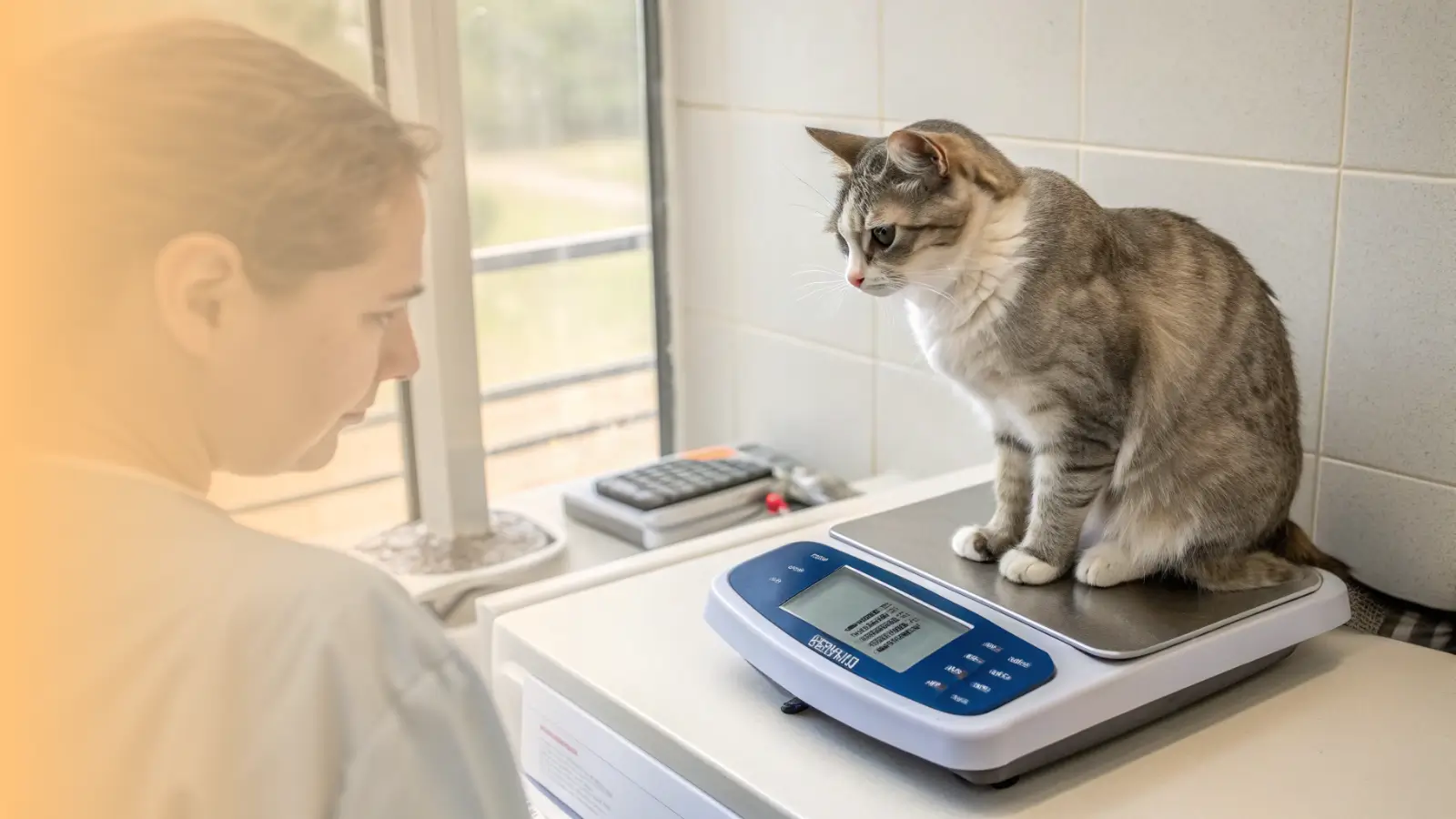
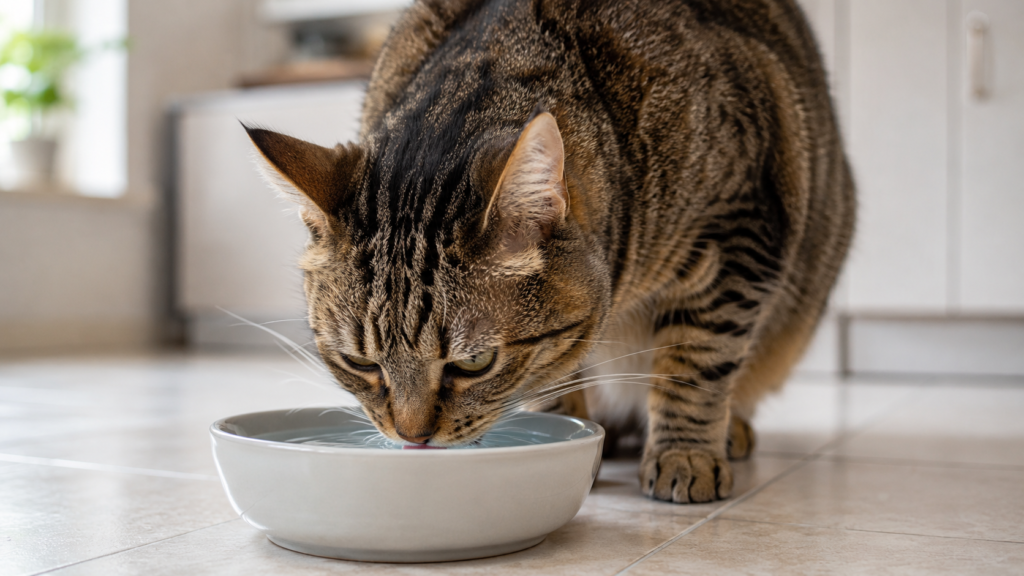
If you have ever looked at your cat’s water bowl and wondered, “Is that enough?”, you are not overthinking it. Cats can be confusing drinkers. Some barely seem to touch their bowl. Others suddenly start draining it faster than usual. Both can be normal in the right context, or concerning in the wrong one.
A healthy cat often needs about 4 ounces of water per 5 pounds of body weight per day. For a 10-pound cat, that works out to about 8 ounces, or 1 cup, of total water daily.
The word “total” matters. Your cat’s daily water does not only come from the bowl. Wet food, dry food moisture, treats, fountains, faucets, and other water sources all count. That is why two healthy cats can drink very different amounts from the bowl and still be fine.
For me, the safer way to think about this is simple: the number gives you a baseline, but your cat’s usual pattern gives you the context. A cat eating wet food may drink very little. A cat eating mostly dry food usually needs to drink more. A cat that suddenly drinks much more or much less than usual deserves closer attention.
The Basic Daily Water Estimate for Cats
A common veterinary estimate is that cats need around 4 ounces of water for every 5 pounds of body weight each day. This is not a strict target your cat must hit from the water bowl alone. It is a rough daily hydration estimate from all sources.
Here is what that can look like in practical terms:
| Cat’s body weight | Approximate total water per day |
|---|---|
| 6 pounds | About 4.8 ounces |
| 8 pounds | About 6.4 ounces |
| 10 pounds | About 8 ounces, or 1 cup |
| 12 pounds | About 9.6 ounces |
| 15 pounds | About 12 ounces |
These numbers are most useful for healthy adult cats. They can be less reliable for kittens, senior cats, overweight cats, pregnant or nursing cats, and cats with kidney disease, diabetes, urinary problems, vomiting, diarrhea, or other health concerns.
One detail that often gets missed is lean body weight. If a cat is overweight, using their current weight may make the water estimate look higher than it really should be. That does not mean you should restrict water. It only means the number is a guide, not a medical calculation.
If your cat has a health condition, the right amount of water is not something to guess from an online chart. That is where I’d use the chart only as a starting point and let a veterinarian interpret the bigger picture.
Your Cat’s Food Changes How Much They Drink
The biggest reason cats drink different amounts is diet. A cat eating wet food may take in a lot of water without visiting the bowl very often. A cat eating dry food gets much less moisture from meals, so more of their daily water has to come from drinking.
Wet cat food can contain a high amount of moisture, often around 60% to more than 80%. Dry food contains much less moisture. That difference changes what “normal drinking” looks like.
This is why a wet-fed cat that barely drinks from the bowl is not automatically dehydrated. They may be getting a meaningful amount of water from food. On the other hand, a dry-fed cat that barely drinks at all is more worth watching, especially if their urine clumps are small, they seem unwell, or their routine has changed.
What makes this tricky is that the bowl can lie. A full bowl does not always mean the cat is not hydrated. An empty bowl does not always mean the cat is healthy. You have to look at food type, urine output, appetite, energy, weather, and changes from your cat’s usual pattern.
Why Cats on Dry Food May Need Extra Attention
Cats eating dry food usually drink more than cats eating wet food, but that does not always mean they fully make up the moisture difference. Research comparing diets with different moisture levels found that cats eating higher-moisture food had higher total fluid intake and more dilute urine.
That matters because urine concentration is part of the hydration conversation. More water can help increase urine volume and make urine less concentrated. This does not mean wet food cures urinary problems, and it does not mean every cat must eat canned food. But it does explain why moisture-rich food can be useful for some cats, especially cats with a history of urinary concerns.
A practical way to think about this is: dry food is not “bad” just because it is dry, but it does shift more of the hydration burden onto drinking. If your cat eats mostly dry food, their water setup matters more.
That setup can include multiple water bowls, clean bowls, a quiet location, a fountain if your cat likes moving water, and watching the litter box for changes.
Drinking Too Little and When It May Be Normal
A cat may drink very little from the bowl and still be okay if they eat mostly wet food, seem bright and comfortable, eat normally, urinate normally, and show no signs of illness.
Some cats also drink from places owners do not notice. A dripping faucet, another pet’s bowl, a glass on the table, or outdoor water can make the main bowl look untouched. In a multi-cat home, it can also be hard to know which cat is drinking what.
This is why one quiet day at the water bowl is not automatically a crisis. I’d be more interested in the full pattern: Is your cat eating? Are they using the litter box normally? Are they acting like themselves? Has the food changed recently?
A low-drinking cat becomes more concerning when the low intake comes with other changes, such as poor appetite, vomiting, diarrhea, weakness, lethargy, dry gums, sunken eyes, or reduced urination. In that situation, the question is no longer only “How much water should my cat drink?” It becomes “Could my cat be dehydrated or sick?”
Drinking Too Much and When It Can Be a Warning Sign
Drinking more than usual can be more concerning than many owners expect, especially when it happens together with more urination.
A cat that suddenly empties the water bowl faster, produces larger urine clumps, floods the litter box, or asks for water in unusual ways may need a veterinary check. This is especially true if the change lasts beyond a brief hot day or comes with weight loss, appetite changes, vomiting, diarrhea, poor coat condition, lethargy, or behavior changes.
Several health problems can cause increased thirst and urination in cats. Chronic kidney disease can make cats lose more water through urine, so they drink more to compensate. Diabetes can cause excess urination because glucose affects how water moves through the body. Hyperthyroidism can also cause increased thirst and urination, often along with weight loss and increased appetite.
This does not mean you should diagnose your cat from water intake. You should not. But I wouldn’t ignore a sustained increase in thirst, especially in a middle-aged or senior cat.
Watch the Litter Box, Not Just the Water Bowl
The litter box often gives better clues than the water bowl alone. If your cat drinks more and also urinates more, that pattern matters. If your cat drinks less and also urinates less, that matters too.
In a single-cat home with clumping litter, larger or more frequent urine clumps can suggest increased urination. Very small clumps, repeated trips to the box, or little to no urine can point to a different problem.
This is especially important because urinary issues can look confusing at home. A cat may keep going to the litter box, squat, strain, cry, or lick the genital area. Some owners mistake this for constipation or think the cat just needs more water.
If your cat is straining and producing little or no urine, treat that as urgent. This can be a medical emergency, especially in male cats. Do not try to solve it with a fountain, wet food, or extra water. Contact a veterinarian or emergency vet.
How to Measure How Much Your Cat Drinks
If you suspect your cat is drinking too much or too little, you can measure water intake for a short period. This is easiest in a single-cat home.
Measure how much water you put out at the start of the day. At the end of 24 hours, measure what is left. The difference gives you a rough idea of how much was consumed.
This method is imperfect. Water can spill. Some evaporates. Other pets may drink it. A fountain reservoir can make measuring harder. Wet food adds water that will not show up in the bowl measurement. In a multi-cat household, you may not know which cat drank how much.
Still, a short record can be useful. If you call your vet, being able to say “my cat is drinking about this much per day, and the litter clumps are bigger than usual” is more helpful than saying “I think she drinks a lot.”
I would not measure obsessively forever. A few days of notes are usually enough to show whether there is a real change worth discussing.
Simple Ways to Help a Cat Drink More
The safest hydration support starts with access and preference. Cats should generally have clean water available at all times. You should not restrict water because your cat is peeing more. If a cat is drinking and urinating excessively, that is a reason to investigate, not a reason to take water away.
Many cats prefer water that is fresh, clean, and placed away from food and litter. Some cats dislike water bowls beside food bowls. Some prefer wide, shallow bowls. Some like ceramic, glass, or stainless steel better than plastic. Some drink more from a fountain, while others ignore fountains completely.
Good low-risk options include: