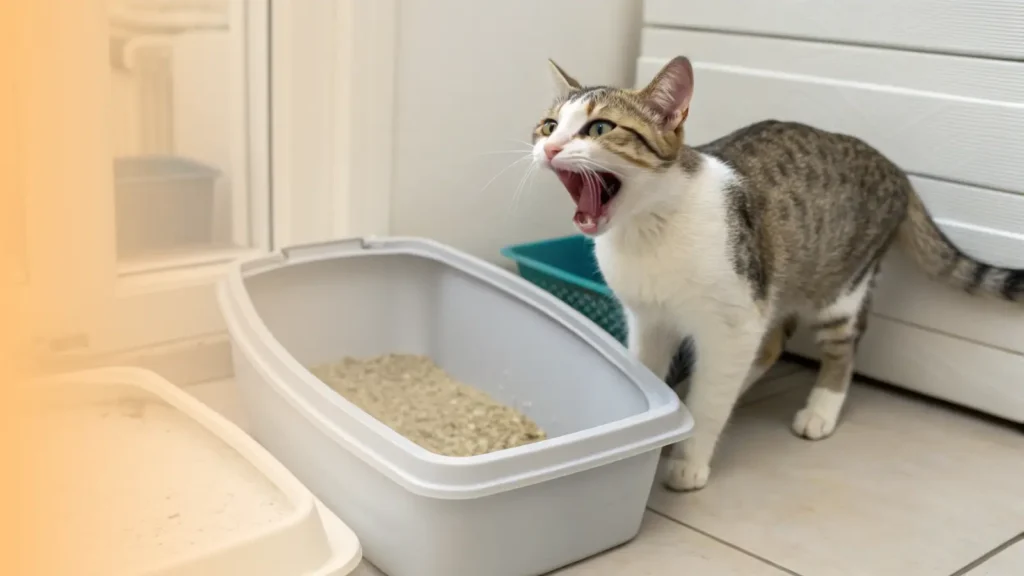
It’s one of the more puzzling things our cats do. The moment they finish their business in the litter box, they let out a meow, sometimes a loud one, leaving you wondering what on earth they’re trying to say. This little post-potty announcement can be anything from a harmless quirk to a sign that your cat needs your help.
Key Takeaways
- A cat meowing after pooping can be a simple habit to get your attention or a serious signal of medical pain.
- Common medical reasons include constipation, urinary tract problems, and arthritis, which is especially common in older cats.
- A sudden change in your cat’s vocalizations, especially if the meow sounds pained or distressed, always requires a check-in with your veterinarian.
- Harmless reasons often include your cat proudly “announcing” its accomplishment or getting a sudden case of the post-poop “zoomies.”
Is It Just a Quirk or a Cry for Help?
The first thing I always consider is whether this is a new behavior or a lifelong habit. A cat that has given a quick, cheerful meow after exiting the litter box its entire life is very different from a cat that suddenly starts howling. The sound of the meow itself tells a huge part of the story.
A short, matter-of-fact chirp is likely a simple announcement. However, a loud, drawn-out, or pained-sounding cry is a significant red flag. This shift from a chronic quirk to an acute change is the most important signal you can pick up on as their owner.
The Main Reasons Your Cat Meows After Pooping
When we try to figure out the “why” behind this behavior, the reasons generally fall into two major categories. It is either rooted in a medical issue that is causing them discomfort, or it is a behavioral habit they have developed over time.
1. They Are Experiencing Medical Discomfort
Ruling out pain is always the top priority. Cats are experts at hiding when they don’t feel well, so by the time they start vocalizing, the issue could already be significant. From my experience helping cat owners, these are the most common culprits.
Constipation
This is a leading cause of painful pooping. When stool becomes too hard and dry, it is difficult and painful for a cat to pass. The vocalization you hear is often a strained groan or cry from the effort and discomfort of the stool moving through their system.
Urinary Tract Pain
Sometimes, what looks like straining to poop is actually straining to pee. Conditions that fall under the umbrella of Feline Lower Urinary Tract Disease (FLUTD) can cause serious bladder pain. To a cat owner, the hunched posture and straining can look identical. If your cat is making frequent trips to the box, crying, but not producing any urine, it is a medical emergency that requires an immediate vet visit.
Arthritis
This is a major and often overlooked cause of pain, especially in our senior cats. In fact, studies show over 90 percent of cats older than 12 show evidence of arthritis. The simple act of squatting in the litter box can put immense pressure on sore hips, knees, and lower back joints, causing them to cry out from the strain.
2. It’s a Behavioral or Instinctual Habit
If a vet has given your cat a clean bill of health, then we can explore the behavioral reasons. These are usually much less concerning and are often just a part of your cat’s unique personality.
A Learned Call for Attention
Cats are smart, and they learn quickly. If your cat meows after pooping and you immediately rush to scoop the box, they learn that meowing gets them a clean toilet. In their mind, they have successfully trained you. This vocalization is usually not distressed but rather a demanding or matter-of-fact call for your attention.
A Sudden Burst of Energy
Many owners have seen their cat burst out of the litter box and run around frantically. This is sometimes paired with excited meows. A fascinating theory, which I find quite compelling, suggests this is caused by “poop-phoria.” The act of pooping can stimulate the vagus nerve, which can give your cat a brief, exhilarating feeling, triggering a burst of energetic running and vocalizing.
Final Thoughts
Your cat’s meow after using the litter box is a direct message intended just for you. By paying close attention to the sound and context, you can start to understand what they are communicating. When you are ever in doubt, a quick call to your vet provides peace of mind and is the best way to keep your feline friend happy and healthy.