Taking care of a cat can look simple from the outside: food, water, litter box, done. In real life, good cat care is quieter than that. It is the routine that helps your cat feel safe, use normal cat behaviors, stay at a healthy weight, and show you early when something is wrong.
The tricky part is that cats often hide pain, stress, and illness. A cat may still walk around, groom, or sit near you while eating less, drinking more, avoiding the litter box, or moving differently. That is why I think of cat care less as buying the right pile of products and more as building a home where normal patterns are easy to notice.
This guide keeps the basics practical: food, water, litter, enrichment, grooming, dental care, vet visits, parasite prevention, safety, and warning signs. The goal is not to make cat care complicated. It is to help you know what matters day to day, what changes with age, and when guessing is not the safest move.
The short version of what your cat needs
A well-cared-for cat needs a predictable routine, complete nutrition, clean water, clean litter boxes, safe housing, normal outlets for scratching and climbing, routine veterinary care, and close attention to changes. None of this has to be fancy. It just has to fit your actual cat.
- Food: feed a complete and balanced cat food for your cat’s life stage.
- Water: offer fresh water in easy-to-reach places, especially for cats eating mostly dry food.
- Litter: provide one litter box per cat, plus one extra, and clean boxes daily.
- Environment: give places to scratch, climb, hide, rest, play, and eat without pressure.
- Health care: keep up with checkups, vaccines, parasite prevention, dental care, and weight monitoring.
- Safety: keep lilies, human pain medicines, dog flea products, and other hazards away from cats.
- Observation: watch appetite, thirst, urine, stool, breathing, movement, grooming, and social behavior.
If you are bringing home a new cat, book a veterinary visit within a few days to a week. For adult cats, routine checkups should happen at least yearly. Kittens and senior cats usually need more frequent care.
Start with the cat you have, not a generic checklist
Cat care changes with age, health, lifestyle, and household setup. A kitten, an indoor adult cat, a senior cat, and a cat living with three other cats do not need the exact same routine.
For me, the safest way to think about it is this: your cat’s care plan should make normal life easier and abnormal changes more visible. If your cat has several water stations, separate feeding spots, clean litter boxes, and places to retreat, it is easier to tell when something changes because the setup is not working against them.
Kittens
Kittens need more frequent veterinary visits, early vaccination planning, parasite prevention, and food made for growth. Veterinary owner guidance says kittens need vet visits every 3 to 4 weeks until about 6 months old.
They also need gentle handling, safe play, and a home arranged for curiosity. A kitten who is climbing, chewing, hiding, or darting into small spaces is not being difficult. They are learning the world. Your job is to make that world safe and predictable.
Adult cats
Adult cats still need routine care, even if they seem independent. A full veterinary checkup at least once a year is recommended for adult cats. That visit is where weight, teeth, vaccines, parasite prevention, and subtle changes can be reviewed before a small issue becomes obvious at home.
For indoor adult cats, the big risks often come from inactivity, overeating, stress, dental disease, and missed illness signs. A quiet cat is not always a healthy cat, so baseline routines matter.
Senior cats
Senior cats need closer observation because gradual changes can be easy to explain away. Owner guidance notes that cats over roughly 8 to 9 years old should be seen twice yearly or more often if needed.
I’d be more cautious with a senior cat who starts losing weight, eating differently, drinking more, missing the litter box, hesitating to jump, hiding more, or seeming stiff. Those changes do not prove one specific disease, but they are good reasons to call a vet rather than wait for them to become dramatic.
Feed a complete, balanced diet, not a trend
The safest general feeding choice is a commercial cat food labeled complete and balanced for your cat’s life stage. Cats need species-specific nutrients, including taurine and preformed vitamin A, so dog food, treat-heavy feeding, or poorly planned homemade diets are not good substitutes.
Words like premium, natural, grain-free, raw, or homemade do not automatically mean the food is nutritionally right for your cat. The label and life stage matter more. Kittens need growth nutrition. Most healthy adult cats need adult maintenance nutrition. Pregnant or nursing cats have different needs again.
Cats are obligate carnivores, which means their bodies rely on nutrients found in animal-based ingredients. That does not mean raw feeding is automatically safer or healthier. Cornell feeding guidance notes that evidence for claimed raw or gently cooked diet benefits is lacking, and these diets may carry bacteria, viruses, or parasites that can affect cats and people. I would not use raw feeding as a casual experiment, especially in a home with children, older adults, or immunocompromised people.
Wet food, dry food, and water
Wet and dry foods can both be appropriate if they are complete and balanced. The practical difference is water and calorie density. Dry food is typically about 6 to 10 percent water, while canned food is at least 75 percent moisture.
If your cat eats mostly dry food, water access matters even more, especially for cats prone to lower urinary tract issues. That does not mean every cat must eat only wet food. It means you should watch hydration, litter box habits, body condition, and your vet’s advice.
Portions and feeding style
Feeding directions are based on an average cat, and many indoor, neutered, low-activity cats can gain weight if fed exactly as the package says without adjustment. Free-feeding works for some cats, but it can lead to overeating in others.
Multi-cat homes make this harder. One cat may graze all day while another eats everything in sight. Separate feeding areas can prevent one cat from being quietly pushed away and another from gaining too much weight.
Make water easy to use
Your cat should have clean, fresh water available at all times. The part many homes miss is placement. A water bowl can technically be present and still be hard for a cat to use comfortably.
Food and water should not be crowded into one stressful corner, especially in multi-cat homes. Some cats avoid a bowl because another cat blocks access, because the bowl is too close to the litter box, or because the location feels exposed. Multiple water spots can make a big difference.
Watch for changes. Drinking more than usual, urinating more, or suddenly hanging around the water bowl is not something I would dismiss as a quirky new habit. It can be a sign that your cat needs veterinary attention.
Set up litter boxes for comfort and health monitoring
A good litter setup supports both behavior and health monitoring. The basic rule is one litter box per cat, plus one extra. So one cat gets two boxes, two cats get three, and so on.
Clean litter boxes daily. This helps with odor, but it also helps you notice changes in urine, stool, frequency, and effort. Litter box changes are often one of the first visible clues that something is off.
Do not treat accidents as spite. Cats may avoid the box because of pain, urgency, mobility problems, litter box aversion, location preference, surface preference, stress, urine spraying, digestive issues, urinary tract inflammation, kidney disease, thyroid disease, diabetes, or cognitive decline. You cannot sort all of that out by scolding the cat.
If your cat suddenly urinates or defecates outside the box, strains, makes repeated trips, seems painful, or acts distressed around the box, call your veterinarian. This is where I would stop guessing, because litter box problems can be medical, behavioral, or both.
Give your cat places to scratch, climb, hide, play, and rest
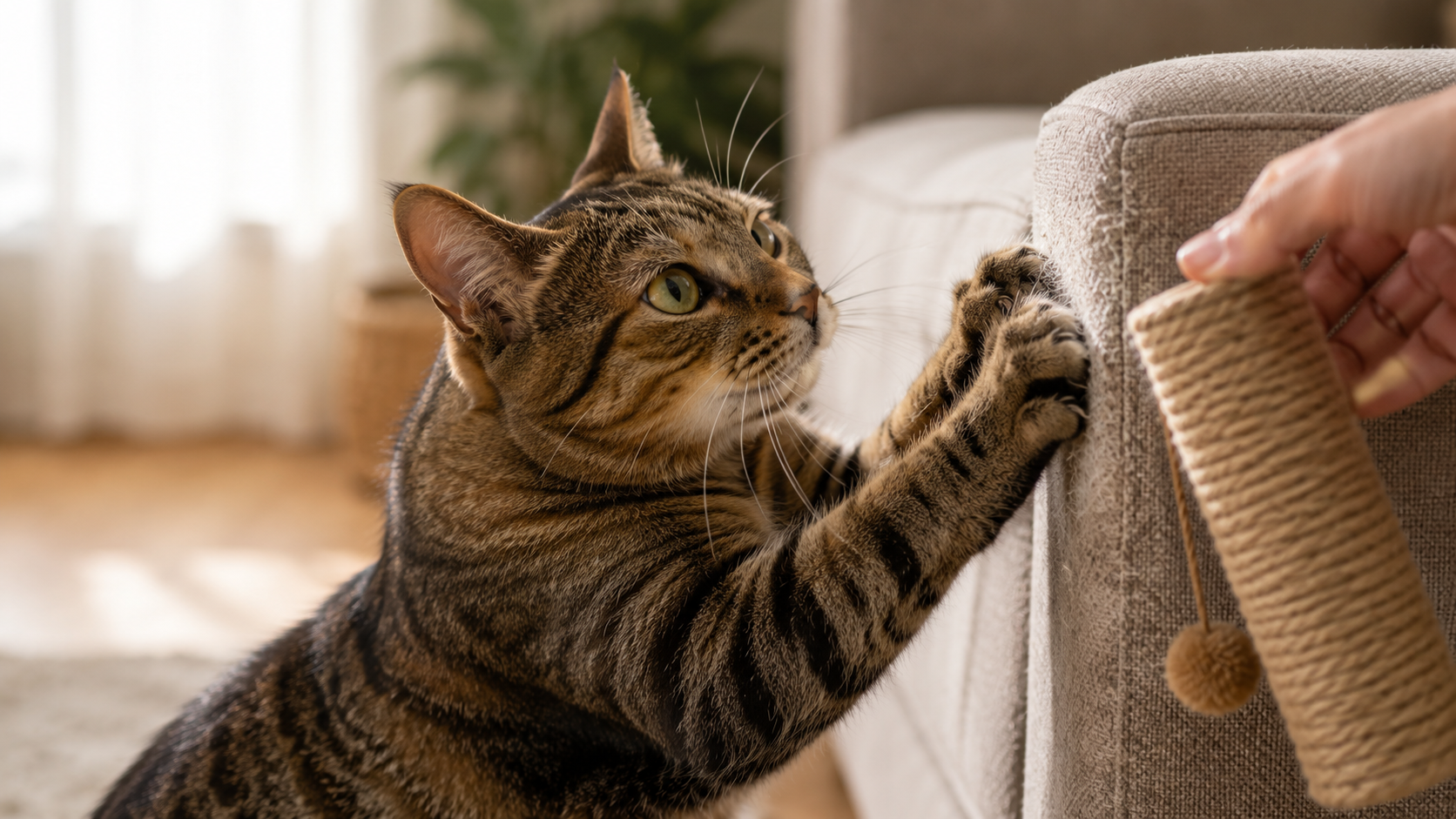
Scratching, climbing, hiding, stalking, resting, and playing are normal cat needs. They are not extra decorations for a spoiled cat. When those needs have no good outlet, stress and behavior problems become more likely.
A cat-friendly home includes scratching areas, elevated spaces, hiding spots, resting places, play areas, food stations, water stations, and toileting areas. These resources should be separated enough that a cat can use them without feeling trapped or challenged.
This matters even more in multi-cat homes. Cats may appear to share a food bowl or sleeping spot when they are really time-sharing because there are not enough good options. One bowl, one box, and one favorite perch can create quiet conflict that owners miss.
Play should let your cat act like a cat: stalk, chase, pounce, pause, and problem-solve. Indoor cats especially need this because they do not get natural hunting-style activity outside. A few short play sessions can be more useful than leaving toys scattered forever in the same place.
Indoor and outdoor care need different risk planning
Indoor life reduces some risks, but it does not remove your cat’s need for enrichment. An indoor cat still needs movement, choice, scratching, climbing, hiding, and play that mimics hunting.
Outdoor cats need extra safety planning. Guidance for owners says outdoor cats need shelter in cold or rainy weather, shade in heat, and nighttime access indoors for protection from predators. Food left outdoors can also attract wildlife that may spread disease.
I would avoid framing this as one simple moral choice. Some cats are indoors only, some have controlled outdoor access, and some live in situations where outdoor exposure happens. The care question is: how do you reduce risk while still meeting the cat’s physical and behavioral needs?
Handle multi-cat homes like shared territory
Multi-cat care works best when every cat has choices. Adult cats often do not welcome unfamiliar cats into their territory quickly, so new introductions should be gradual and controlled.
Stress may not look like open fighting. It may look like one cat blocking a hallway, staring near a bowl, sleeping in doorways, chasing another cat away from the litter box, or quietly eating more than their share. Owners often miss this because the cats are not screaming or swatting.
Spread resources around the home. That means more than one feeding area, more than one water area, enough litter boxes, multiple resting spots, hiding areas, and perches. The goal is to let each cat avoid conflict instead of forcing them to negotiate every basic need.
Use grooming as a health check
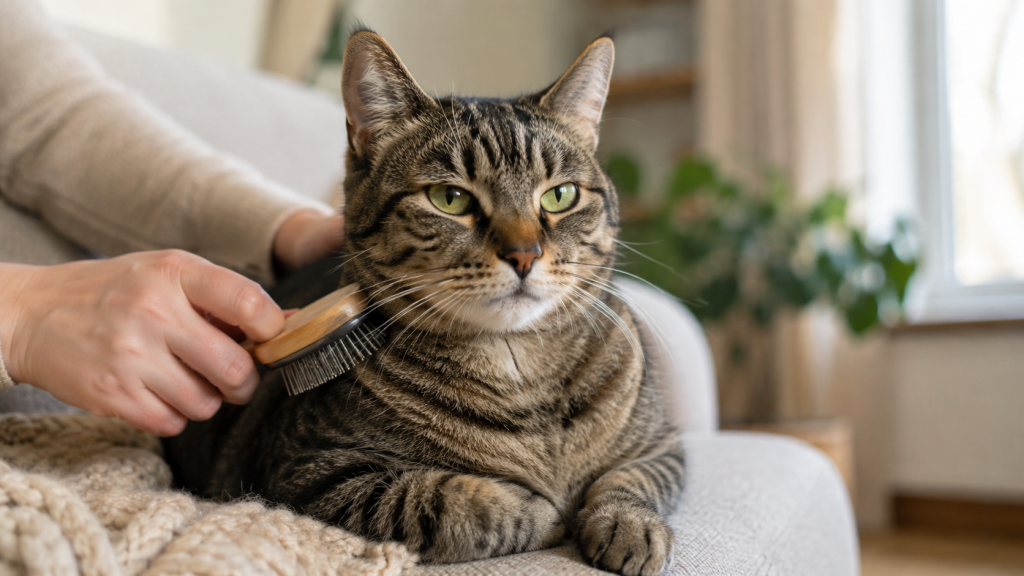
Grooming is not just about shedding. It is a regular chance to notice changes in your cat’s coat, skin, ears, eyes, teeth, nails, movement, and comfort.
While brushing or handling your cat, watch for mats, hair loss, itchiness, dirty or irritated ears, overgrown nails, sore spots, stiffness, limping, or reluctance to be touched. None of these signs gives you a diagnosis at home, but they are worth noting and discussing with a vet if they persist or appear suddenly.
Some cats tolerate grooming better in short sessions. If your cat is older, overweight, stiff, or long-haired, they may need more help staying comfortable. Be gentle. A cat who suddenly resists handling may be uncomfortable, not stubborn.
Do not treat dental care as cosmetic
Cats need dental care throughout life. Plaque buildup can lead to gum disease and tooth loss, and veterinary guidance includes tooth brushing and regular veterinary dental cleanings as part of routine care.
If you brush your cat’s teeth, use cat-specific toothpaste. Human toothpaste can be unsafe for cats. If your cat already seems painful around the mouth, struggles to eat, drools, or has a sudden change in eating habits, ask a vet before trying to brush through the problem.
Dental problems are easy to underestimate because many cats keep eating even when uncomfortable. I would not wait for a cat to stop eating before taking mouth changes seriously.
Plan vet care before your cat looks sick
Routine veterinary care is part of taking care of a cat, not a last resort after obvious illness. Cats are underserved compared with dogs in part because people assume they are low-maintenance and because illness signs can be subtle.
Use age as your rough guide. New cats should be checked within a few days to a week after adoption. Kittens need visits every 3 to 4 weeks until about 6 months old. Adult cats need at least yearly checkups. Senior cats over about 8 to 9 years old should be seen twice yearly or more often when needed.
Vaccines should be discussed with your vet based on age, history, lifestyle, and local requirements. Routine owner guidance includes rabies and feline distemper vaccines, and your vet may discuss others such as feline leukemia depending on risk.
Parasite prevention should also be individualized. Talk with your vet about fleas, heartworm, ticks, and intestinal parasites. Indoor cats are not automatically risk-free, and cats are sensitive to many chemicals. Do not use dog flea or tick products on a cat unless your veterinarian specifically says it is safe.
Cat-proof the home before there is a problem
Some of the most serious household hazards look ordinary. ASPCA poison resources highlight lilies, over-the-counter pain medicines, and permethrin as common feline dangers.
Lilies can cause life-threatening kidney injury in cats, and any part of the plant, including leaves, stems, petals, and pollen, can be harmful. Human pain medicines such as ibuprofen, naproxen, and acetaminophen can cause severe problems in cats. Permethrin, often found in some dog flea and tick products or insecticides, can cause signs such as drooling, vomiting, wobbliness, tremors, and seizures.
If your cat may have been exposed to a poison, call your veterinarian, an emergency vet, or ASPCA Poison Control right away. Keep the packaging, plant material, or product name if you can do so safely. Do not try home treatments such as inducing vomiting, giving oils, milk, salt, or activated charcoal unless a veterinary professional tells you to.
Know the changes that should not wait
Cats often hide signs of illness and pain, so changes from your cat’s normal pattern matter. A cat who is suddenly quiet, withdrawn, clingy, restless, or hidden away may be telling you something before the signs become obvious.
Contact a veterinarian if you notice:
- Not eating properly, especially for 24 hours.
- Vomiting, including frequent hairballs.
- Diarrhea or hard, dry stools.
- Increased thirst or urination.
- Coughing, wheezing, or abnormal breathing.
- Sneezing with eye or nose discharge.
- Dirty, itchy, or painful-looking ears.
- Hair loss, general itchiness, or overgrooming.
- Stiffness, limping, or not putting weight on a leg.
- Sudden litter box problems, straining, urgency, or signs of pain.
- Sudden hiding, low energy, depression, or major behavior change.
Some situations deserve urgent help: suspected poisoning, breathing trouble, seizures or tremors, severe pain, inability to urinate, collapse, or a cat not eating for a full day. If you are unsure, calling a vet is not overreacting. It is often the fastest way to find out whether you can monitor at home or need immediate care.
A simple cat care routine you can maintain
The best routine is the one you can repeat. Small daily habits catch more problems than occasional deep worry.
Daily
- Feed measured meals or monitor free-fed intake closely.
- Refresh water and check that bowls are accessible.
- Scoop litter boxes and notice urine or stool changes.
- Offer play, scratching access, resting spots, and quiet hiding space.
- Watch appetite, energy, movement, breathing, and social behavior.
Weekly
- Brush your cat if they tolerate it, especially long-haired or senior cats.
- Check ears, coat, skin, nails, and general comfort.
- Review whether one cat is blocking resources in a multi-cat home.
- Look at body condition, not just the food bowl.
Ongoing
- Keep veterinary checkups on schedule for your cat’s age.
- Keep vaccines and parasite prevention current with veterinary guidance.
- Store medicines, plants, chemicals, and dog parasite products safely.
- Reassess food portions if weight, activity, age, or health changes.
This does not need to become a rigid checklist taped to the wall. It is more about knowing your cat’s normal. Once you know that, small changes stand out faster.
What to remember
Taking care of a cat means creating a routine where your cat can eat, drink, eliminate, rest, scratch, climb, play, and hide without stress. It also means choosing complete nutrition, keeping the home safe, planning preventive vet care, and watching for changes that your cat may not make obvious.
I would rather see an owner call the vet early about appetite, breathing, litter box, mobility, or poisoning concerns than wait because the cat still seems mostly normal. Cats are good at hiding discomfort. Good care makes those quiet changes easier to see.
References
- Merck Veterinary Manual: Routine Health Care of Cats — veterinary visit frequency, dental care, grooming checks, signs needing attention.
- CDC: Cats and Healthy Pets — new-cat veterinary care, litter box number, vaccines, parasite discussions, hygiene, outdoor safety.
- AAFCO: Selecting the Right Pet Food — complete and balanced diets, life-stage feeding, species-specific nutrients.
- Cornell Feline Health Center: Feeding Your Cat — feline nutrition, wet versus dry food, water needs, supplement and raw diet cautions.
- AAFP/ISFM Feline Environmental Needs Guidelines — separated resources, hiding, perching, scratching, play, and multi-cat stress prevention.
- Cornell Feline Health Center: House-Soiling — litter box problems, medical causes, aversion, spraying, pain, and stress factors.
- ASPCA: Harmful Feline Hazards — lilies, human pain medicines, permethrin risks, and poison response guidance.
- VCA: Recognizing Signs of Illness in Cats — subtle illness signs, behavior changes, appetite concerns, and urgent no-eating guidance.