“How many cans should my cat eat?” sounds like it should have a neat answer. One can a day. Two cans a day. Half a can in the morning and half at night.
The problem is that canned cat food does not work that way. A small 3 oz can, a 5.5 oz can, and a calorie-dense pâté can all give your cat very different amounts of energy. Two cats can also weigh the same but need different portions because one is younger, leaner, more active, intact, overweight, or managing a health condition.
The safest way to answer the question is to think in calories first, then cans. For me, that is the cleaner way to avoid both overfeeding and accidental underfeeding.
The Short Answer: Feed by Calories, Not by Cans
Most adult cats need their canned food portion based on their daily calorie needs, not a fixed number of cans.
The basic formula is:
Your cat’s daily calorie target ÷ calories per can = cans per day
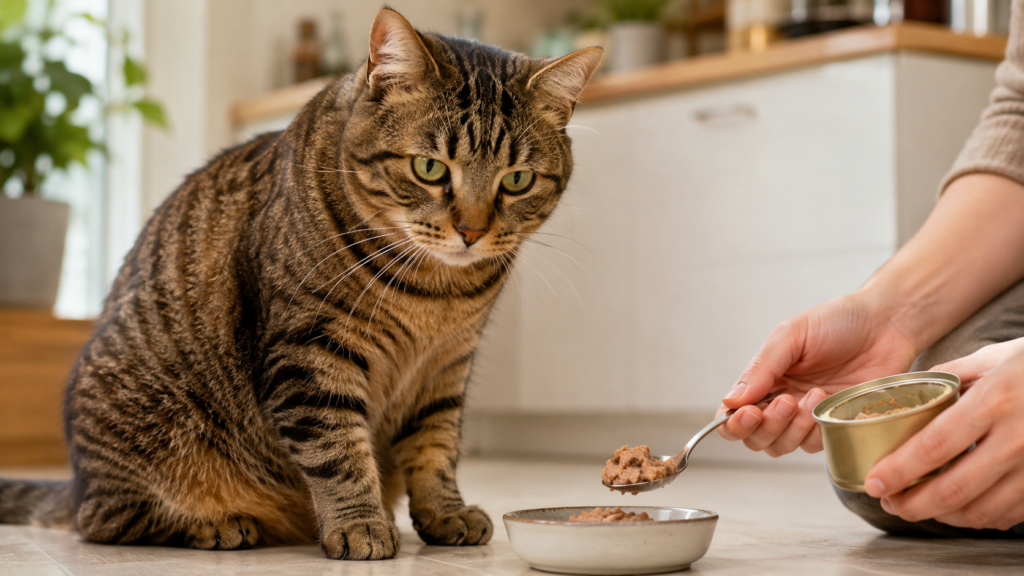
So if your cat needs about 220 calories per day, and the canned food contains 110 calories per can, your cat would eat about two cans per day if that is the only food they eat.
If your cat also eats dry food or treats, subtract those calories first. For example, if that same cat gets 70 calories of dry food and 15 calories of treats, only 135 calories are left for canned food. With a 110-calorie can, that would be a little over one can of wet food for the day.
This is where many owners accidentally overfeed. They add canned food for moisture or variety, but they do not reduce the kibble. The cat may seem like they are eating a normal amount because the meals look small, but the total calories can creep up.
Why One Can Per Day Is Not a Safe Rule
“One can per day” is too vague because cans are not all the same.
Some canned foods come in small cans. Others come in larger cans. Some are lower in calories because they contain more moisture. Others are richer and more calorie-dense. Even foods that look similar on the shelf can have very different calorie numbers.
The number you need is the calorie statement on the label. It may say “kcal per can” or “kcal per 3 oz can.” That is the practical number for feeding.
A cat food label may also show calories per kilogram, but most owners do not feed by kilogram. For daily portioning, the calories per can, tray, pouch, or other familiar unit are much more useful.
The other label detail that matters is whether the food is complete and balanced for your cat’s life stage. A canned food may look meaty and high quality, but that does not automatically mean it can be used as your cat’s main diet. Look for the nutritional adequacy statement and check whether the food is meant for adult maintenance, growth, all life stages, or another specific use.
How to Estimate Your Cat’s Daily Calories
A calorie calculator or veterinary formula can give you a starting point, but it is not the final answer.
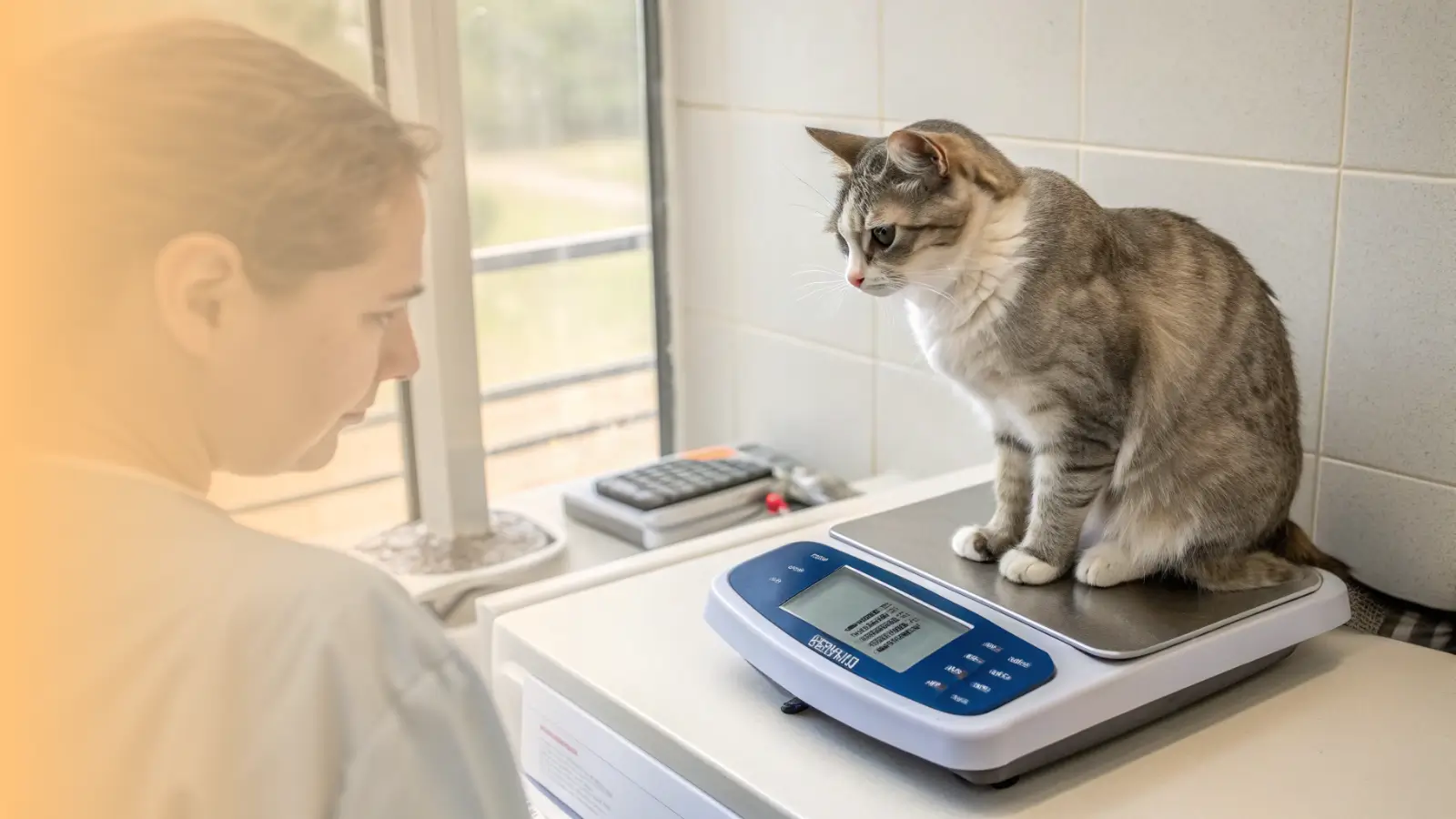
Veterinary nutrition references often start with a cat’s resting energy requirement, or RER. That is an estimate of the energy a body uses at rest. A 10 lb cat, which is about 4.5 kg, has an RER of roughly 217 calories per day.
From there, the estimate changes based on the cat. A healthy neutered adult cat may need around 1.2 times RER, which would put that 10 lb cat near 260 calories per day. A cat prone to weight gain may need closer to RER. An intact adult cat may need more.
Those numbers are useful, but they are still estimates. I would treat them like a starting line, not a permanent rule. A quiet indoor cat and a lean, active cat can need different portions even if the scale shows the same weight.
Your cat’s real portion should be checked against what happens over time. Is your cat gaining weight? Losing weight? Staying steady with a healthy body shape? That feedback matters more than any single chart.
How to Convert Calories Into Cans
Once you have a calorie target, the math is simple.
| Daily calorie target | Calories in the canned food | Approximate canned food amount |
|---|---|---|
| 180 kcal/day | 90 kcal per can | 2 cans/day |
| 220 kcal/day | 110 kcal per can | 2 cans/day |
| 240 kcal/day | 120 kcal per can | 2 cans/day |
| 260 kcal/day | 130 kcal per can | 2 cans/day |
| 220 kcal/day | 180 kcal per large can | About 1.2 cans/day |
These are examples, not universal feeding rules. The correct amount depends on your cat and the exact food.
If the number comes out awkward, such as 1.2 cans per day, you can divide the can into measured meals. Some owners do better with smaller cans because they are easier to portion neatly. Others use larger cans and refrigerate the unused food.
The important part is not whether the meal looks large or small. The important part is whether the total daily calories match your cat’s needs.
What If Your Cat Eats Both Wet and Dry Food?
If your cat eats both canned food and dry food, count both.
This is the part I would be strict about. Wet food does not become “extra” just because it has more water. Treats, lickable snacks, table scraps, and kibble all count toward the same daily calorie budget.
A simple way to handle mixed feeding is:
- Estimate your cat’s daily calorie target.
- Decide how many calories will come from dry food.
- Keep treats to a small part of the daily total.
- Use the remaining calories for canned food.
For example, if your cat’s target is 240 calories per day and they eat 80 calories of kibble, you have about 160 calories left for canned food. If the wet food is 80 calories per can, that means two cans per day. If the wet food is 120 calories per can, that means about one and one-third cans.
Mixed feeding can work well, but guessing is where problems start. A few extra bites of kibble may not look like much, yet dry food is often calorie-dense compared with wet food by volume.
Wet Food Looks Bigger Because It Contains More Water
Canned food often looks like a lot of food because it contains much more moisture than dry food. Many canned cat foods are around three-quarters water or more.
That is one reason a wet-food meal can look bigger in the bowl while still having a reasonable number of calories. It is also why some cats drink less from the water bowl after switching to wet food. They may be taking in more water through meals.
That does not mean a wet-fed cat no longer needs fresh water. Cats should still have clean water available. If a cat is sick, vomiting, having diarrhea, eating poorly, or dealing with certain diseases, hydration can become more complicated.
The practical point is this: do not judge wet food portions by volume alone. A full-looking bowl may be reasonable. A small-looking serving may still be calorie-rich. The label gives better information than your eyes.
How Often Should You Feed Canned Food?
Many adult cats do well with canned food split into two or more meals per day.
Some owners feed morning and evening. Others split the daily amount into three smaller meals if their schedule allows it. What matters most is that the full day’s portion is measured.
Meal feeding also helps you notice changes. If your cat normally finishes breakfast and suddenly leaves most of it behind, that is useful information. Free-feeding makes appetite changes harder to see, especially if there are several cats in the home.
Kittens usually need more frequent meals than adults. Young kittens are growing and need more food per pound of body weight. A kitten may need several meals per day, and adult canned-food portions should not be copied onto a growing kitten.
For senior cats, do not assume the amount should automatically drop just because the cat is older. Some older cats maintain their usual feeding routine. Others lose muscle, gain weight, or develop health problems that change their needs. That is a good place for a veterinary check rather than guesswork.
Kittens Need a Different Feeding Approach
Kittens are not small adult cats when it comes to food.
They need more energy for growth, and they usually need kitten food or a food labeled for growth or all life stages. A growing kitten may eat much more per pound of body weight than an adult cat.
Kittens also tend to do better with multiple meals. A very young kitten should not be left without food for long, and appetite loss in kittens can become serious faster than many owners expect.
If you are feeding canned food to a kitten, check three things before you rely on the portion: the calorie content, the life-stage statement, and your kitten’s growth pattern. If the kitten is not gaining appropriately, seems weak, has persistent diarrhea, vomits, or refuses food, that is not something to solve by changing can amounts alone.
What About Overweight Cats?
For overweight cats, the canned food amount should be planned carefully instead of guessed.
Wet food can be useful in some weight plans because it often has fewer calories per volume than dry food. A cat may get a more satisfying-looking portion for the same number of calories. But wet food is not automatically a weight-loss food.
An overweight cat can still gain weight on canned food if the total calories are too high. A cat can also lose weight too quickly if food is cut too hard.
This is one area where I would not freestyle. Rapid weight loss in cats can be dangerous, and simply reducing the amount of a regular food can also reduce important nutrients. If your cat needs to lose weight, ask your vet for a safe calorie target and monitoring plan.
A safe weight plan is not just about smaller meals. It should track body weight, body condition, appetite, and how fast the cat is losing.
Multi-Cat Homes Make Canned Food Trickier
In a multi-cat home, the right amount per cat only works if each cat actually eats their own portion.
This is where canned food can get messy. One cat may finish quickly and steal from another bowl. A shy cat may back away. A cat on a diet may eat the other cat’s leftovers. You may think everyone is getting the right amount, but the food is being redistributed by personality.
Separate feeding spots help. Some cats need distance. Some need visual separation. Some need to eat in another room with the door closed for a short time.
This is not just about fairness. It affects health. If one cat is on a prescription diet, a weight-loss plan, or a different life-stage food, shared bowls can undo the plan. Separate meals also make it easier to notice when one cat is eating less than usual.
When Canned Food Portions Need Veterinary Input
Some cats should not have their food amount adjusted by guesswork.
Call your veterinarian if your cat has a known health condition, unexplained weight loss, sudden weight gain, increased thirst, vomiting, diarrhea, appetite loss, or a major change in eating behavior. Diet and portion size can be part of managing some conditions, but the right choice depends on the diagnosis.
Diabetes, chronic kidney disease, dental pain, hyperthyroidism, pancreatitis, gastrointestinal problems, and obesity can all change what a cat needs from food. Some cats may need a specific diet. Some may need calorie control. Some may need help because they want to eat but cannot chew comfortably.
A cat that stops eating deserves special caution. In adult cats, appetite loss lasting around a day can become serious. In young kittens, food refusal can become dangerous even faster.
I would rather make a cautious call than wait several days to see whether a cat “gets used to” a new canned food. Cats are not a good species for hunger standoffs.
Normal Changes vs Concerning Signs
Some changes are expected when you change canned food amounts.
Your cat may drink less visibly after eating more wet food. Stool may change briefly if the diet changes suddenly. Some cats also need time to accept a new texture or flavor.
But some signs should not be brushed off as normal adjustment. Contact your vet if your cat refuses food, seems weak or lethargic, vomits repeatedly, has ongoing diarrhea, loses weight quickly, has dry or tacky gums, or seems unwell in a way that does not match their usual behavior.
If your cat is overweight and you are reducing calories, monitor carefully. Weight loss should be gradual. Fast loss is not a win in cats.
If your cat is underweight, senior, very young, diabetic, or already diagnosed with kidney disease or another condition, be more cautious. The margin for guessing is smaller.
How to Store Leftover Canned Cat Food
If your cat does not eat a full can at once, refrigerate the unused portion.
That sounds minor, but it affects feeding in real life. Some cats dislike cold food straight from the fridge. Some owners open a large can and then forget how long it has been stored. Some cats walk away from food that smells different after refrigeration.
Choosing the right can size can make feeding easier. If your cat needs small portions, small cans may reduce waste. If you use larger cans, portion the food cleanly, cover it, refrigerate it, and keep track of how much has already been used.
This also helps with accuracy. “A bit from the can” is easy to misjudge. Measured portions are more reliable.
Common Mistakes When Feeding Canned Food
The first mistake is feeding by can count without checking calories. Two cans of one food may be reasonable. Two cans of another may be too much.
The second mistake is adding wet food without reducing dry food. This is especially common when owners want to improve moisture intake. The intention is good, but the calories still count.
The third mistake is assuming wet food cannot cause weight gain. It can. Moisture changes volume, not the basic rule that excess calories add up.
The fourth mistake is cutting food sharply for an overweight cat. Cats need controlled, gradual weight loss. A crash diet is not a safe shortcut.
The fifth mistake is ignoring appetite changes during a food switch. A cat refusing canned food is not being stubborn in a way you should test for days. If the cat is not eating enough, especially if they are young, overweight, ill, or acting abnormal, get veterinary advice.
A Practical Way to Start
Start with the food label and your cat’s current body condition.
Find the calories per can. Estimate a daily calorie target using your cat’s weight, age, and neuter status as a starting point. Subtract dry food and treats. Divide the remaining calories by the calories per can.
Then feed that amount consistently for a few weeks and watch the result. Your cat’s weight and body shape will tell you whether the estimate is working.
If your cat stays steady at a healthy condition, you are probably close. If your cat gains, the portion may be too high. If your cat loses weight without a planned reason, eats poorly, or seems unwell, do not just keep adjusting the can amount. That is where veterinary guidance matters.
The best canned food portion is not the neatest number. It is the amount that keeps your cat well-fed, stable, and healthy for their age, body, and medical situation.
References
- AAFCO: Calories in Pet Food — supports using kcal per can or familiar unit instead of judging by can size alone.
- AAFCO: Reading Pet Food Labels — supports checking the nutritional adequacy statement and life-stage suitability.
- Cornell Feline Health Center: Feeding Your Cat — supports canned food moisture context, storage guidance, and cautions about incomplete diets.
- Cornell Feline Health Center: How Often Should You Feed Your Cat? — supports feeding frequency, kitten versus adult feeding, label limitations, free-feeding concerns, and multi-cat feeding issues.
- Cornell Feline Health Center: Hydration — supports wet food’s role in water intake and dehydration warning signs.
- MSD Veterinary Manual: Nutritional Requirements of Small Animals — supports RER and maintenance energy estimates by life stage and status.
- Tufts Petfoodology: How Much Should I Feed My Dog or Cat? — supports using calorie estimates as a starting point and adjusting based on weight and body condition.
- VCA: Obesity in Cats — supports caution around rapid weight loss, calorie restriction, and veterinary-guided weight plans.